
Hatchet vs Axe vs Tomahawk: Which Chopping Tool Belongs in Your Kit?

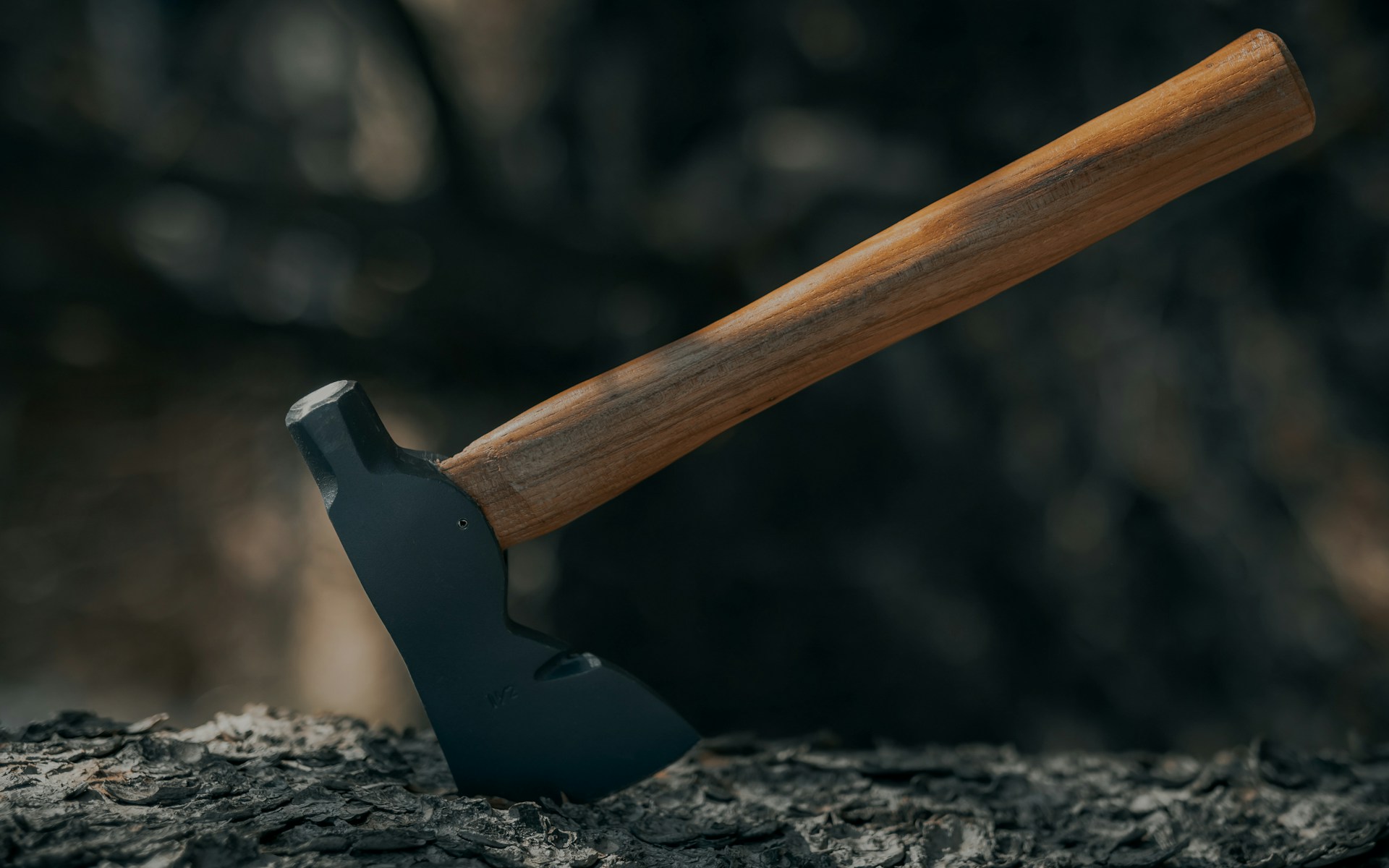
A hatchet, an axe, and a tomahawk can all chop wood, but each one is built for a different job. Pick the wrong one and you’ll either haul extra weight or wear yourself out.
This hatchet vs axe vs tomahawk guide compares head shape, handle length, weight, one- or two-handed use, and safety. It ends with a quick “choose this if” summary for camping, yard work, bushcraft, and throwing.
What Are the Key Differences at a Glance?
A hatchet is a short, one-handed tool for light chopping. An axe is a longer, heavier, two-handed tool for felling and splitting. A tomahawk is a light, straight-handled tool suited to camp chores and throwing.
All three have a handle and a wedge-shaped metal head, so they look alike at first. Their size, head weight, and balance point them toward different work.
How Do Size, Weight, and One-Handed Use Compare?
- Hands: Hatchet: One. Axe: Two (most sizes). Tomahawk: One.
- Handle: Hatchet: Short. Axe: Long. Tomahawk: Straight, slim.
- Head: Hatchet: Small, often flat cheeks. Axe: Heavy; slim for felling, wide for splitting. Tomahawk: Light, thin bit, often with a spike or hammer poll.
- Best jobs: Hatchet: Kindling, small limbs, light carving. Axe: Felling, limbing, splitting rounds. Tomahawk: Light camp work, target throwing.
- Carry: Hatchet: Belt or pack. Axe: Hand or shoulder. Tomahawk: Belt or pack.
Hatchets and tomahawks are built for one hand. A full-size axe needs two hands to swing safely and with control.
Axes vary a lot by purpose. Felling and splitting axes carry long handles and heavy heads for the reach and momentum a two-handed swing needs. Some tools sit in between: Gränsfors Bruk describes its Splitting Hatchet as suited to smaller firewood and usable with one or two hands.
A tomahawk usually runs a little longer than a hatchet but with a much lighter head, so it still handles well in one hand.
Which Tool Handles Each Common Job?
Splitting firewood calls for an axe or splitting maul. Kindling and light camp chopping suit a hatchet. Target throwing suits a tomahawk or a purpose-built throwing hatchet.
A heavy splitting axe drives wood fibers apart with force. A hatchet handles smaller cuts where control matters more than raw power. A tomahawk’s thin edge and light head are built to bite and stick, so it struggles on thick logs.
How Do the Heads and Handles Change Performance?
Head shape and how the head attaches to the handle determine whether a tool is built to split, chop, or throw. A wide axe head forces wood apart, while a slim tomahawk head bites fast and releases cleanly.
Why Does Head Shape Matter for Chopping or Splitting?
A splitting axe head is shaped to enter the wood and then wedge it open. According to Gränsfors Bruk’s guide to splitting axes, the concave shape lets the edge “enter the wood quickly and with minimal resistance,” and as the head goes deeper, “the broader section effectively forces the wood apart.” A felling axe keeps a slimmer head so it cuts across the grain instead of bouncing off.
A splitting maul takes this further. Gränsfors Bruk calls its maul “the heaviest splitting axe produced by Gränsfors Bruk” and the only one of its splitting tools meant for striking a splitting wedge.
A hatchet head is smaller and often flatter in the cheeks, trading splitting force for control in tight spots. A tomahawk head is thin and light, often with a spike or hammer poll on the back, which makes it quick in the hand but weak at splitting.
How Are the Handles and Heads Attached?
Axes and hatchets usually use a handle driven up through the eye of the head and locked with a wedge. When it’s fitted well, the head shouldn’t move at all.
Most tomahawks use a slip fit. The handle tapers, and the head slides down from the top and locks by friction. That makes it easy to replace a broken handle in the field, but the head can work loose if it isn’t seated tightly.
Which Tool Fits the Work You Plan to Do?
An axe suits heavy wood processing, a hatchet suits portable camp chores, and a tomahawk suits light utility work and throwing. Matching the tool to the job keeps the work efficient and the tool in one piece.
When Does an Axe Make Sense for Yard Work and Firewood?
An axe makes sense when you’re felling small trees, limbing, or splitting a season’s firewood. Its length and head weight give you the reach and force two-handed work needs.
For most households, a mid-size splitting axe handles typical firewood rounds. For big, knotty rounds, a heavier maul gives more force per swing and can drive a wedge.
When Is a Hatchet Easier to Carry for Camp Chores?
A hatchet earns its spot in a pack because of its size. It handles kindling, small branches, and light carving without the bulk of a full axe. Brands like Condor Tool & Knife and Gerber make hatchets in this pack-friendly size class.
Where Does a Tomahawk Fit for Light Camp Work or Throwing?
A tomahawk fits camp tasks that need a light, quick tool, and it’s a favorite for recreational throwing. The word comes from an Algonquian language, and Native nations used tomahawks as tools and weapons long before they became camping gear; iron-headed versions spread through trade with Europeans. Today Cold Steel, SOG, and Condor all make modern tomahawks, from camp and throwing hawks to tactical designs.
For organized throwing, the tool has to meet league specs. The World Axe Throwing League’s official rules cap competition hatchets at 3 pounds, 19 inches long measured from the top of the eye, and a 4-inch bit, with separate specs for its Big Axe division. Most venues require you to use their tools or ones that meet their rules, so check before you bring your own.
If you’re curious about throwing in general, this guide to throwing knives that actually stick covers balance and weight in more depth.
What Should You Check Before Buying or Using One?
Before you buy, check the weight, grip, and how the head attaches. Then plan how you’ll store it and what job it’s really for.
Compare Carry Weight, Grip, and Head Security
A hatchet is the easiest to carry on a belt or pack. A full axe usually rides in your hand or over a shoulder. Hold the tool the way you’d swing it and see whether the weight feels manageable for several minutes, not just a few seconds.
Check the head. A wedged axe or hatchet head should feel solid with no wiggle, and a slip-fit tomahawk head should seat tight against the handle. Before you swing, check any used or secondhand tool for a loose head or a cracked handle.
Plan for Safe Storage, Wood Processing, and Throwing
Store any chopping tool dry with the edge covered by a sheath. Wipe the head with a light coat of oil before long storage to prevent rust, and keep the edge touched up with a sharpener that handles larger tools, since a dull axe glances off wood instead of biting.
Use only a maul built for the job to strike a splitting wedge. Gränsfors Bruk says its other splitting axes shouldn’t be used to strike a wedge or as a wedge, since hammering can damage the eye. For throwing, use tools built for it; general-purpose hatchets and axes aren’t made for the repeated impact of target practice.
Swing with a clear area around you, keep your stance wide, and make sure nobody is within reach of a full swing or a glancing blow.
Choose This If…
- Choose an axe if you’re felling small trees, limbing, or splitting a winter’s worth of firewood. Its length and head weight give you the force two-handed work needs.
- Choose a hatchet if you want a pack-friendly tool for kindling, small limbs, and camp chores, with one-handed control.
- Choose a tomahawk if you want a light, quick tool for camp tasks and recreational throwing, and you don’t need heavy splitting power.
- Choose a splitting maul if your firewood rounds are big, knotty, or need a wedge.
Frequently Asked Questions
Is a tomahawk an axe or a hatchet?
A tomahawk is its own category, though it shares traits with both. It has a lighter head and a straighter, slimmer handle than most hatchets, and the head usually slides on from the top instead of being wedged. Its roots are in Native American tools and weapons rather than European felling axes.
Can a tomahawk be used as a hatchet?
Yes, for light work. A tomahawk can handle kindling, small branches, and many of the same camp tasks as a hatchet. Its thinner edge and lighter head make it less suited to splitting or dense hardwood, so a dedicated hatchet is the better pick if most of your work is chopping.
Should I bring a hatchet or an axe camping?
A hatchet is usually the better camping choice. It’s compact, light, and easy to control with one hand for kindling and small firewood. Bring an axe only if you plan to split larger rounds or the campsite allows cutting downed timber that needs more power.
Which tool works best for splitting firewood?
A splitting axe or splitting maul works best. Their heads are shaped to wedge wood apart, and their weight and long handles give you force on every swing. A hatchet can split kindling, but neither a hatchet nor a tomahawk has the mass for full-size rounds.
Can you use any tomahawk for axe throwing?
No. Leagues and venues set limits on weight, length, and bit size, and many only allow their own tools. The World Axe Throwing League’s hatchet limits are 3 pounds, 19 inches, and a 4-inch bit. Check a tomahawk’s specs and the venue’s rules before you bring one.
Come See It In Store
Not sure which chopping tool fits your trips or your woodpile? Browse the axes collection at Sharp Things OKC, or stop by the N May Ave store to feel head weight and handle length in person before you buy.