Best Kitchen Knife Sets for Home Cooks: Premium Picks Worth the Investment

Shopping for the best kitchen knife sets for home cooks raises a fair question: is a set worth it, or should you buy a few good knives one at a time?
The answer depends on what’s in the block. This guide covers the knives a set actually needs, how three premium sets compare, forged vs. stamped blades, storage, and simple care.
What Should a Good Kitchen Knife Set Include?
A useful set is built around three knives you’ll reach for every day:
- Chef’s knife (about 8 inches): handles most chopping, slicing, and dicing.
- Paring knife (about 3.5 inches): small, detailed work like trimming strawberries or deveining shrimp.
- Serrated bread knife: saws through crusty loaves and ripe tomatoes without crushing them.
After those, a utility knife or a santoku is a practical fourth knife. A santoku has a flatter profile that suits up-and-down chopping of vegetables, and many come with a hollow (Kullenschliff or Granton) edge that helps food release.
Two extras earn a slot in almost any block: kitchen shears and a honing steel. Shears handle everything from spatchcocking a chicken to opening packaging. A honing steel keeps the edge aligned between sharpenings.
Premium Kitchen Knife Sets Worth Comparing
Here are three sets from three different traditions. Each covers the core knives differently, so the right one depends on how you cut and how much care you want to give.
| Set | Knives | Steel and hardness | Made in | Bread knife included? |
|---|---|---|---|---|
| Lamson Premier Forged 3-Piece Cook’s Set | 3.5″ paring, 5″ Kullenschliff santoku, 8″ chef’s | Grade 4116 high-carbon stainless from Solingen, 58 HRC | Massachusetts, USA | No |
| Wüsthof Classic 6-Piece Starter Block Set | 3.5″ paring, 5″ serrated utility, 8″ chef’s, plus honing steel, shears and 15-slot acacia block | Forged Wüsthof steel, 58 HRC | Knives in Germany, block in China | No |
| Kai Pro 3-Piece Set | 3.5″ paring, 6″ utility, 8″ chef’s | High-carbon stainless | China | No |
None of the three includes a full bread knife, which is common in starter sets. Plan to add one if you bake or buy crusty bread often.
Lamson Premier Forged 3-Piece Cook’s Set: American-Made and Low Maintenance
Lamson’s Premier Forged line suits a cook who wants an American-made set with a long-term sharpening plan. The blades are hot-drop forged from Grade 4116 high-carbon stainless steel from Solingen, Germany, then tempered, ice-hardened to 58 on the Rockwell scale, and sharpened at Lamson’s Massachusetts facilities.
Each knife has a full tang and a triple-riveted handle. Lamson offers this set with Fire (acrylic), Midnight (black G-10), or solid walnut handles. Every Lamson product carries a lifetime warranty against manufacturer defects, and the Sharp-For-Life program covers free professional sharpening for life; you pay only shipping.
Why it’s a strong pick: a santoku in place of a utility knife makes this set especially good for cooks who prep a lot of vegetables.
Wüsthof Classic 6-Piece Starter Block Set: German Heft With Storage Included
The Wüsthof Classic line suits a cook who likes a heavier knife with a bolster and a rocking chop. Wüsthof says its Classic blades are forged from a single piece of steel and hardened to 58 HRC in Solingen, Germany, where the company has made knives since 1814.
The starter block set gives you the 8″ chef’s knife, 3.5″ paring knife, and 5″ serrated utility knife, plus a 9″ triple-rivet honing steel, come-apart kitchen shears, and a 15-slot acacia block with room to grow.
Why it’s a strong pick: it’s the only one of the three that arrives with storage, a honing steel, and shears, so it’s ready to use on day one. The spare slots let you add a bread knife later.
Kai Pro 3-Piece Set: Lighter Japanese-Style Blades
Kai’s Pro 3-Piece Set suits a cook who wants lighter knives with a fine edge for push cuts and thin slices. Kai lists the blades as high-carbon stainless steel, hand-sharpened to 16 degrees per side, with full-tang construction and riveted POM handles. The set carries a limited lifetime warranty.
Why it’s a strong pick: it covers the core cutting tasks with less weight in the hand, which helps during long prep sessions.
Is a Knife Set Worth It, or Should You Buy Individual Knives?
A set is worth buying when every piece earns its slot. The value comes from matched steel, consistent handles, and, often, a lower total price than buying the same knives separately.
Buying individually makes more sense when a set leaves out a knife you need or pads the block with ones you don’t. If you want a specific chef’s knife from one brand and a bread knife from another, you’ll usually do better buying one at a time.
For help deciding which single knife to start with, see this guide on choosing a kitchen knife.
What to Skip: Sets Padded With Filler Knives
Large 14- and 15-piece block sets often pad the count with six or more steak knives, duplicate paring knives, and specialty blades few home cooks use every day. That piece count looks like value on the box, but it can hide a mediocre chef’s knife.
Judge any set by its three core knives first. A smaller set with three or four well-made knives usually serves a home kitchen better than fifteen pieces of mixed quality. Steak knives, boning knives and carving knives are worth adding only if you regularly host steak dinners, butcher meat or carve roasts.
What Construction Details Matter Most?
Forged vs Stamped Blades
A forged blade is shaped from heated steel under pressure, which usually gives it a thicker spine, a bolster, and a heavier, more balanced feel. A stamped (laser-cut) blade is cut from a sheet of steel, which makes it lighter and usually less expensive.
The difference shows up in the work behind each one. Wüsthof’s FAQ says its forged knives go through more than 40 steps in its factory, while its laser-cut stamped blades go through 14. Forged knives suit cooks who like heft and control; stamped knives suit cooks who want a lighter blade for long prep sessions.
German vs Japanese Knife Styles
German-style knives, like Wüsthof Classic, tend to have a thicker blade, a bolster, and a curved belly that suits a rocking chop through dense ingredients. Japanese-style knives tend to be thinner and lighter, with a flatter profile built for precise push cuts.
Edge angles vary by maker more than by country. Wüsthof sharpens its standard blades at 14 degrees per side and its Asian-style blades, such as santokus, at 10 degrees per side. Kai sharpens its Pro line at 16 degrees per side. Thinner, harder edges cut with less effort but need gentler handling, since they chip more easily if they hit bone or a hard cutting board.
Steel, Handles and Full Tang Construction
Most premium kitchen sets use high-carbon stainless steel, which balances rust resistance with an edge that sharpens well. If you want to compare grades like 4116, VG-10, and others in more depth, read the guide to kitchen knife steel grades.
Full tang means the steel runs the full length of the handle, which adds balance and strength. Handle materials change the feel and the upkeep: G-10 and acrylic shrug off moisture, POM is a durable, low-maintenance plastic, and wood looks warm but needs drying right away after washing.
How Should You Store a Kitchen Knife Set?
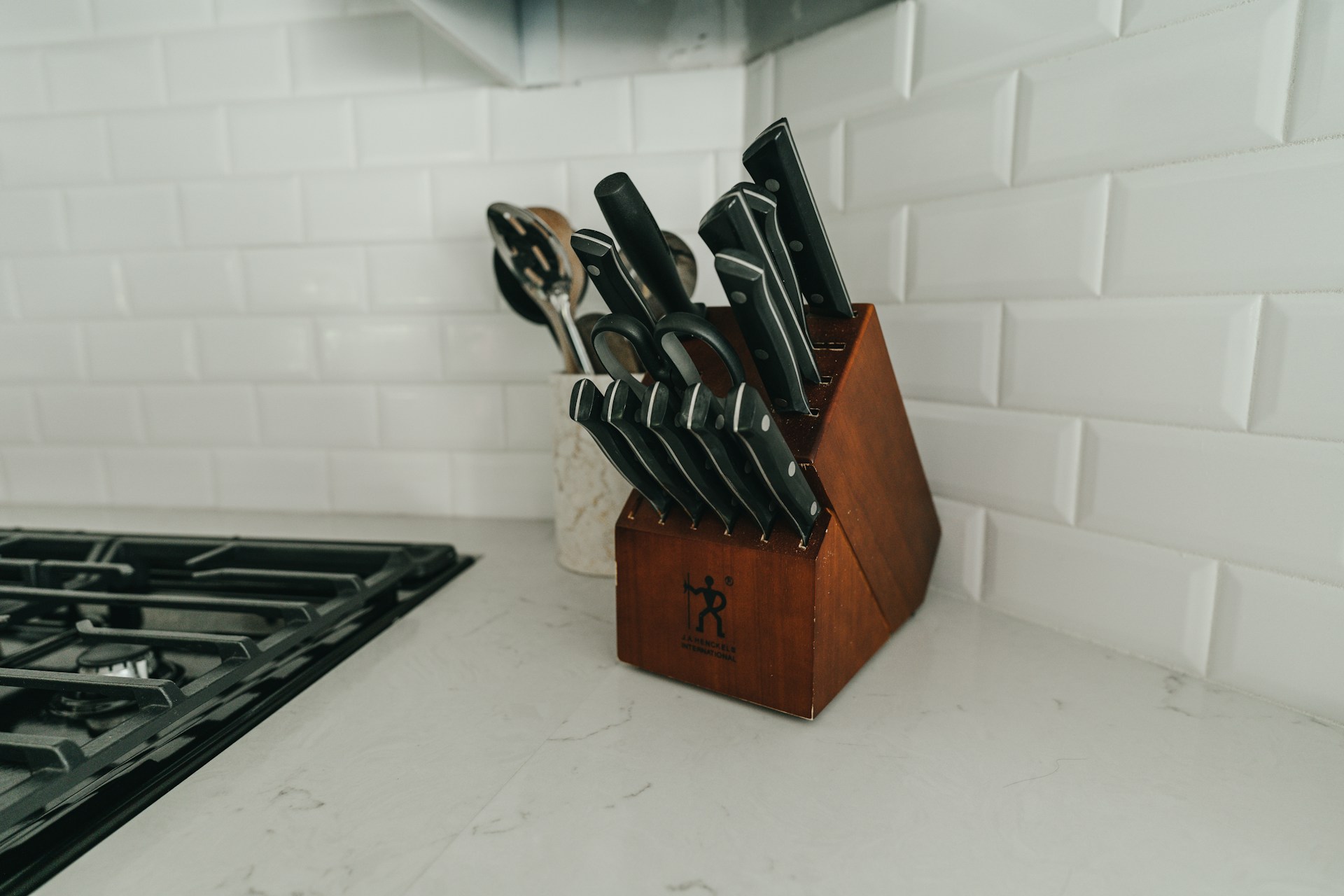
- Wooden block: holds each blade in its own slot and protects edges from metal contact. It takes counter space, and you need enough slots for future knives.
- Magnetic bar: mounts on the wall, frees counter space, and keeps knives visible. Edges stay exposed, so mount it out of reach of kids.
- Knife roll: worth it only if you carry knives to a friend’s house, a cooking class, or a rental kitchen. For a kitchen that stays put, a block or bar is more practical.
Avoid tossing knives loose in a drawer. It dulls edges fast and makes reaching in risky.
How Do You Care for a Premium Knife Set?
Hand Wash and Dry Right Away
Wash knives by hand in warm, soapy water and dry them right away with a soft cloth. Lamson states that its knives are not dishwasher safe, and most premium knife makers give the same advice, since heat, detergent, and rattling against other items dull edges and wear handles.
Don’t leave knives soaking in a sink. Water is hard on steel and handles, and a hidden blade is a hazard for whoever reaches in next.
Hone Often, Sharpen When Needed
Honing realigns an edge that has rolled over with use; it removes little or no metal. Sharpening grinds away a small amount of steel to form a fresh edge. Hone every few uses, and sharpen when honing no longer restores the edge.
Match your sharpening angle to the knife. Wüsthof also recommends using a sharpener from the same brand as your knives so the abrasive suits the steel’s hardness. For a blade that has gone fully dull, a whetstone or a professional service does a more thorough job than a quick pull-through.
If you’d rather hand it off, here’s what to look for in knife sharpening near you.
Frequently Asked Questions
What is the best knife set for a home cook who cooks most nights?
Look for a compact forged set built around an 8-inch chef’s knife and a paring knife, then add a bread knife if the set lacks one. Full tang construction and high-carbon stainless steel hold up to nightly prep. Sets with storage and a honing steel, like a starter block set, save you from buying those separately and make daily honing easy.
Is it cheaper to buy a knife set or three good knives separately?
A set is often cheaper than buying the same knives one by one, because makers price bundles below the total of the individual pieces. That math works only if you use everything in the box. Compare the set price with the cost of just a chef’s knife, a paring knife, and a bread knife from the same line before you decide.
Are Wüsthof knife sets worth the higher price?
For cooks who use their knives daily for years, often yes. Wüsthof Classic knives are forged from a single piece of steel, hardened to 58 HRC, and made in Solingen, Germany; Wüsthof says its forged knives take more than 40 factory steps. That buys durability, balance, and a bolster for control. A cook who prefers light knives may get more from a lighter, stamped or Japanese-style set.
Are forged knives better than stamped knives for home cooking?
Neither is better for everyone. Forged knives are heavier, usually have a bolster, and feel more balanced for rocking chops. Stamped knives are lighter, easier to handle through long prep sessions, and usually cost less. If you can, hold both styles and choose based on how you cut and how much weight you like in your hand.
Do knife sets with built-in sharpeners replace regular sharpening?
No. A block with a built-in sharpening slot is handy for quick touch-ups, but it can’t fully restore an edge that has gone dull or chipped. Keep honing regularly, and use a whetstone, a guided sharpener, or a professional sharpening service when the edge stops responding to honing. Check that any built-in sharpener matches your knives’ edge angle.
Shop Kitchen Knife Sets
Sharp Things OKC carries premium kitchen knife sets, including American-made Lamson Premier Forged sets. Come hold a chef’s knife at the N May Ave store before you commit, or shop kitchen knife sets online. Orders placed before 3 pm usually ship the same day.