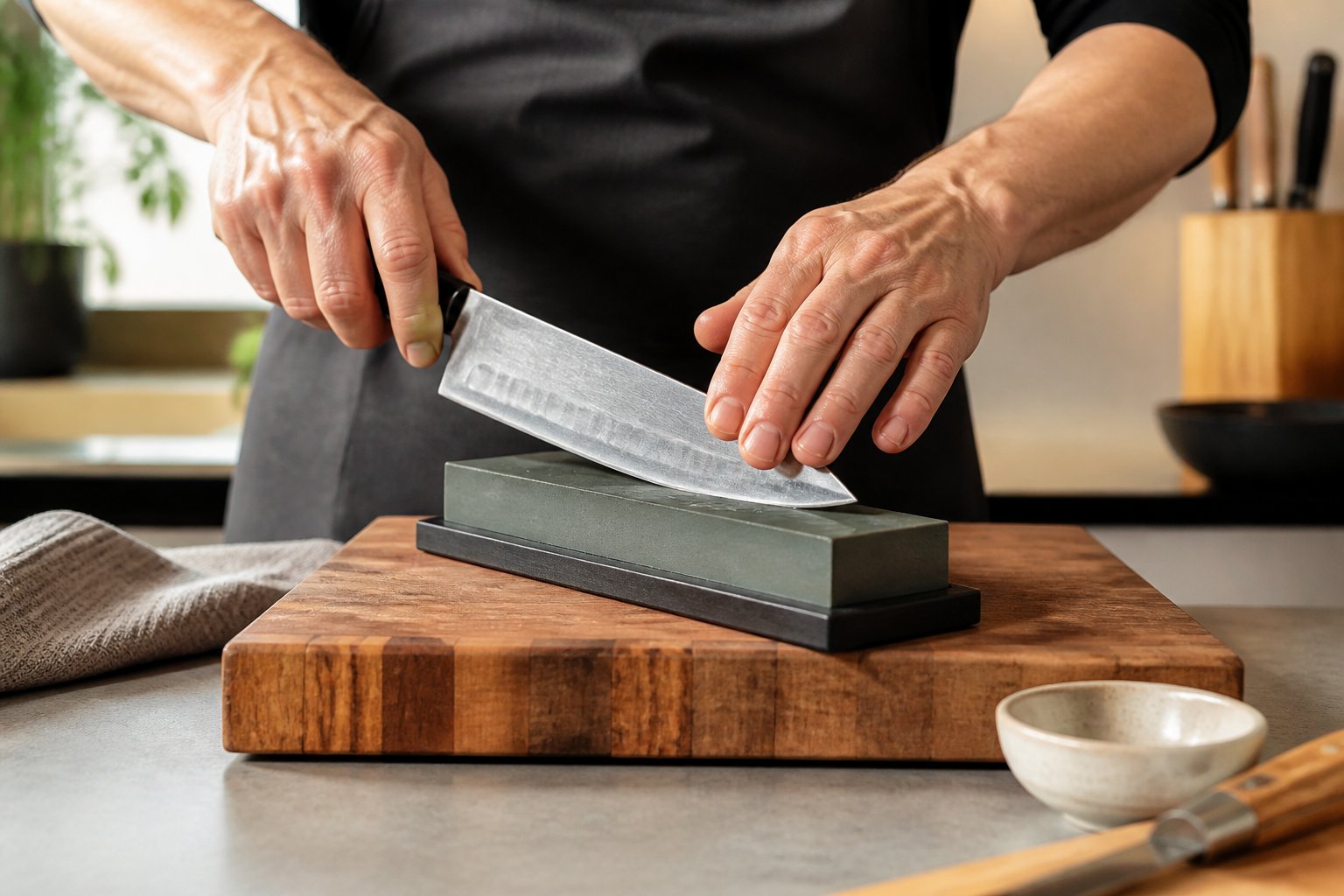
Knife Sharpening Near Me: Repair It or Replace the Blade?

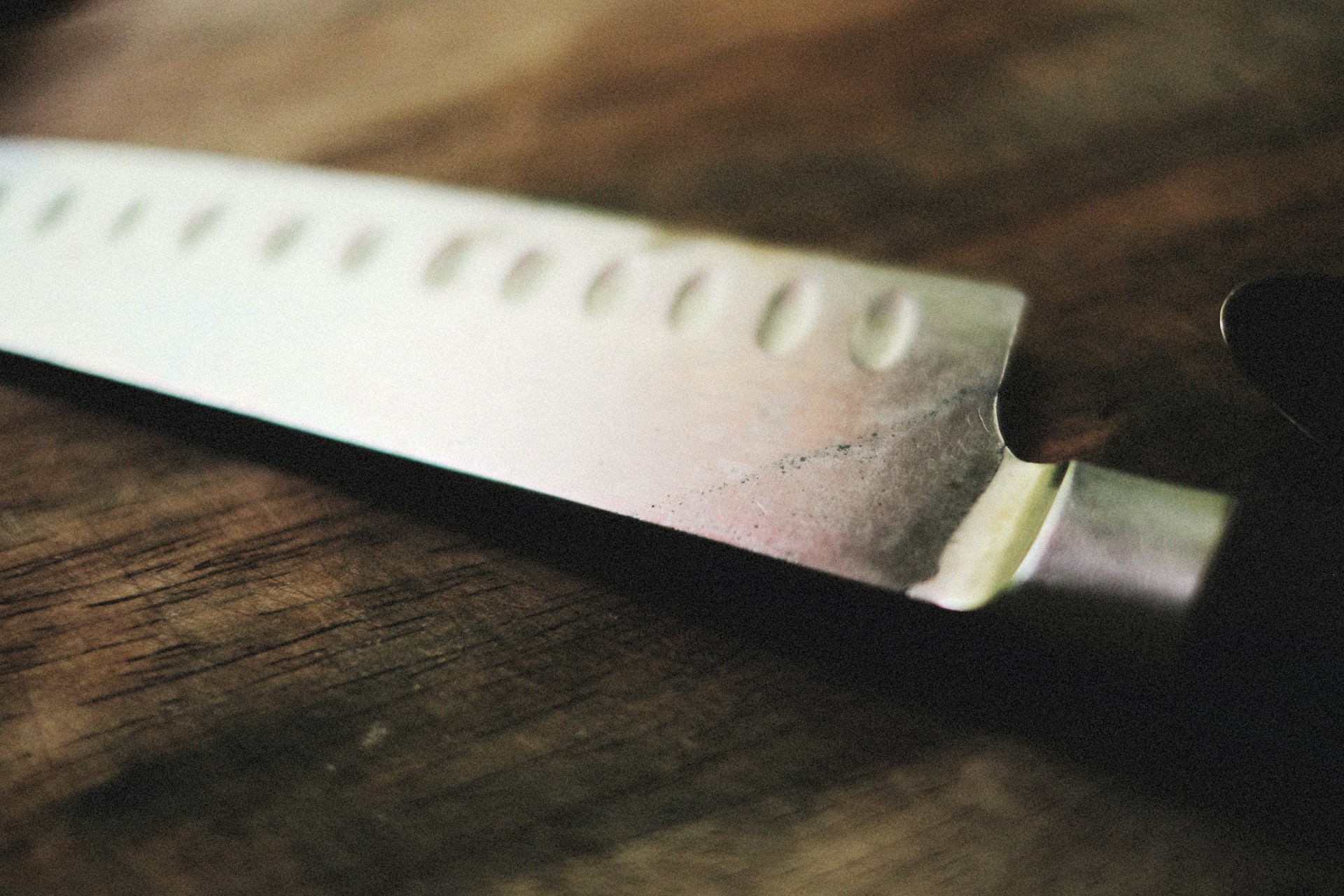
Your chef’s knife slides off a tomato skin instead of biting into it. You press harder, the blade skates, and now you are one slip away from a trip to urgent care. So you pull out your phone and start typing.
That search for knife sharpening near you turns up walk-in shops, mobile vans, mail-in services, and a hardware store counter or two. Some of those options are excellent. Some will grind away more steel than your knife can afford to lose. And a few of those blades in your block are past the point where sharpening does any good at all.
Keep reading to learn how to compare local sharpening routes, what a skilled sharpener should check before touching your edge, rough price benchmarks, and the honest signs that a blade is done. A dull knife is fixable. A knife ground down to a toothpick is not.
Choose the Right Sharpening Route First
There are three real ways to get a knife sharpened by someone else: drop it off, have someone come to you, or ship it. Each fits a different kind of blade and a different kind of schedule.
Directories now list thousands of verified knife and tool sharpening services across all fifty states, filterable by service style. That helps, but the listing does not tell you whether the shop uses a belt grinder, water stones, or a guided system. You still have to ask.
Here is the fast way to match your situation to a route:
- Walk-in shop: best for kitchen sets, scissors, and anyone who wants to talk to the person doing the work
- Mobile sharpener: best for restaurants, butchers, salons, and homeowners with a full block plus garden tools
- Mail-in service: best for Japanese knives, high-hardness steels, and towns with no local sharpener at all
Walk-In Shops for Fast, In-Person Service
Local drop-off shops usually turn work around in a day or two, sometimes while you run errands. You get to hand over the knife and explain how you use it, which matters more than most people expect. Sharp Things OKC sharpens knives in-house at the N May Ave store, so OKC-area readers can hand over a blade and get it back without shipping.
Ask what equipment they run. A shop using a variable-speed belt with fresh abrasives and a water quench can do excellent work. A shop running a worn wheel at high speed can blue your edge and ruin the heat treat in seconds.
Mobile Sharpeners for Home and Restaurant Blades
Mobile sharpeners bring the setup to your kitchen or loading dock. For a restaurant running twelve line knives, that saves hours of downtime and keeps blades in rotation.
Home cooks benefit too, especially when you want lawn mower blades, pruners, and kitchen knives handled in one visit. Expect a travel fee or a minimum order. Most mobile operators need a few blades to make the trip worth it.
Mail-In Options for Specialty Edges and Remote Locations
Mail-in services shine when your knife needs specialist attention. Thin Japanese blades in high-carbon steel, single-bevel deba, and hard powder steels all reward a sharpener who works with them daily.
The trade-off is time and risk. You lose the knife for one to three weeks, you pay shipping both ways, and you cannot watch the work. Insure anything valuable, and photograph the blade before it goes in the box.
Whichever route you pick, the real question is what the sharpener actually does once the knife is in their hands.
What a Skilled Sharpener Should Check
A good sharpener asks questions before touching steel. What do you cut? Have you had it sharpened before? Any chips you know about?
Those questions are not small talk. They determine the angle, the grit progression, and how much metal comes off.
Edge Angle, Grind Type, and Intended Use
Most Western kitchen knives have a 20-degree angle per side. Japanese knives often sit near 15 degrees or lower, and some are ground on one side only.
Intended use shifts that number. A pocket knife you use on cardboard and zip ties wants a sturdier angle than a slicer that only touches fish. A sharpener who puts a 15-degree edge on your camp knife has given you an edge that will roll the first time you hit a knot.
Grind type matters too. Full flat, hollow, convex, and scandi grinds each behave differently on a belt. Someone who cannot name the grind on your blade is guessing.
Heat Control and Conservative Metal Removal
Heat is the quiet killer. Push a blade too fast against a grinding wheel and the edge gets hot enough to soften the temper. The knife will feel sharp for a week, then never hold an edge again. Metallurgists who study this professionally have found the effect is real but narrow: it takes sustained heat concentrated right at the thin apex, not just visible sparks, to actually cook the temper out of an edge.
The best shops are upfront about this: they aim for a sharp edge suited to how you’ll use the knife, without stripping off more material than the job needs. Low speeds, light pressure, frequent cooling, fresh belts. That is what conservative sharpening looks like.
Every sharpening takes steel off permanently. Your knife has a finite number of sharpenings in it, and a careless one can burn through three or four sessions’ worth in a single pass.
Damage Assessment Before the Blade Hits the Belt
Before grinding, a sharpener should inspect for chips, a bent tip, a loose handle, and rust pitting along the edge. Some of that is repairable. Some of it changes the price, and some means the job is not worth doing.
Ask them to show you what they found. A sharpener who walks you through the damage is a sharpener worth paying, which brings up what all this actually costs.
Compare Turnaround Time, Convenience, and Cost
Price tracks with blade type, service style, and the extent of edge repair needed. Convenience costs extra, and specialty work costs more than a straight touch-up.
Typical Pricing for Kitchen and Everyday Carry Knives
Standard household kitchen sharpening generally runs about $6 to $25 per knife. Chef’s knives sit in the middle. Paring knives run cheaper, and long slicers or specialty blades tend to be more expensive.
Pocket knives usually land in a similar range. Serrated edges cost more because each scallop gets worked individually. Mobile service often adds a trip charge or sets a minimum, and mail-in adds round-trip shipping on top of the per-blade rate. If you’re local, ask Sharp Things OKC directly what they charge for your specific knife, since price varies by blade type and condition.
Turnaround varies just as much. Walk-in shops often finish same day or next day. Mail-in commonly runs for 1 to 3 weeks, depending on the queue.
When Tool Sharpening Costs More Than Expected
Lawn mower blades, machetes, axes, and chisels take more time and more abrasive than a kitchen knife. A nicked mower blade needs the edge reprofiled before it can be sharpened, and that is grinding, not honing.
Damage repair is where quotes climb fast. A broken tip on a chef’s knife means reshaping the entire profile. A deep chip means grinding the whole edge down to meet it. Expect repair work to run well above a routine sharpening.
Questions to Ask Before You Leave a Knife Behind
Five questions save you from a bad outcome:
- What angle will you put on this, and why that angle?
- How do you keep the blade from overheating?
- Roughly how much steel will come off?
- What is the turnaround, and do you call before doing extra repair work?
- What happens if the knife is damaged in your care?
If the answers are vague, keep your knife. And if the answers reveal your blade needs major surgery, it is worth asking whether that surgery makes sense at all.
Know When Sharpening Is No Longer the Smart Fix
Some knives are past saving, and paying $20 to have one ground is money you will not get back. Steel is a consumable, even in good knives.
Blades That Have Been Sharpened Too Many Times
Look at the blade profile from the side. If the heel has crept upward and the belly has gone flat, the knife has lost significant height to repeated sharpening.
A chef’s knife that started at 50mm tall and now measures 38mm handles differently. Your knuckles hit the cutting board. The balance shifts toward the handle. On knives with a bolster, the bolster starts to sit lower than the edge, so every sharpening now requires grinding the bolster too.
That is when a sharpener quotes you a reprofiling fee that approaches the price of a new knife.
Chips, Broken Tips, Rust, and Uneven Regrinds
A chip smaller than 1mm usually grinds out fine. A 3mm chip means removing 3mm of steel across a long stretch of edge, and that is a real loss.
Deep rust pitting along the edge is worse. The pits go below the surface, so grinding past them removes far more metal than the damage suggests. Surface rust on the flat is cosmetic. Pitting on the cutting edge is structural.
Uneven regrinds from a previous shop create a wavy edge that never quite sharpens to a straight edge. Fixing it means starting over at coarse grit.
When Replacing a Hard-Use Knife Delivers Better Value
Machetes, cheap paring knives, and stamped blades in soft stainless are often cheaper to replace than to repair. A machete with a badly bent edge and a loose handle is not a restoration project.
The math is simple. If repair costs more than half of a replacement, and the replacement is a better knife, buy the knife. Which raises the more interesting question: what should you actually buy?
Make the Next Blade Decision With Confidence
When a knife is done, the replacement should fix whatever was wrong with the old one. Most people replace like for like, only to repeat the same problem two years later.
Choose a Replacement That Matches Your Daily Use
Think about what actually failed. If your old knife chipped constantly, you want tougher steel, not harder steel. Something like 14C28N or 3V takes impact better than a brittle high-hardness blade.
If your knife dulled fast but never chipped, go the other direction. S30V, S35VN, and M390 hold an edge far longer between sharpenings. They are harder to sharpen at home, but you will do it less often.
Handle material matters just as much for cooking. G-10 and Micarta stay grippy with wet hands. Polished wood looks great and gets slick the moment you break down a chicken. Sharp Things OKC’s kitchen knives selection covers both ends of that spectrum if you want to compare a few in hand.
Frequently Asked Questions
How Much Does Professional Knife Sharpening Usually Cost?
Most kitchen knives run about $6 to $25 each, with chef’s knives near the middle of that range. Serrated blades, long slicers, and repair work cost more. Mobile service often adds a trip fee, and mail-in adds shipping both ways.
Is Professional Sharpening Worth It for Wüsthof, Shun, and Other Kitchen Knives?
Yes, as long as the sharpener knows the blade. German knives take a wider angle than Japanese knives, and a shop that treats them the same will thin your German blade too far or leave your Japanese one too blunt. Ask about angles before you hand anything over.
Does Ace Hardware Still Offer Knife Sharpening Services?
Many locations offer scissor and knife sharpening, as well as sharpening for tools like lawn mower blades. Availability is set on a store-by-store basis, so call your nearest location first. Service quality varies with the equipment and the person running it.
Does Home Depot Sharpen Kitchen Knives or Pocket Knives?
Big-box home improvement stores generally do not sharpen kitchen or pocket knives. Some handle lawn mower blades seasonally. For knives, you are better served by a dedicated sharpening shop or a mail-in specialist.
Can I Find a Mobile Knife Sharpener That Comes to My Home or Workplace?
Yes. Mobile sharpeners operate in most metro areas and travel to homes, restaurants, butcher shops, and salons. Most require a minimum number of blades or charge a travel fee, so gather everything dull before you book.
How Often Should I Have My Kitchen Knives Professionally Sharpened?
Two to three times a year is enough for most home cooks. Hone with a steel weekly between sharpenings to keep the edge straight. If you are pressing hard to cut a tomato, you have already waited too long.
Get It Sharpened or Get a New One, Right Here in OKC
Sharp Things OKC handles both sides of this decision. If your knife is worth saving, contact the shop or bring it into the N May Ave store to have it sharpened in person. If it’s past saving, the same store lets you feel the balance, check the handle in your grip, and get a straight answer about steel choice before you spend anything.
Sharp knives make cooking faster, safer, and a lot less frustrating. Whether you get the one you have sharpened or upgrade to something that holds an edge longer, the goal is the same: a blade that does the work so your hands do not have to. Come into the OKC store and hold a few before you decide.