
Buy Knives Online With Confidence: A Specialty Retailer Trust Checklist

Maybe you got burned once already. The photo showed a crisp Microtech clone site, the price was 40 percent under everyone else, and what arrived was a soft-steel knockoff with blade play you could hear. Or maybe you have never ordered a blade sight-unseen, and you are not sure who deserves your card number. Either way, the question is the same: how do you tell a real specialty knife store from a drop-shipper with a nice logo?
The good news is that credible retailers leave fingerprints everywhere. Authorized brand listings, accurate steel callouts, a real phone number, a physical storefront, and shipping policies written in plain English. When you know which five or six details to check, you can vet an online knife store in about three minutes and order with real confidence.
In this guide, you’ll discover the specific signals that separate a legitimate specialty shop from a marketplace reseller, how to read a product page like someone who actually carries knives, and what extra homework automatic and OTF orders require. Think of it as the same set of questions a good counter guy would ask you before he let you spend the money.
Signs of a Credible Specialty Retailer
The fastest tell is inventory depth paired with brand accountability. A real knife store carries Benchmade, Spyderco, Kershaw, Boker, CRKT, Buck, Cold Steel, SOG, ESEE, and Ka-Bar because it has accounts with those companies, not because it scraped a supplier feed.
Look at how the store talks about the products it sells. Specialty retailers list model numbers, blade steel, country of origin, and warranty terms. Generic sellers copy a paragraph of marketing fluff and hope you do not notice.
Authorized Brand Channels and Authentic Inventory
Authorized dealers matter for one practical reason: warranty coverage. Benchmade, Spyderco, and Buck all honor their warranties through legitimate purchase channels, and a gray-market or counterfeit knife leaves you holding a paperweight.
Counterfeits cluster around the most recognizable designs. Microtech OTFs, popular Benchmade Axis-lock folders, and certain Spyderco compression-lock models are constantly cloned. Warning signs include prices far below MAP, stock photos only, no serial or model number, and vague “premium steel” language instead of a named alloy like CPM MagnaCut or M390.
ESEE and Ka-Bar sit at the other end of the spectrum. Their 1095 carbon steel fixed blades are cheap enough that fakes are rare, but you still want a seller who ships the correct sheath and hardware. If a listing cannot name what it is selling, close the tab.
Once you trust the inventory, the next question is who you talk to when something goes sideways.
A Real Storefront and Reachable Product Experts
A physical store is one of the strongest trust signals available. It means real overhead, real inventory on shelves, and staff who handle these knives daily instead of guessing from a spec sheet.
Call and ask something specific. “Is the CRKT you have in stock the D2 version or the 8Cr13MoV version?” A knowledgeable person answers in seconds. A drop-shipper stalls, deflects, or emails you a link.
Good customer service in this niche sounds like a conversation, not a script. The best interactions involve steel comparisons, Rockwell hardness, pocket clip position, and honest talk about whether a knife suits your actual use case.
That same directness should show up in writing, which brings you to the fine print.
Clear Policies Before You Add to Cart
Policies should be findable in one click and readable without a law degree. Before you check out, confirm these:
- Shipping cutoff time and which carriers the store uses
- Return window in days, plus whether the knife must be unused
- Restocking or return shipping fees, and who covers them
- Restricted-item handling for automatics and OTFs
- Payment options, including buy now, pay later plans if you are spreading out a premium purchase
- Warranty support, meaning whether the store helps or hands you off to the manufacturer
Watch for the absence of information as much as its presence. No physical address, no phone number, and no named return window is a pattern, not a coincidence.
A store can pass every trust check and still sell you the wrong knife if you misread the listing.
Read Product Listings Like a Knife Buyer
A good product page is a spec sheet with intent. Blade steel, lock type, blade length, closed length, weight, and clip configuration should all be listed, because those six numbers decide whether the knife works for you.
Skim the description, then read the specs twice. That is where retailers who know knives separate themselves from retailers who sell knives.
Match Blade Steel to the Work You Actually Do
Steel is a trade-off between edge retention, toughness, corrosion resistance, and how easily you can sharpen it. Nothing wins all four.
CPM MagnaCut is the current favorite for good reason. It holds an edge like a high-vanadium steel while resisting rust well enough for wet work, which makes it excellent for EDC and fishing. M390 and CPM-20CV push edge retention higher but demand diamond stones. S30V sits in a comfortable middle and shows up on a lot of proven folders.
Carbon steel like 1095 rusts if you ignore it, and that is fine. It sharpens on a river rock, takes abuse in bushcraft use, and patinas into something you stop worrying about. Budget stainless like 8Cr13MoV is genuinely useful for a beater knife you loan out.
Steel decides maintenance. The mechanism decides how the knife feels in your hand every day.
Compare Locks, Opening Methods, and Carry Features
Lock type changes the whole experience. A liner lock is thin, light, and easy to close one-handed. A frame lock adds rigidity by using the handle slab itself, which is why so many hard-use folders run one.
A lockback is strong, ambidextrous, and slower to close, which some carriers prefer for kitchen and camp tasks. Modern crossbar locks split the difference with ambidextrous operation and no finger crossing the blade path.
Then check deployment and carry. Thumb stud, thumb hole, or flipper tab, plus bearings versus washers, changes how the knife opens. Clip position, tip-up or tip-down, left or right, matters more than most first-time buyers expect.
Handle details are the last piece before you commit.
Check Handle Materials, Measurements, and Included Gear
G10 is textured, grippy, and nearly indestructible. Micarta softens with hand oils and gains character. Carbon fiber cuts weight for a premium and can feel slick when wet.
Numbers matter here. A 3.5-inch blade and a 4.5-ounce weight sound reasonable until you clip it to gym shorts. Check closed length against your actual pocket, and check whether a sheath, extra clip, or hardware kit is included.
Knowing what to read is different from knowing which category to shop.
Choose the Right Tool Category Before Ordering
Category comes before brand. Deciding between a folder, a fixed blade, and a specialty tool eliminates 90 percent of the catalog and prevents the most common regret purchase.
Be honest about the task. Most people buy a survival knife to open boxes.
Folders for Everyday Carry and Routine Tasks
Pocket knives dominate everyday carry because they disappear until you need them. For most people, a 2.75 to 3.5-inch blade in MagnaCut or S30V handles mail, packaging, cordage, food prep, and the occasional stubborn zip tie.
Traditional slip joints still earn their spot. A Case Cutlery stockman is polite in an office, easy to sharpen, and costs less than a tank of gas. Modern one-hand folders trade that charm for speed and a stronger lock.
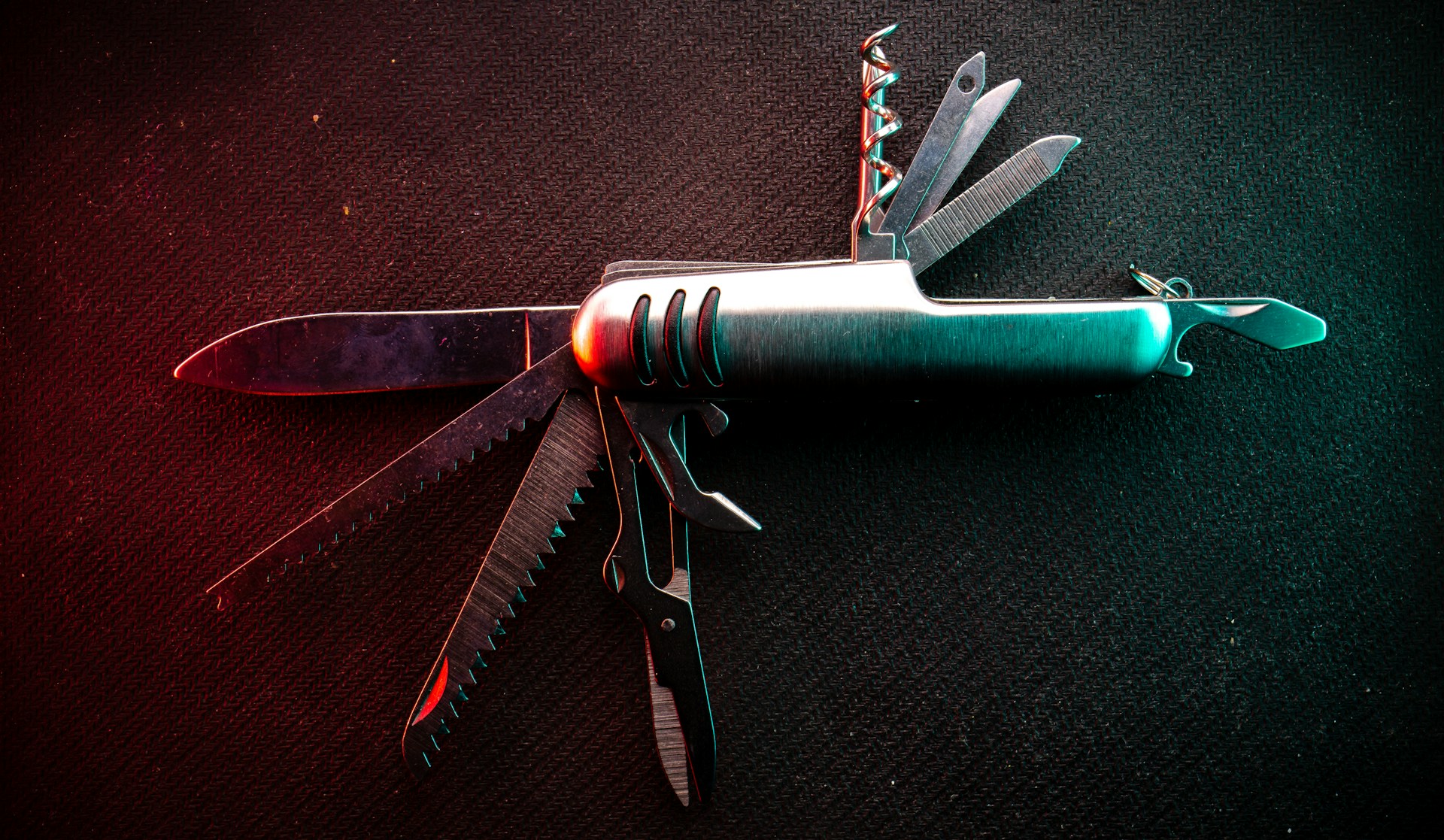
Swiss Army knives and multi-tools serve a different role. When you have more screws than cuts, a multi-tool wins.
Some jobs need a blade that does not fold at all. Sharp Things OKC’s folding knives selection covers this whole range, from Case slip joints to modern one-hand folders.
Fixed Blades for Hunting, Bushcraft, and Camping
Fixed blades give you full-tang strength and nothing to clean out of a pivot. For hunting, a 3.5 to 4-inch drop point with a well-fitted sheath does more real work than a 9-inch fantasy blade.
Bushcraft favors a Scandi or high flat grind in carbon steel for carving and fire prep. Condor Tool & Knife and similar makers build tough, sensibly priced camp knives. A machete or throwing axe belongs in the same conversation for brush clearing and outdoor adventures.
Boot knives and small fixed blades work for discreet carry, though local carry laws deserve a look.
Not every blade you buy online is going in a pocket or a sheath.
Kitchen and Specialty Tools for Focused Jobs
Kitchen cutlery is the easiest category to shop online because the sizes are standardized. A Shun or Kai gyuto in VG-MAX, a Lamson slicer, and a decent paring knife cover almost everything.
Fillet knives are worth buying dedicated. Thin, flexible, and long enough for your usual catch, they beat forcing a chef knife into the job.
Add-ons matter too: steak-knife sets, turners, Knife Pivot Lube, and a rechargeable flashlight round out most orders. Sharp Things OKC’s kitchen knives selection includes Shun and Lamson alongside the fixed-blade and folder catalog.
One category, though, carries legal weight the others do not.
Automatic and OTF Orders Require Extra Care
Automatics are the one purchase where the checkout page is not the last step. Mechanism, state law, and delivery requirements all need a look before you order.
Reputable sellers flag these restrictions clearly. If a site sells switchblades with zero legal language anywhere, that tells you something.
Understand Side-Opening, Switchblade, and OTF Designs
Side-opening automatics fire the blade out on a pivot with a button or lever. Benchmade and Kershaw both build proven examples, and they tend to be slimmer in the pocket than an OTF.
OTF knives run the blade straight out the front on a track. Double action means the same slider deploys and retracts; single action means you cock it manually. Microtech built its reputation here, with models in M390 and MagnaCut across a wide price range.
Tolerances are tighter on OTFs, so lint and grit matter. Plan on occasional lube and a canned-air cleanout. Our automatic knives selection covers both side-opening and OTF formats if you want to compare the two before ordering.
Mechanism is the easy part. Legality varies by where you stand.
Verify Knife Laws Where You Live and Travel
Automatic knife laws differ by state and sometimes by city, and they change. Some states permit ownership and carry outright, others restrict blade length or concealment, and a few remain restrictive.
Check your state statute and your city ordinance before ordering, and check again before traveling with the knife. This article is not legal advice, and a five-minute read of the current law is cheaper than the alternative.
Once you have legal clearance, the shipment itself has requirements.
Confirm Age, Delivery, and Signature Requirements
Expect age verification on automatics. Most legitimate retailers require the buyer to be 18 or older and will not ship to restricted jurisdictions.
Signature confirmation is common on higher-value orders, which is a feature, not friction. It keeps a $700 OTF off your porch. Also check whether the store ships automatics only to the billing address.
Those same shipping mechanics apply to everything else in your cart.
Confirm Shipping, Returns, and Support Details
Fast shipping is a policy, not a promise. The number you want depends on the daily order cutoff and whether the store ships from its own shelves or a third-party warehouse.
Stores that stock inventory locally move orders same day. That is why an order placed Friday afternoon can land across the country by Tuesday.
Know When In-Stock Orders Will Leave the Warehouse
Look for a stated cutoff, something like 3 pm local time, and note the store’s time zone. Then check whether weekends count as processing days.
“In stock” should mean on a shelf. If a listing says available but ships in seven to ten days, that is a supplier order in disguise.
Review Return Windows and Condition Requirements
Most specialty retailers offer a 14 to 30-day window on unused knives in original packaging. Once you cut with it, you own it, and that is standard across the industry.
Read the exceptions. Custom, engraved, and sale items are often final. Know who pays return shipping and whether a restocking fee applies.
Use Responsive Support Before Placing a High-Value Order
For anything over a few hundred dollars, contact support first. Ask about centering, blade play tolerance, or which variant is physically on the shelf.
The answer tells you what post-sale service will look like. Fast, specific replies before the sale usually mean fast, specific help after it.
Once the box arrives, one short routine remains.
Make the Final Check With Confidence
Open the package the day it lands and inspect it while the return window is wide open. Five minutes now prevents a month of arguing later.
Compare what you received against what you ordered, spec by spec.
Keep Your Order Confirmation and Inspect It Promptly
Save the confirmation email, the invoice, and the packaging. Those documents are your warranty paperwork for Benchmade, Buck, or any other maker.
Check the blade steel marking, model number, edge condition, lock engagement, and blade centering. On an OTF, fire it 20 times and listen for a clean lockup. On kitchen knives and flashlights, verify accessories and charging cables are present.
If something is off, contact the seller before you sharpen, carry, or mod it.
When a Hands-On Comparison Is Worth the Visit
Some decisions genuinely need your hand. Handle thickness, clip tension, and how a knife rides in your pocket do not translate through photos.
If you are choosing between three folders at similar prices, or spending real money on a first premium piece, handling them settles it fast. Flashlights are the same; beam pattern and switch feel are personal.
That is the last variable, and it is the one an online spec sheet cannot solve for you.
Frequently Asked Questions
What Is the Best Website to Buy Knives Online?
The best site is an authorized dealer for the brands it lists, publishes clear shipping and return terms, and has real product experts you can reach by phone. Specialty retailers with a physical storefront are often the safest bet because they stock inventory rather than drop-shipping it.
Is It Legal to Order a Knife Online in My State?
Standard folders and fixed blades are legal to purchase in most of the country, but automatic and OTF knives are governed by state and sometimes city rules. Check your current state statute and local ordinance before ordering, and confirm the retailer ships to your jurisdiction.
Which Online Knife Stores Offer Free Shipping?
Many specialty retailers offer free shipping above a set order threshold, commonly $75 to $99, while smaller orders pay flat-rate ground shipping. Check whether that free tier still meets the store’s same-day cutoff, since some free options ship on a slower schedule.
How Can I Tell Whether an Online Knife Retailer Is Legitimate?
Look for a physical address, a working phone number, named blade steels instead of “premium steel,” model numbers on every listing, and published return terms. Prices dramatically below everyone else on Microtech or Benchmade models are the clearest counterfeit warning.
Can You Order Knives From Amazon?
You can, but listings often mix authorized sellers with third-party resellers, making warranty coverage and authenticity harder to confirm. A specialty knife store gives you a named seller, verifiable brand authorization, and staff who can answer steel and lock questions.
What Should I Look for in a First Folding Knife?
Start with a 3-inch blade in something forgiving like S30V, D2, or 8Cr13MoV, paired with a liner or frame lock and a G10 handle. Keep it under 4 ounces, make sure the clip position matches your pocket, and spend the leftover budget on a sharpening stone.
Order Smart, Carry Something You Trust
The checklist is short: verify brand authorization, read the specs instead of the marketing copy, confirm the legal picture on automatics, and know the shipping and return terms before you pay. Do that and buying knives online stops feeling like a gamble.
Whether you are picking a first EDC folder, filling a gap in a collection, or replacing kitchen cutlery that stopped holding an edge, the right blade matches your actual work. Sharp Things OKC keeps deep inventory across every price tier, and the staff will tell you honestly when a cheaper knife is the better call.
If you are near Oklahoma City, the store on N May Ave is open seven days a week, and you are welcome to hold it before you buy it.