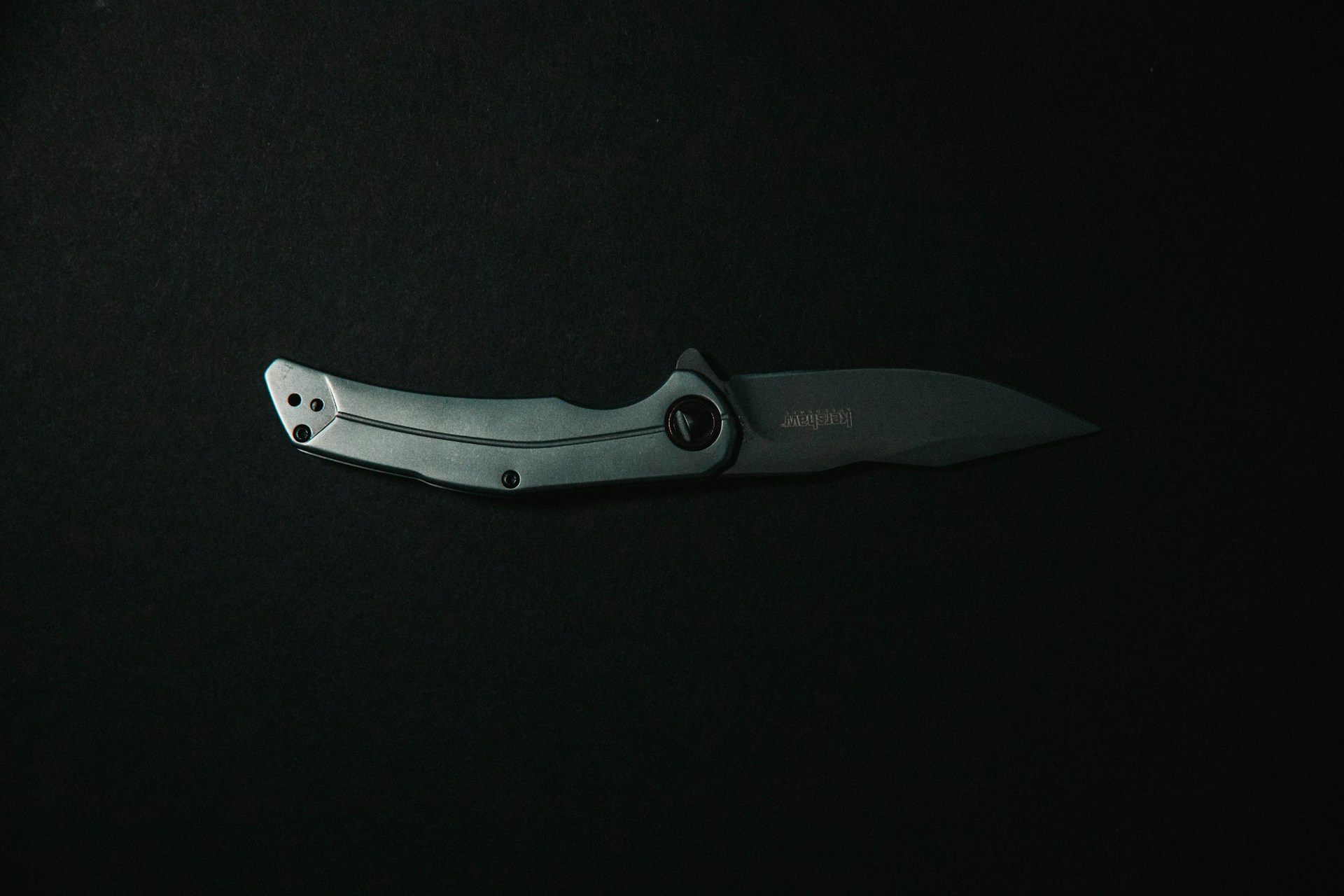
Out the Front Knives: How OTF Automatics Fit Everyday Carry

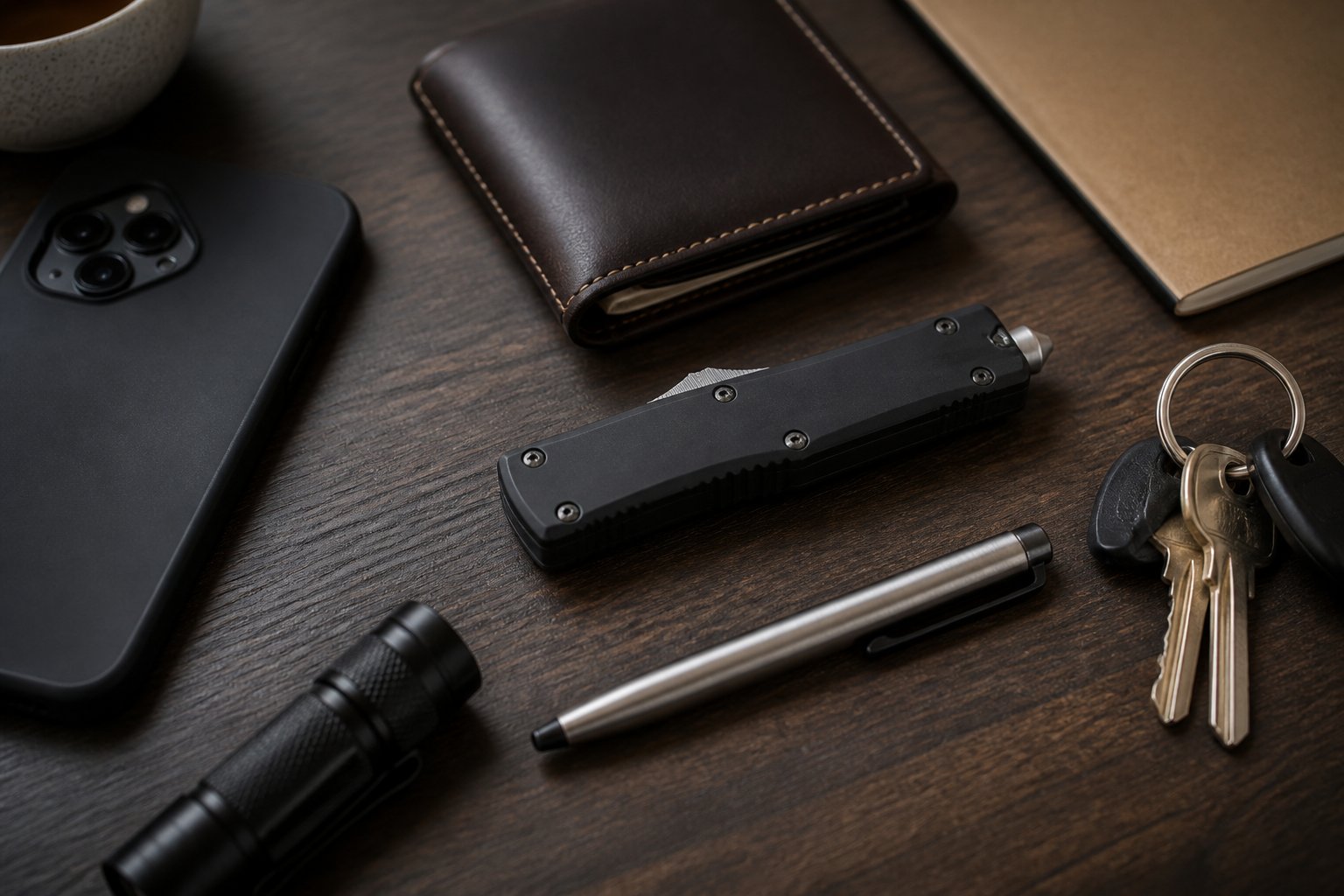
You are standing at the counter with a folder in your pocket that works fine, but you keep coming back to the OTF case. The blade shoots straight out the front, snaps back in with the same slide, and it does something no folder can do. You want to know if that speed is worth the trade-offs, or if it is just a cool sound.
That question gets answered faster when you can hold one. Sharp Things OKC keeps Microtech and other automatics in the case so you can fire one a few times, feel the slide tension, and decide with your hands instead of a video clip. An out-the-front automatic earns its place in your carry when one-handed deployment and retraction actually save you steps, not when it just looks fast on camera.
In this guide, you’ll discover how the blade track, spring, and push button work together, the real difference between single-action and double-action OTF firing, and where a traditional folder still beats an automatic. Buy the mechanism that fits your day, not the one that fits your feed.
How an OTF Automatic Works
An OTF automatic pushes its blade forward through an opening in the front of the handle instead of swinging it around a pivot. Press or slide the button, and spring force drives the blade down a straight internal track until it locks.
That linear motion is the whole reason these knives feel different. A folder needs clearance to swing open, so you need room and a free thumb. An out-the-front automatic needs only the length of the handle and one finger on the switch.
The Blade Track, Spring, and Push Button
Inside the handle, the blade rides in a machined channel with very little side-to-side play. A coil spring stores tension, and the button or thumb slide releases it. When you fire, the blade travels forward, and a small detent or lock catches it in the open position.
The lockup on most OTF autos comes from that detent, not a liner or frame lock. That means a bit of blade wiggle when open is normal, even on premium models. What matters is that the blade holds firm against forward and backward pressure while you cut.
Springs and tracks do wear. Dirt in the channel is the most common cause of a sluggish fire, which is why cleaning matters more on an OTF than on a simple folder.
What Deployment and Retraction Feel Like in Hand
The slide has a short travel and a distinct break, similar to a firm light switch. Push it forward, and the blade goes out with a sharp mechanical crack. Pull it back, and the blade disappears just as fast.
Most people are surprised by how little force it takes. Your thumb does maybe a quarter inch of work, and the spring does the rest. That is what makes online clips look so dramatic while real-world experience feels almost casual after a week of carry.
There is a learning curve to firing the knife without shifting your grip. Practice it before you need it.
Single-Action Versus Double-Action Mechanisms
The mechanism split matters more than any other spec on an OTF:
- Single-action: the spring fires the blade out only. You retract it by pulling the slide back manually against the tension, which reloads the spring.
- Double-action: one slide both fires and retracts. Push forward, blade out. Pull back, blade in. No manual reloading.
- Trade-off: single-action designs often use heavier springs and hit harder. Double-action designs are faster to cycle and simpler to use one-handed.
Double-action is what most people picture when they hear out the front, and it is what most EDC buyers end up carrying. Single-action fans point to fewer moving parts and a more forceful deployment.
Which one fits depends less on the mechanism and more on what you actually cut during the day.
When an OTF Belongs in Your Everyday Carry
An OTF earns its spot when your other hand is busy. Holding a box, gripping a ladder rail, managing a leash: those are the moments a double-action slide beats a thumb stud.
The knife also closes one-handed, which folders rarely do safely. That matters more than deployment for most people, because you open a knife once and close it once.
Tasks That Suit One-Handed Automatic Deployment
Package opening, cutting zip ties, stripping tape off pallets, trimming line, breaking down cardboard. Repetitive tasks where you open, cut, and close a dozen times an hour reward a knife that cycles in under a second.
Work in high-impact environments also favors an OTF. Gloved hands, awkward angles, and cold weather all make thumb studs and flippers harder to use. A wide thumb slide still works through a glove.
Vehicle and field use is another fit. A slim OTF rides flat in a pocket and comes out ready without needing two hands or a stable stance.
Where a Traditional Folding Knife Wins
Hard use, dirty work, and heavy prying are best suited to a locking folder or a fixed blade. A frame lock or AXIS-style lock gives you a solid mechanical stop with no spring in the equation.
Folders also handle grit better. Sand, drywall dust, and sawdust fall out of an open pivot but pack into an OTF track. If your work is dusty, a folder stays reliable longer between cleanings.
Cost and legal simplicity also favor folders. A quality manual folder in D2 or 154CM runs far less than a comparable automatic, and it travels with fewer questions.
Pocket Carry, Maintenance, and Debris Considerations
OTF handles are boxy because the blade lives inside them. Expect a slightly thicker profile than a flat folder of the same blade length, though most models still ride well clipped tip-up.
Cleaning is straightforward if you keep up with it. Fire the blade a few times, blow compressed air through the front opening, and wipe the exposed blade with a light oil. Avoid heavy grease in the track.
If your OTF fires slowly or stalls halfway, debris is almost always the cause. Clean it before you assume the spring failed.
Choosing the Right OTF Configuration
Blade shape, handle size, and clip position decide whether you actually carry the knife or leave it in a drawer. Spec sheets sell knives; carry comfort keeps them in your pocket.
Start with the blade profile, because that dictates what the knife is good at.
Blade Shapes and Edge Choices for Daily Use
Drop point and tanto dominate the category. A drop point gives you belly for slicing and a stronger tip for general work. A tanto puts more steel behind the point, which helps with puncturing but slices less smoothly.
Dagger and double-edged grinds look aggressive and are popular with collectors, but they cut cardboard worse than a plain drop point does. They also draw more legal attention in some places.
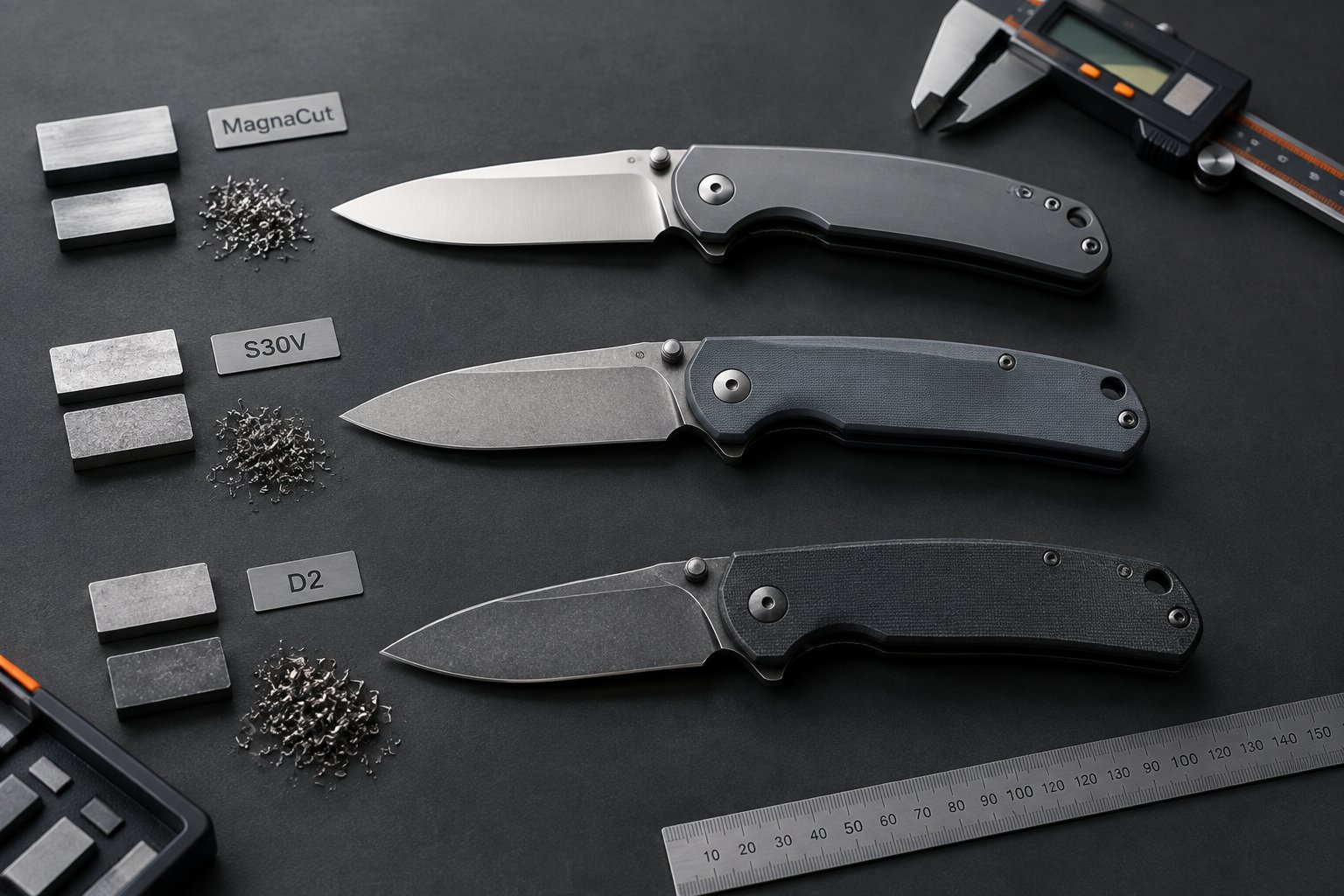
For steel, M390 and CTS-204P are common on premium OTFs and hold an edge a long time. Elmax and 20CV land in the same performance range. Budget models often use D2 or 8Cr13MoV, which sharpen easily but need more frequent touch-ups.
Serrations are worth it when cutting rope, webbing, or seatbelts. Otherwise, a plain edge is easier to maintain.
Handle Size, Pocket Clip, and Carry Comfort
Measure your pocket, not your hand. A 3-inch OTF usually opens to around 8.5 inches and closes to 5 inches, which fits in most pockets. Larger models push past 9 inches and start to feel like a tool you plan for.
Clip position on most OTFs is tip-down or tip-up depending on the model, and many are reversible for left-hand carry. Check that the slide sits where your thumb naturally lands when you draw.
Aluminum handles with a hard anodized finish are the standard for a reason: they’re light, grippy enough, and resistant to dings. Titanium adds weight and cost.
Microtech and Benchmade as Practical Starting Points
Microtech built its reputation on OTF autos, and the Ultratech is the model most people start with. It runs a roughly 3.4-inch blade, a double-action slide, and premium steel options depending on the run.
If you want something smaller, the Troodon shortens the platform for easier pocket carry, and the UTX-70 goes even smaller for anyone who finds full-size OTFs too much knife. Benchmade’s Infidel and Mini Infidel are the other proven double-action platforms worth handling side by side with the Microtech lineup: full-size Infidels run around 3.95 inches in D2 or CPM S30V, while the Mini Infidel drops to a more pocketable size in the same steels.
Sharp Things OKC keeps a rotating selection of Microtech and Benchmade OTFs in the case at the N May Ave store. Firing a few sizes back-to-back tells you more than any spec comparison, and the staff carries these daily, so ask which actually holds up.
Once you know the model you want, there is one more thing to sort out before you order.
Know the Rules Before You Order
Automatic knife laws are set state by state and vary widely. Some states allow open ownership and carry, others restrict blade length, and a handful still limit automatics outright.
Federally, the relevant framework (the Switchblade Act and its Customs regulations) has remained largely unchanged for years. What actually changes year to year is state and local law, so that’s where your attention belongs.
Why Automatic Knife Laws Vary by State
Most automatic knife statutes were written decades ago and target the word “switchblade” rather than any specific mechanism. That means an out-the-front automatic and a side-opening auto usually fall under the same rule.
Blade length limits are the most common restriction. A 3-inch OTF may be fine where a 4-inch one is not. Some states separate possession from concealed carry, so owning a knife and carrying it in your pocket can be treated differently.
Checking Local Carry and Possession Restrictions
Read your state statute, then check your city ordinance, because cities sometimes go stricter. Pay attention to school zones, courthouses, and airports regardless of where you live.
If you travel with your carry knife, check the states you drive through, not just your destination. And if a rule is unclear, ask before you clip it on.
Sorting the legal side first means the only remaining question is which one you want in your pocket.
Frequently Asked Questions
Are Out-the-Front Knives Legal to Own and Carry in My State?
That depends entirely on your state and city. Many states allow automatic knives with no restriction, some cap blade length, and a few limit them outright. Check both your state statute and local ordinance before you order.
How Does a Double-Action OTF Knife Work?
One thumb slide handles both directions. Push it forward, and spring tension drives the blade out the front until it locks; pull it back, and the same mechanism retracts it into the handle.
What Is the Difference Between an OTF Automatic and a Switchblade?
Legally, usually nothing. “Switchblade” is the older statutory term that covers most spring-fired knives, including out-the-front models. Mechanically, a switchblade typically refers to a side-opening auto that pivots.
Which Brands Make Reliable OTF Knives for Everyday Carry?
Microtech is the benchmark, with the Ultratech, Troodon, and UTX-70 covering most carry sizes. Benchmade’s Infidel and Mini Infidel are another proven double-action platform. Stick with established makers, because OTF tolerances are unforgiving.
What Blade Steel Should I Look for in an OTF Knife?
M390, CTS-204P, and 20CV give long edge retention with good corrosion resistance. D2 and 154CM are solid mid-range options that sharpen more easily. Pick based on how often you want to touch up the edge.
How Do I Maintain and Clean an OTF Knife Mechanism?
Blow compressed air through the front opening to clear pocket lint and grit, then fire the blade several times to work debris loose. Wipe the blade with light oil and skip thick grease, which attracts dust.
Make Your Carry Decision With Confidence
An OTF automatic is worth carrying if one-handed opening and closing solves a real problem in your day. If your knife lives in your hand while both arms are free, a good folder will serve you better and cost less.
The power to move a blade from pocket to work in one motion is the whole pitch. Match the size to your pocket, the steel to how often you want to sharpen, and the mechanism to how often you cycle the knife.
Not sure which blade fits your carry? Come into the OKC store and hold a few before you decide.