Stun Gun for Sale: Choosing Contact or Distance Protection for Daily Safety

You are standing in the personal protection aisle, phone in hand, trying to decide between two devices that look similar and cost very differently. One requires you to be close enough to touch someone. The other fires probes across a room. Both get called stun guns in casual conversation, and that confusion costs people money and confidence.
The honest answer is that neither device wins on paper. The right pick depends on how you carry, where you walk, what your hands do under stress, and what your state allows. A stun gun for sale at $40 and a TASER device at $400 solve different problems, and the cheaper one is not automatically the weaker choice for your life.
In this guide, you’ll discover how contact and projectile devices actually function, which formats fit purse carry versus nightstand duty, what specs matter beyond voltage numbers, and how to sort through carry rules. Skip the marketing math on the box and focus on whether you can reach the button in the dark.
Contact Stun Guns vs. TASER Devices
The core split is distance. A stun gun works only when the metal contacts touch the target, roughly arm’s length. A TASER device launches probes on wires and can work from up to 15 feet away.
That single difference cascades into everything else: price, training needs, reusability, and what happens after you press the button.
How Contact-Based Electric Shock Devices Work
Contact stun guns push a high-voltage, low-amperage current between two or more electrodes on the front of the unit. When those electrodes bridge across a person, the current causes intense localized pain and muscle disruption.
What it does not reliably do is drop someone. Contact devices are pain-compliance tools. They work best when you hold contact for two or three seconds against a large muscle group, not a quick tap.
There is also a psychological layer worth respecting. Test-firing a stun gun into open air produces a loud arc and a bright crackle. Plenty of confrontations end right there, before contact happens at all.
How Projectile-Based TASER Devices Differ
A TASER device fires two barbed probes from a replaceable cartridge, connected to the unit by thin conductive wires. When both probes land with enough spread, the current travels between them and overrides motor control.
That is neuromuscular incapacitation, a different outcome than pain. The subject loses voluntary muscle function for the duration of the cycle, commonly 30 seconds on civilian models like the Pulse 2 and Bolt 2.
Law enforcement has used this platform for decades, which is why the civilian versions inherit real engineering. Most also function as a contact device if the probes miss, giving you a backup layer in the same tool.
Range, Escape Time, and Real-World Tradeoffs
Here is what each format buys you and what it costs:
- Contact stun gun: arm’s length only, unlimited uses, typically $20 to $150, no cartridges to replace
- TASER device: up to 15 feet of standoff, one or two shots per cartridge, $150 to $450+ for civilian models
- Contact device recovery: the person recovers the instant you break contact
- TASER cycle: runs a full 30 seconds, letting you drop the unit and leave
That escape window is the real product you are buying with a projectile device. With a contact device, you stay in the danger zone the whole time.
Which one belongs on your keychain depends less on the specs and more on where you actually carry.
Matching a Device to Your Carry and Home Needs
Personal protection only works if the device is on you, charged, and reachable. A powerful unit in a glovebox protects the glovebox.
Think in terms of three environments: on your body, in your bag, and at home. Each one rewards a different size and shape.
Compact Options for Everyday Personal Safety
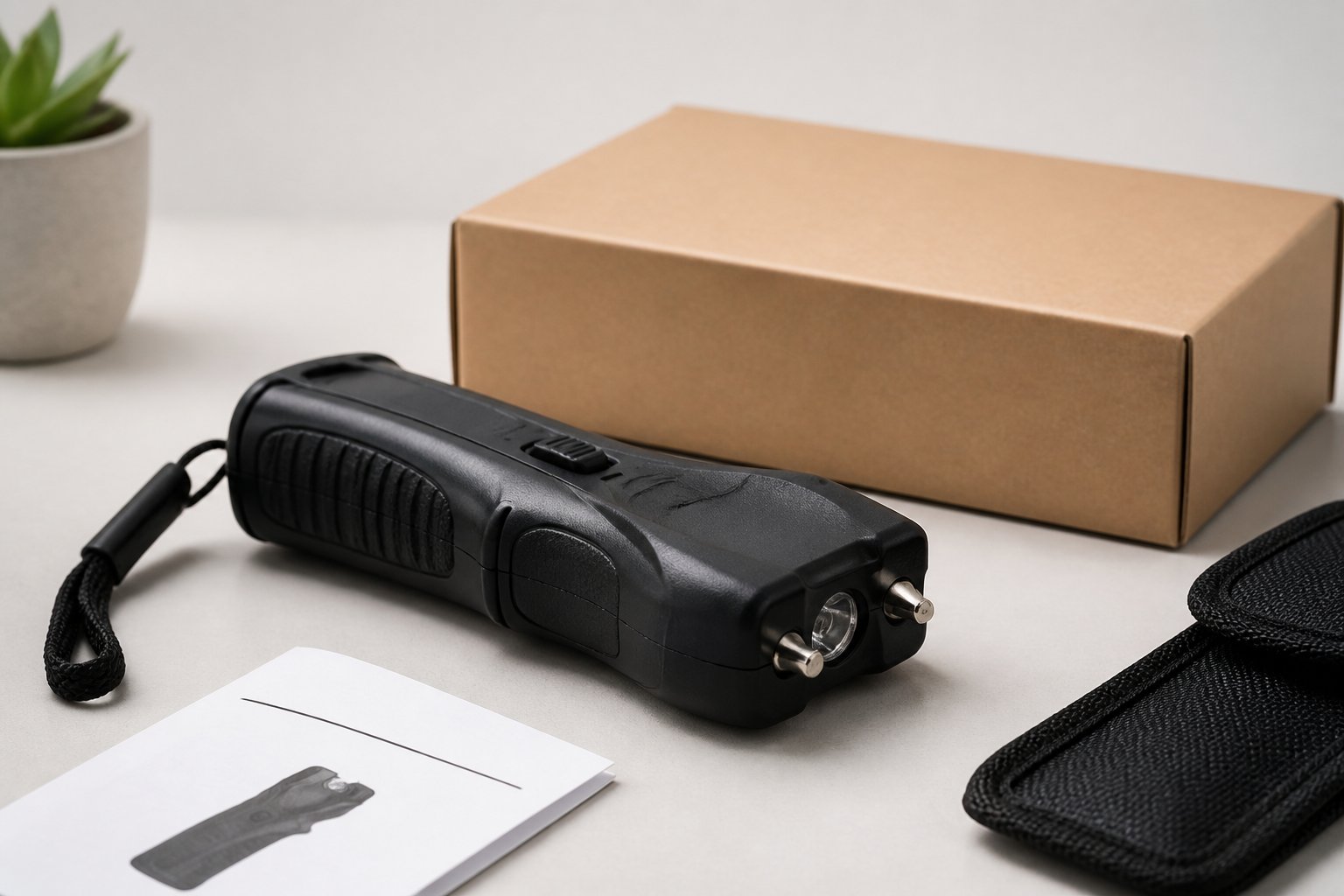
A mini stun gun is usually palm-sized, three to four inches, with a wrist strap and a belt or purse clip. Models in this class often include a disable pin that kills the circuit if the unit is yanked away.
For pocket or purse carry, weight and edges matter more than raw output. If it snags coming out of a bag, you have added a delay you cannot afford.
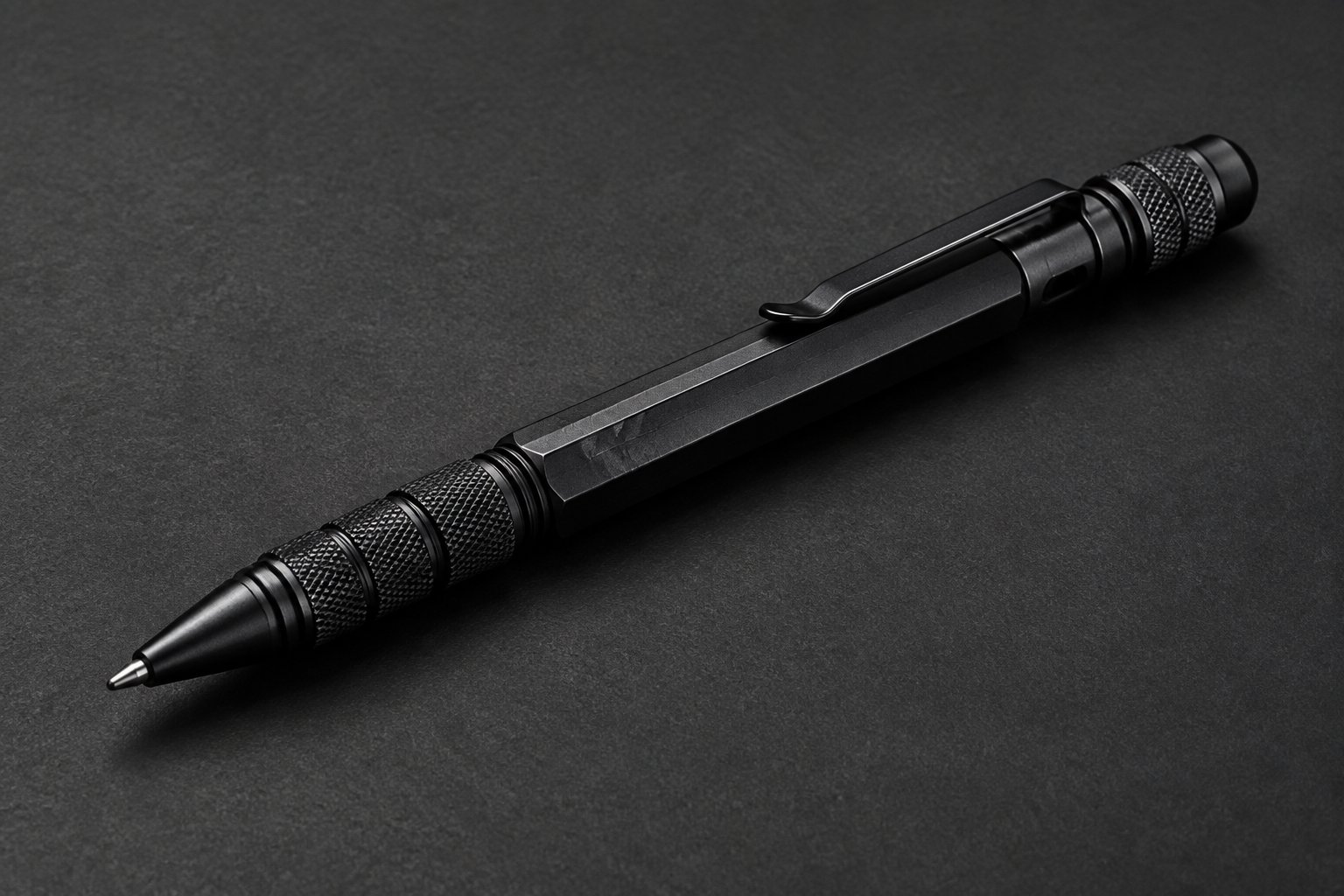
Pen-style units and lipstick-shaped designs exist for discretion, and they carry beautifully. Just be honest about grip. Under adrenaline, a slim body is harder to hold and press than a chunky one with a textured wrap.
Stun Flashlights for Light and Readiness
A stun flashlight combines a genuine LED light with contact electrodes at the bezel. It is the most socially invisible option available, because nobody questions a flashlight in a parking garage.
The practical advantage is that you use the light regularly, which keeps you familiar with the switch layout and the battery status. That habit alone puts it ahead of a device that sits untouched for a year.
Look for a separate activation for the stun function, usually a slide safety plus a dedicated button. You don’t want a fumbled thumb turning on the light when you need current, or the reverse.
Home Defense and Home Security Considerations
Home use changes the math. You are not concealing anything, so size limits disappear, and you can pick a device with real reach and a substantial grip.
A larger baton-style unit gives you standoff without a cartridge, and it doubles as a striking tool. Many people pair it with pepper spray, which works at a distance and does not require you to close in.
Keep home devices in a consistent, reachable spot and check the charge monthly. Home security is a system, and the device is only one piece.
Once you know the format, the spec sheet is where most buyers get misled.
Features That Matter More Than a Voltage Claim
Ignore the voltage number on the packaging. Claims of 25 million or 300 million volts are marketing figures with no standardized testing to back them up.
What actually determines whether a stun gun does its job is amperage delivery, electrode spacing, contact quality, and whether the charge can penetrate a winter coat. Build quality beats a big number every time.
Size, Grip, and Activation Safety
Hold the unit and mimic a draw. Your thumb should find the safety and the trigger without looking, and the electrodes should point away from your own forearm naturally.
Rubberized or knurled bodies hold up when your hands are damp or shaking. Slick plastic does not.
Two safety features earn their keep: a physical slide safety so the device cannot fire in a bag, and a disable pin on the wrist strap. That pin turns a snatched device into a paperweight.
Battery Type, Charging, and Readiness Checks
Rechargeable lithium units with USB-C are now standard on mid-tier models and are worth the small premium over 9V-battery designs. Built-in charge indicators tell you where you stand without guessing.
Set a recurring reminder and test-arc the device for one second every month. Any noticeable drop in the arc’s snap means it is time to charge.
Heat matters too. Leaving a rechargeable device in a hot car through an Oklahoma July will shorten its usable life faster than any amount of use.
Why Training and Accessible Carry Matter
The best electric shock device is the one you have practiced drawing at least a dozen times. Muscle memory is not optional for personal protection.
Practice pulling it from the exact pocket or bag pouch you use daily, safety off, in under two seconds. If you cannot, change where you carry it.
Cost is usually the next filter buyers apply, and the tiers are clearer than you might expect.
Comparing Price Tiers and Device Formats
Contact devices generally run $20 to $150, specialty formats sit in the middle, and TASER stun guns start around $150 and climb past $1,000 for professional models. The price jump maps almost entirely to range and reusability.
Entry-Level Contact Devices
Under $50, you get a mini stun gun or a basic flashlight combo with a rechargeable battery and a disable pin. These are legitimately useful tools, not toys.
What you give up is refinement: cheaper switches, thinner housings, and less consistent charge retention. If it lives in a purse and gets bumped daily, spend a little more on build.
Combination Lights, Batons, and Specialty Designs
The $50 to $120 range is where stun batons, stun knuckles, and higher-output stun flashlight models live. Batons add 12 to 18 inches of standoff and often include a bright light head.
Stun knuckles secure across your hand, which helps if you worry about being disarmed. They are polarizing in terms of local legality, so verify the format before buying.
Distance Devices, Cartridges, and Ongoing Costs
A TASER device is a system purchase, not a one-time buy. Cartridges are consumable, typically $25 to $60 per pair, and practice cartridges cost the same as duty ones.
Budget for one training cartridge on day one. Firing it once at a target teaches you more about probe spread than any video will.
Price aside, the rules where you live may narrow your options before your wallet does.
Check Local Rules Before You Buy or Carry
Stun gun laws are set at the state level and refined by city and county ordinances. Most states permit civilian ownership, but the details vary enough that you should confirm before ordering.
Nothing here is legal advice. Verify current rules for your address and anywhere you travel.
Why Stun Gun Laws Can Change by Location
State statutes commonly address age minimums, felony restrictions, and where devices may not be carried, such as schools, courthouses, and airports. A device that is fine to own may still be restricted in specific buildings.
This is an area where the rules genuinely shift year to year, not just theoretically. Hawaii repealed its total ban on civilian ownership in 2022, and it’s now legal for adults 21 and older after a background check.
A federal court ruled Rhode Island’s blanket ban unconstitutional in 2023, and the state has since worked through legislation to formally update its statute. Illinois, Wisconsin, and Connecticut take a different approach: ownership and carry are legal but tied to a permit, license, or age requirement (a FOID card in Illinois, for example, or a concealed-carry permit in Wisconsin).
California allows TASER-style devices and stun guns but restricts sale to certain buyer categories. Municipal codes can layer on top of any of this, so a device that’s fine at the state level can still be restricted in a specific city.
Permits, Travel, and Concealed Carry Questions
A few jurisdictions have historically tied electroshock devices to a concealed carry permit or a similar license. Others require only proof of age at purchase.
Travel is where people get caught, and the rule is more specific than most people assume. TSA prohibits stun guns and TASER devices in carry-on bags entirely, but they are allowed in checked baggage as long as they’re packed so they cannot accidentally discharge, typically with the battery removed or a safety engaged.
Declare them and follow your airline’s specific packing requirements, since airline policy can add conditions on top of TSA’s.
State Restrictions and Product-Specific Limits
Beyond Hawaii, Rhode Island, Illinois, Wisconsin, and Connecticut, states including Delaware, New Mexico, and West Virginia have their own local wrinkles worth checking before you order. Some restrictions apply to specific formats, like disguised or knuckle-style units, rather than the whole category.
Retailers also apply shipping limits based on destination. If checkout blocks your ZIP, that is usually why.
Once the legal picture is clear, the last question is what you will actually carry every day.
Choose the Protection You Will Carry Responsibly
The device is a tool inside a plan, not the plan itself. Self-defense outcomes improve most when awareness, distance, and exit routes come first.
Build an Escape-First Personal Safety Plan
Decide in advance what “done” looks like. For most people, it is creating enough space to leave and call for help, not winning a confrontation.
Walk your regular routes and note lighting, exits, and where you would move if something felt wrong. That habit costs nothing and pays constantly.
See Eligible Personal-Defense Options in Oklahoma City
Handling a device before you buy answers questions a photo cannot. Grip, button placement, weight in your palm, whether the clip fits your bag.
Sharp Things OKC on N May Ave carries personal-safety items, including TASER civilian models and stun gun and stun flashlight options, alongside its knife and flashlight selection, and the staff will talk you through the trade-offs without upselling you.
Order With Confidence When In-Person Shopping Is Not Practical
If you are outside the Oklahoma City area, shop online and read the specs carefully. Focus on battery type, safety features, and whether the format ships to your state.
Frequently Asked Questions
What Is the Difference Between a Stun Gun and a TASER Device?
A stun gun requires direct contact and delivers pain through electrodes on the unit. A TASER device fires probes up to 15 feet and causes neuromuscular incapacitation for a full cycle, giving you time to leave.
Are Stun Guns Legal to Carry in My State or City?
They are legal in most states, but rules vary by state and by municipality, including age limits and restricted locations. Some states that once banned them outright, like Hawaii and Rhode Island, have recently repealed those bans or lost them in court. Check your current state statute and city ordinance before you buy or carry.
What Should I Look for When Choosing a Stun Gun for Personal Protection?
Prioritize grip texture, a physical safety, a disable pin, and a rechargeable battery with a charge indicator. Ignore the voltage claim on the box; build quality and electrode spacing matter far more.
Which Stun Guns Are Best for Women and Everyday Carry?
Compact mini stun guns and stun flashlights carry well in a purse or jacket pocket and include wrist straps with disable pins. Choose the one you can draw and activate in under two seconds without looking.
How Much Does a Reliable Stun Gun Typically Cost?
Solid contact devices typically cost about $20 to $150, depending on format and build. Civilian TASER models start around $150 and climb, with replacement cartridges adding about $25 to $60 per pair.
Can I Buy a Stun Gun Online and Have It Shipped to My Address?
In most states, yes, though retailers block shipping to restricted jurisdictions at checkout. Confirm your state and city allow the specific format before ordering, since some rules target disguised or knuckle-style designs.
A Straight Answer on Contact vs. Distance
If you want simplicity, low cost, and something you will actually carry daily, a contact device is the honest pick. If standoff distance and a full incapacitation cycle are worth the price and cartridge costs, a projectile device earns it.
Either way, buy the one you will keep charged, keep reachable, and practice drawing. That variable changes outcomes.
Come hold it before you buy it at Sharp Things OKC on N May Ave.