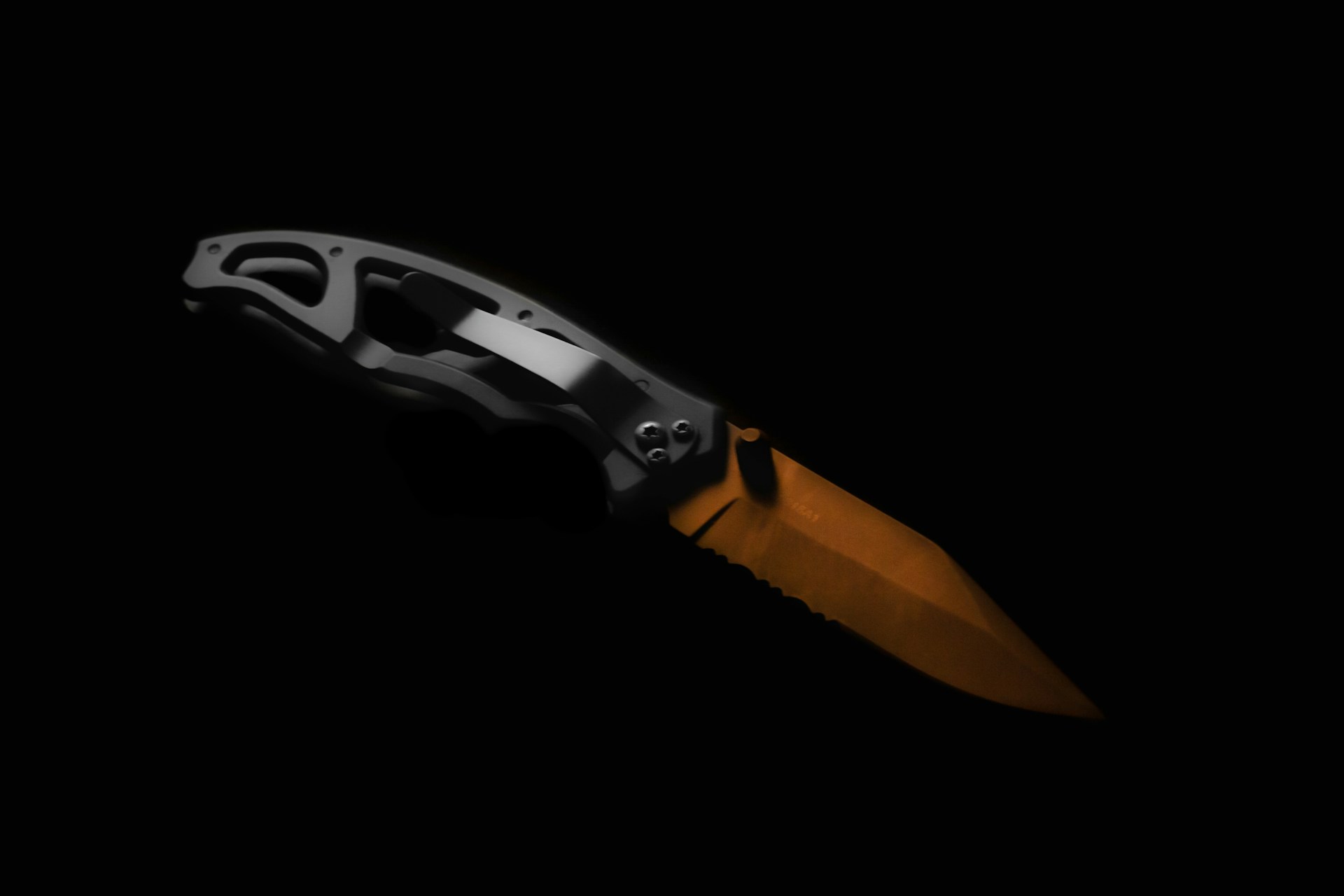
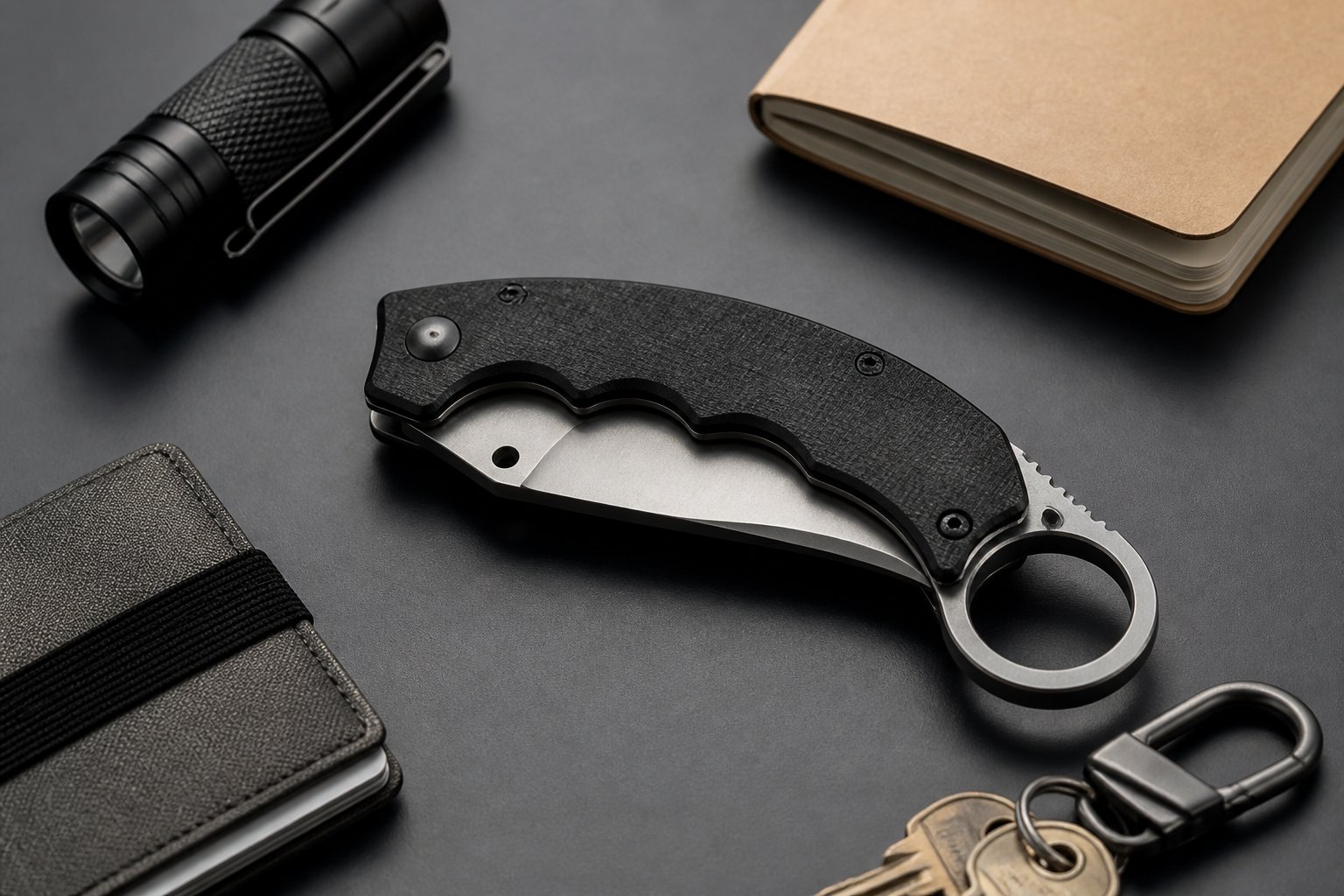
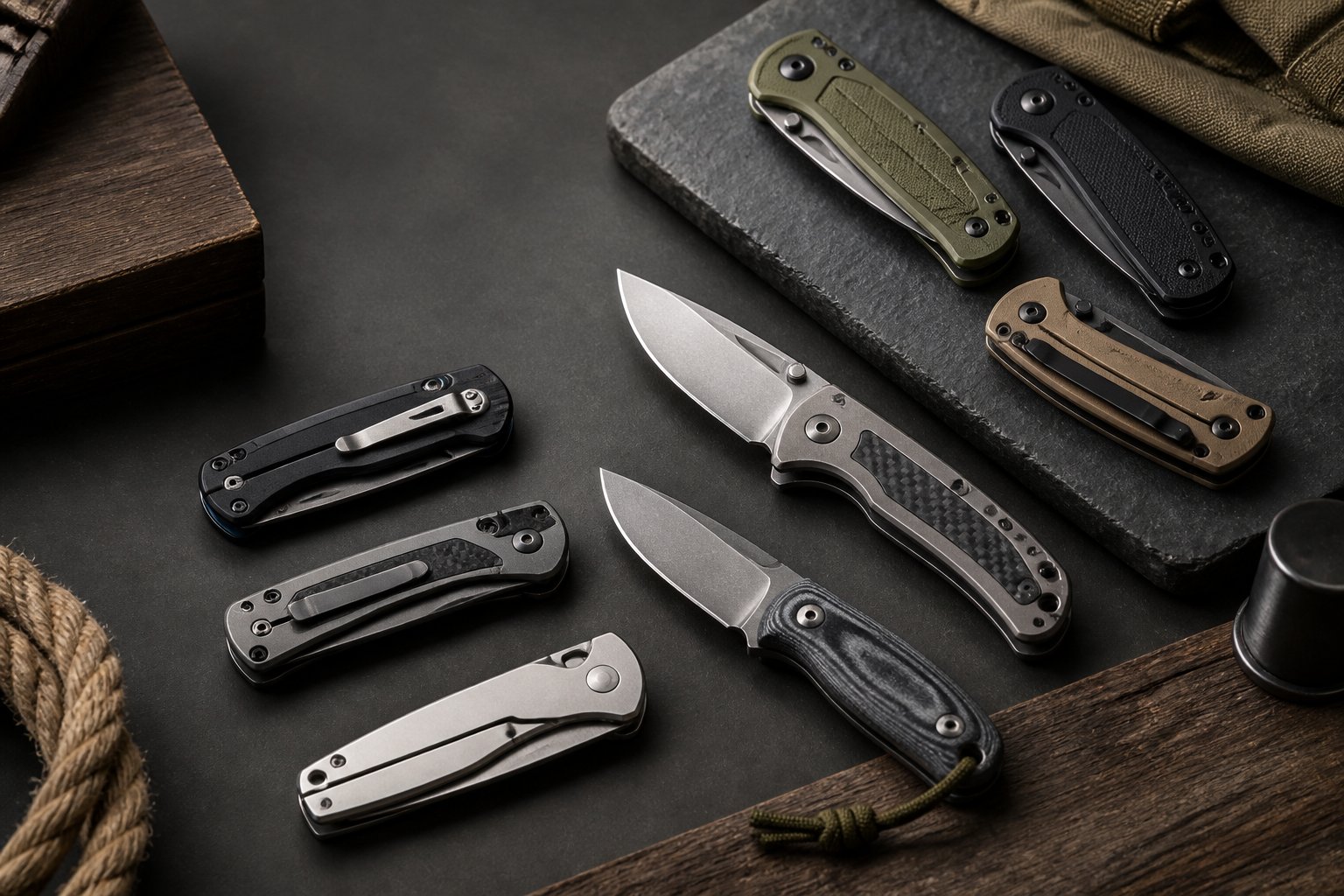
Karambit Knife History and Design: From Rice Fields to Modern EDC Carry

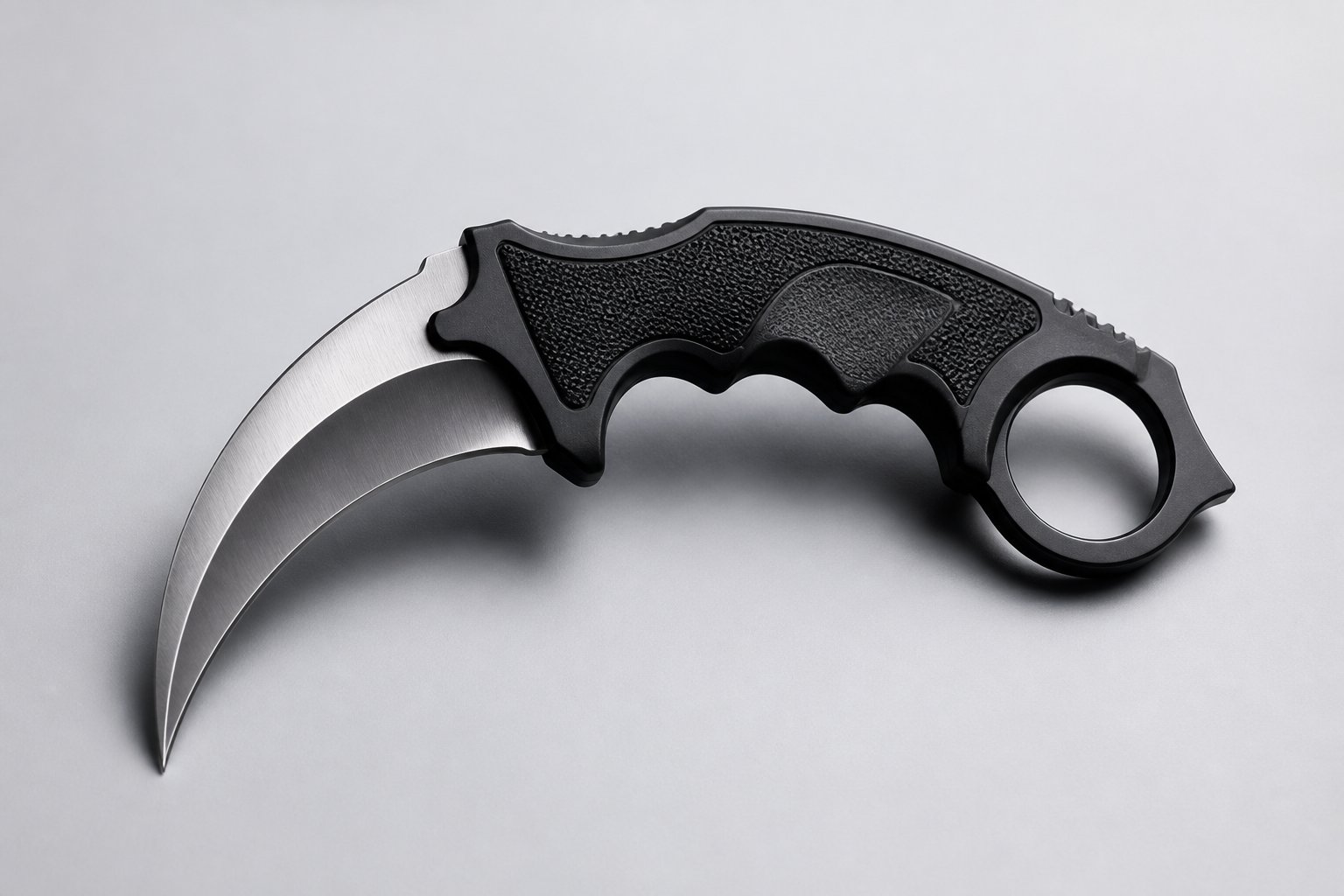
Maybe a friend flicked one open at a range day, or a curved blade with a ring on the end caught your eye in a display case. Either way, you want to know what you are actually looking at before you spend money on one. A karambit is a specialized tool with a specific history and a specific set of trade-offs, built for a very different job than a general-purpose folder.
The design starts in Southeast Asian farm fields, not in a movie fight scene. Once you understand that the curved blade was built to pull through plant material and the finger ring was built to keep the tool from slipping out of a wet hand, every modern karambit feature starts making sense. That context matters whether you are shopping for personal defense, adding a specialty piece to a collection, or just curious.
Keep reading to learn where karambit knives came from, how the recurved edge and retention ring actually perform, how fixed blades compare to folding karambits for daily carry, and how to tell if one belongs in your pocket. Fair warning: this blade rewards people who handle it before they commit.
From Agricultural Tool to Regional Icon
The karambit began as a working blade in the Indonesian archipelago, most closely associated with West Sumatra. It was a farm implement first and a weapon second, and that order matters.
West Sumatra, the Minangkabau People, and the Tiger-Claw Motif
Historians commonly trace the karambit to the Minangkabau people of West Sumatra. The name connects to a broader family of small curved hooks used across the region for cutting and raking.
The claw comparison is not a marketing invention. The blade profile echoes a tiger’s claw, sometimes referenced as kuku macan, and that imagery shaped both the shape and later the movement patterns built around it.
Rice Harvesting, Root Raking, and Early Utility Work
Curved hooks efficiently grab plant material and pull it to the edge. Early karambits handled rice harvesting, root raking, cutting cordage, and general household utility work.
Traditional examples were small. Short blades, simple forged steel, wooden handles, no coatings or aggressive styling. A farmer needed a tool that stayed in hand and did not require a sheath the size of a machete.
Household use ran wider than fieldwork. Food prep, basketry, and light woodcraft all fell to the same small curved blade.
How Trade Carried the Karambit Across Southeast Asia
Regional trade routes spread the pattern well past Sumatra. Variants appeared in Java, Sulawesi, Malaysia, the Philippines, Thailand, Cambodia, Laos, and Myanmar.
Bugis warriors and other seafaring groups carried blades along maritime routes, and local smiths adapted the shape to their own materials and preferences. What started as one agricultural implement became a family of related curved knives across Southeast Asian culture.
Once a working tool travels that far, people start building fighting systems around it.
Martial Traditions and the Karambit’s Changing Role
The karambit entered martial arts because it was already in everyone’s hand. A tool you carry daily becomes the tool you use under pressure.
Pencak Silat and Indonesian Blade Traditions
Pencak silat systems folded the kerambit into their blade curriculum alongside weapons like the kris. Training emphasized close-quarters work, hooking motions, and grip retention rather than thrusting.
The ring changed how they taught the knife. It allowed rotation and grip transitions that a straight-handled knife cannot support without regripping.
Related Practices in Kali, Eskrima, and Filipino Martial Arts
Filipino martial arts, including kali and eskrima, developed parallel curved-blade work. Trade contact and shared geography meant techniques and blade shapes crossed borders repeatedly.
Asking whether the karambit is Indonesian or Filipino misses the point. The strongest documented origin sits in Indonesia, and neighboring traditions adopted and adapted it over centuries.
Heritage, Training, and the Limits of Pop-Culture Depictions
Video games and action films made the silhouette famous and the reality blurry. A karambit is not a magic equalizer, and buying one does not confer skill.
Some military and law enforcement personnel carry curved fixed blades, usually as backup tools with dedicated training behind them. Without instruction, a karambit is a specialty utility knife with an unusual draw.
That leaves the practical question: what does the geometry actually do in your hand?
How the Curved Blade and Retention Ring Work
The curve concentrates cutting force on a pull stroke, and the ring anchors the knife to your hand. Those two features define everything about how a karambit performs.
Hawkbill Geometry and Pull-Cut Performance
A karambit uses hawkbill-style geometry. The tip drops below the handle line, and the edge sits inside the curve.
That shape traps material instead of letting it slide off. Cutting zip ties, opening bagged goods, trimming line, or cleaning up cardboard on a jobsite all work well. Push cuts on a flat board do not, which is why a karambit will never replace a drop point for slicing an apple.
Retention, Control, and the Purpose of the Safety Ring
The finger ring is a retention device. Your index finger goes through it, and the knife stays put even if your grip loosens or your hands are slick.
For draw speed, the ring is a genuine advantage once trained. Hook the ring, pull, and the knife orients itself. Untrained, it is slower than a thumb stud folder because your finger has to find a small hole under stress.
Forward Grip and Reverse Grip for Utility Handling
Reverse grip, edge inward, is the traditional carry. Forward grip, blade pointing away, feels more natural for utility tasks like breaking down boxes.
Practice both. Most people find reverse grip better for controlled pulls and forward grip better for detail work at arm’s length.
Steel, Handle, and Sheath Materials in Modern Builds
Modern karambits use the same materials as any quality folder or fixed blade:
- Stainless steels: D2, 154CM, S35VN, and CPM MagnaCut for corrosion resistance and solid edge holding
- Carbon steels: 1095 and similar, easier to sharpen but demanding on maintenance
- Handles: G-10, Micarta, carbon fiber, and aluminum, with G-10 offering the best grip-to-price ratio
- Sheaths: molded Kydex with adjustable retention and multiple carry positions
Material choices matter more once you decide between a fixed blade and a folder.
Fixed Blades, Folders, and Modern Karambit Designs
Fixed karambits win on speed and strength. Folding karambits win on pocket-friendliness and social acceptability. That is the whole trade.
Why a Fixed Blade Karambit Favors Immediate Access
A fixed blade karambit has no moving parts to fail and no deployment step beyond the draw. With a properly tuned Kydex sheath, the ring-and-pull draw is genuinely fast.
The cost is bulk. A sheathed fixed blade needs belt space or inside-waistband real estate, and it is harder to carry discreetly under a tucked shirt. Sharp Things OKC’s fixed blade knives selection includes several fixed karambit builds worth comparing side by side.
What a Folding Karambit Changes for Pocket Carry
A folding karambit rides in a pocket like any other folder. Our folding knives selection carries folding karambits alongside standard EDC folders. The ring often doubles as a deployment aid, and many designs use the ring to catch the pocket edge on the draw.
You accept a two-step process: draw, then open. You also accept a pivot and lock as potential failure points under hard lateral load.
Opening Methods, Locks, and Everyday Carry Considerations
Common systems include thumb studs, flippers, assisted opening, and Emerson wave-style hooks that open the blade against the pocket seam on the draw. Liner locks and frame locks dominate, though some builds use compression-style locks for stronger lockup.
CRKT and Fox Knives have both produced well-regarded folding karambits, and they are a reasonable starting point for a first purchase. If you can, handle one before buying; ring diameter varies enough to matter.
From Traditional Profiles to Contemporary Collector Pieces
Traditional profiles stay small, simple, and functional. Contemporary tactical karambits push blade length, add coatings, aggressive grinds, and oversized rings, and lean into modern knife culture aesthetics.
Collector pieces go further with anodized titanium, custom scales, and limited runs. Nothing wrong with buying for looks, as long as you know which side of the line you are on.
So does a karambit actually earn a spot in your rotation?
Is This Specialized Knife Right for Your Carry?
For some carriers, yes. For most first-time buyers, probably not as a primary knife.
Who May Appreciate a Karambit for EDC or Collecting
Experienced EDC carriers who already own a general-purpose folder and want a dedicated pull-cutter get real value here. So do people trained with curved blades for personal defense who understand the draw.
Collectors have an easy case. The design category is deep, historically grounded, and visually distinct.
When a Conventional Folder Is the Better First Choice
If this is your first knife, buy a drop point or clip point folder. You will use it for food, packages, tape, and a hundred small jobs a karambit handles awkwardly.
Carry the karambit as a second knife once you’ve covered the basics.
Blade Length, Edge Grind, and Maintenance Expectations
Look for a 2.25 to 3-inch blade for practical carry. Longer blades look impressive but get unwieldy fast in tight spaces.
Sharpening a recurve takes a different approach. Flat stones struggle on the inside curve, so plan on a round rod, a ceramic honing rod, or a small-diameter diamond rod. Many owners hand theirs to the shop rather than fight the geometry.
Carry Laws and Training Considerations to Verify First
Carry rules vary by state and city, and some jurisdictions treat curved blades or finger rings differently than standard folders. Concealment rules, blade length limits, and automatic mechanisms all factor in.
Verify your local laws before you buy. Then get instruction, because the draw is the part nobody practices enough.
Choose a Karambit With Context and Confidence
Karambit knives make sense once you see them as what they are: a Southeast Asian working blade that grew into a serious specialty category. The curved blade excels at pull cuts. The finger ring buys retention and, with practice, a fast draw.
Frequently Asked Questions
What Is the Origin of the Karambit Knife?
The karambit originated in the Indonesian archipelago, most strongly associated with the Minangkabau people of West Sumatra. It began as a small curved agricultural tool used for harvesting and general utility work, then spread across Southeast Asia through trade.
Why Does a Karambit Have a Curved Blade and Finger Ring?
The curved blade traps material and pulls it into the edge, which is efficient for slicing vines, rope, and packaging. The finger ring is a retention feature that keeps the knife in your hand when your grip is wet or loose.
Was the Karambit Originally a Farming Tool or a Fighting Knife?
Farming tool first. It handled rice harvesting, root raking, and household chores long before martial systems adopted it, and fighting applications developed because people already carried the tool daily.
Is the Karambit a Filipino Weapon or an Indonesian Weapon?
The strongest documented origin is Indonesian, specifically Sumatra. Filipino martial arts such as kali and eskrima developed related curved-blade techniques through centuries of regional trade and cultural exchange, so both traditions have a legitimate claim to their own versions.
What Is the Purpose of a Karambit Knife?
Practically, it is a specialized pull-cutting tool that excels at cordage, packaging, and controlled draw cuts. It also serves as a martial arts training blade, a personal defense option for trained carriers, and a collectible design category.
Why Are Karambit Knives Restricted or Banned in Some Places?
Some jurisdictions classify blades with finger rings or aggressive curves differently from standard folders, and others limit blade length or concealed carry. Rules vary by state and city, so check your local regulations before purchasing.
Handling a Specialized Blade Before You Commit
Ring diameter, blade curve, and handle thickness feel different in every model, and specs on a page will not tell you which one fits your hand. Put your finger through a few rings, and you will know within seconds which ones work for you.
Sharp Things OKC keeps a deep selection of karambits and other everyday carry knives at 6610 N May Ave, and the staff can walk you through steels, locks, and carry positions without rushing you. Come hold it before you buy it.