Tactical Pen vs Kubotan for EDC Self Defense

Picking between a tactical pen and a kubotan for everyday carry comes down to one honest question: how much training are you willing to put in?
Both tools are small, discreet, and legal to own in most places. But they solve slightly different problems. A tactical pen writes first and strikes second, while a kubotan is built only to strike or apply leverage, which means it rewards practice in a way a pen never has to.
If you carry keys every day, you’ve probably already held a kubotan without knowing its name. If you carry a pen at work, you might already own a tactical model without realizing what it’s rated to do.
This guide breaks down the real differences in design, daily carry, training, and legal risk between a tactical pen and a kubotan for EDC self-defense, so you can pick the one that actually fits your routine.
How Tactical Pens and Kubotans Differ
A tactical pen is a writing tool that also works as an impact weapon; a kubotan is an impact tool that looks like a keychain fob. That single distinction shapes everything else about how each one gets carried and used.
Writing Tool vs. Dedicated Palm Stick
A tactical pen writes real ink, unscrews to take out a spare cartridge, and often includes a glass-breaker tip on the cap. Sōke Takayuki Kubota, a Japanese-American martial arts master, developed the kubotan in the late 1960s while training officers at the Los Angeles Police Department, at the request of then-LAPD leadership, as a discreet self-defense keychain with no writing function.
That history matters for how each tool reads to other people. A pen sitting in a shirt pocket draws zero attention. A ridged metal stick on a keyring gets a second look from anyone who has seen one before.
Design, Materials, and Striking Surfaces
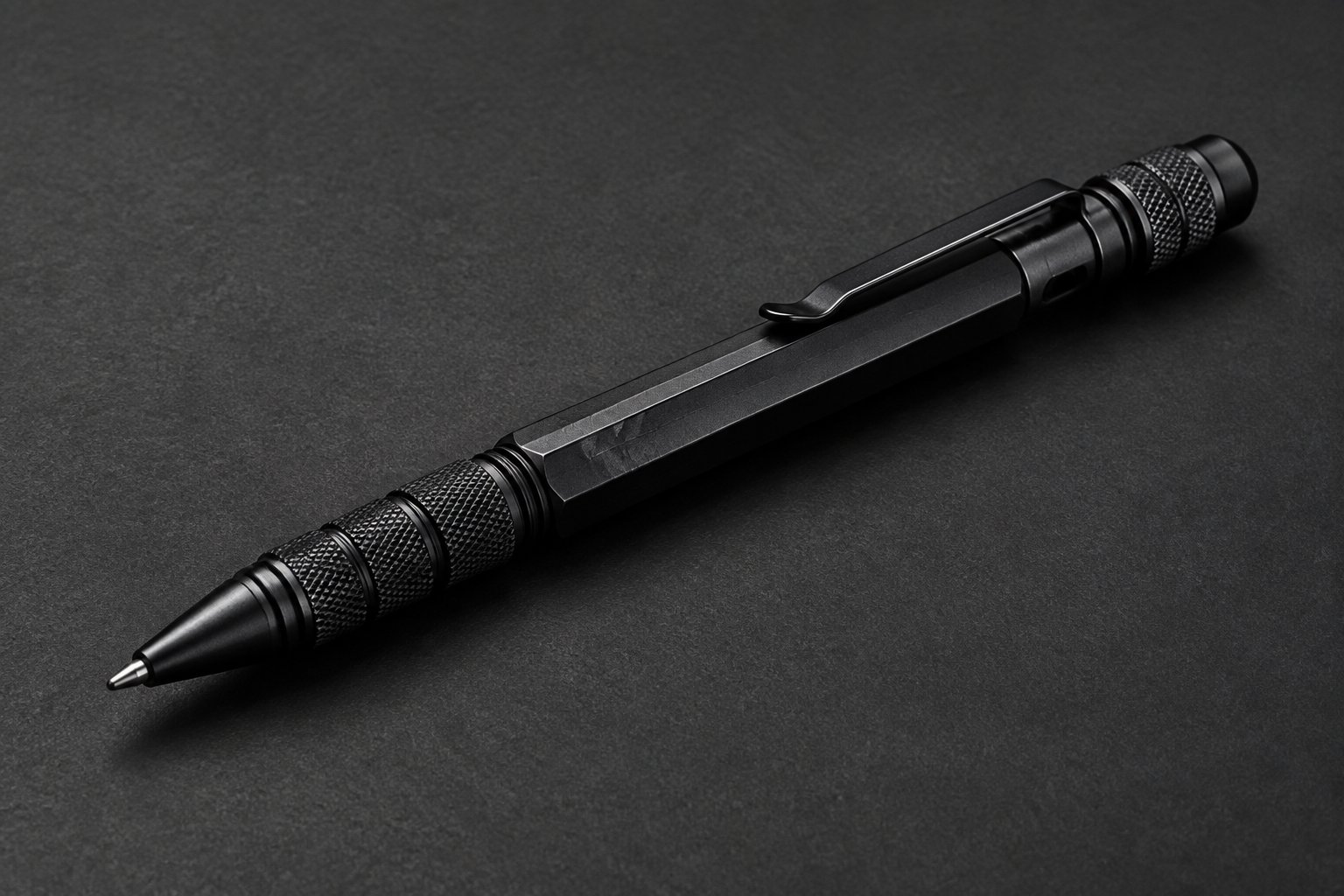
Tactical pens use aerospace-grade aluminum or titanium bodies with a hardened, often tungsten-carbide tip built to break tempered glass in an emergency. That same tip doubles as a striking point against soft targets like the eyes or throat.
Kubotans run simpler: a solid aluminum or hard plastic rod, usually with a grooved or ridged mid-section for grip and a keyring hole on one end. Premium tactical pens add extras like LED lights or DNA-catching grooves on the strike surface, a feature buyers rarely expect on a first purchase.
Collectors also notice something first-time buyers miss: pocket clip tension and knurling pattern change how a pen indexes in the hand under stress, not just how it looks on a desk.
Reach, Grip, and Retention in the Hand
Kubotans typically run 5 to 6 inches long, while tactical pens run closer to 5 to 7 inches. That extra inch or two on some pens adds leverage for a hammer-fist style strike.
Grip retention separates the two more than length does. A kubotan’s ridges lock into the palm for driving strikes into pressure points, while a tactical pen’s clip and knurled barrel favor a pen-grip or hammer-grip stab motion.
Reach alone doesn’t decide the winner here. The real question is what happens once the tool is in your hand and you need to decide, in half a second, whether you’re carrying it for a desk drawer or a coat pocket.
Which Tool Makes More Sense for Daily Carry?
A tactical pen fits daily carry more easily for most people because it passes as an ordinary office item everywhere a kubotan might draw questions. That doesn’t make the kubotan a bad choice, it just means the two tools live in different carry contexts.
Discretion at Work and in Everyday Settings
A pen on a desk, in a bag, or clipped to a shirt pocket never looks out of place in a meeting, an airport lounge, or a classroom. A metal kubotan on a keyring can look like a defensive tool the moment someone examines it closely.
That discretion gap matters most in office jobs, schools, and courthouses where anything resembling a weapon draws scrutiny. A tactical pen from a brand like Benchmade reads as gear, not a threat.
Pocket, Bag, and Keychain Carry Trade-Offs
Carry format changes the math between these two tools:
- Pocket carry: a tactical pen clips in next to a phone or wallet without printing.
- Bag carry: either tool disappears into a bag, though a kubotan’s keyring loop makes it faster to grab.
- Keychain carry: a kubotan rides with your keys and is already in hand the moment you unlock a car door.
- Desk or nightstand carry: a tactical pen doubles as your actual writing pen, so it never feels like “extra” gear.
Non-lethal tools only help if they’re within reach when something happens. The tool that stays in a junk drawer protects nobody.
Choosing a Practical Tactical Pen
Look for a pen with a pressurized ink cartridge (so it won’t leak upside down), a glass-breaker tip, and a pocket clip strong enough to survive daily use. Aluminum bodies keep weight down; titanium adds durability and cost.
Prices for solid tactical pens run from about $15 to $80 depending on materials and machining, with premium titanium models adding features like bolt-action mechanisms or built-in LEDs. Spending more usually buys better machining and a more secure clip, not a sharper tip.
Owning the right tool answers only half the question. The other half is whether you can actually use it under stress, which is where training separates a real option from a false sense of security.
Training and Realistic Self-Defense Use
Both tools need practice, but a kubotan demands far more than a tactical pen. That gap in training requirements is the single biggest factor buyers overlook.
Why Pressure-Point Claims Need Context
Kubotan marketing leans hard on pressure-point strikes and joint manipulation, techniques borrowed from Okinawan and Japanese martial weapon traditions like the yawara stick, which the kubotan itself was loosely modeled after. Those techniques work in the hands of someone with real martial arts training.
Without that training, a kubotan mostly functions as a small, hard object on a keyring. Serious instruction in pressure points and joint control takes months, not a YouTube video watched once before bed.
What Basic Practice Should Focus On
A tactical pen rewards simpler practice: a firm hammer grip, short direct strikes to soft targets, and a plan to drop it and run the moment you create space. Two core grips cover most practical use:
- Positive grip: tip forward for stabbing motions toward soft tissue.
- Negative grip: tip down from the pinky side for hammer-fist strikes.
Ten minutes a month practicing both grips on a pillow or focus mitt builds more real skill than owning a dozen tools ever will.
Creating an Escape Opportunity, Not Winning a Fight
Both tools exist to buy you three or four seconds, not to end a confrontation. A solid strike to an eye, throat, or groin creates a flinch response long enough to run.
Treat either tool as a distraction device, not a fight-winning weapon. That mindset shift, from “defeating an attacker” to “creating an exit,” changes how you train and how you carry.
Once you know how to use either tool responsibly, the next question is whether your state’s laws match your training.
Legal Considerations Before You Carry
Kubotans face more legal restrictions in some states than tactical pens do, largely because of how each tool is classified on paper. That classification gap catches many first-time buyers off guard.
Why a Kubotan May Be Treated Differently Than a Keychain
Some jurisdictions classify a kubotan as a specialty weapon rather than a general keychain accessory, unlike a tactical pen, which usually reads as a writing instrument first. Many owners assume a metal pen and a kubotan sit in the same legal category by default, when in practice the classification differs by state and sometimes by city, in ways that genuinely aren’t consistent enough to summarize in one general rule.
That inconsistency means a tool that’s a harmless keychain fob in one state can be a restricted weapon in another. Assuming “it’s just a keychain” is the most common mistake buyers make.
Tactical Pen Rules and Restricted Locations
Owning a tactical pen is broadly legal, but carrying one into a courthouse, school, or airport secure zone can trigger the same scrutiny as any other weapon-adjacent item. Using one in self-defense also puts the tool under a “justifiable force” standard in court, not a blanket protection.
- Owning a tactical pen at home: legal almost everywhere.
- Carrying one daily in public: legal in most states; some cities restrict “weapon-like” items.
- Bringing one into a courthouse, school, or federal building: often prohibited outright.
- Using one against an attacker: judged under your state’s self-defense and reasonable-force standards.
How to Check State and Local Requirements
State knife and weapon statutes rarely name “tactical pen” or “kubotan” directly, which means enforcement often comes down to how an officer or prosecutor interprets intent. Because that variation is too inconsistent from state to state to summarize responsibly here, check your specific state code and your city’s municipal code before you clip either tool to your pocket.
A quick call to a local police non-emergency line or a review of your state attorney general’s published guidance clears up most gray areas fast. Legal clarity, not guesswork, is what actually makes a carry choice worth sticking with.
Match the Tool to Your Carry Routine
Your daily routine, not a spec sheet, should decide between these two tools. Someone who commutes with a laptop bag has different needs than someone who carries only keys and a phone.
If you already carry a pen for work, upgrading to a tactical model costs you nothing in convenience and adds real capability. Genuine tactical pens use aircraft-grade aluminum or titanium bodies and pressurized cartridges specifically so the pen survives years of pocket carry.
If your keys are already in your hand every time you walk to your car at night, a kubotan adds a striking option with zero extra carry effort. The trade-off is that it only pays off if you’ve put in the practice reps to use it under stress.
Think through these questions before choosing:
- Do you already carry a pen daily, or would adding one feel like extra gear?
- Are you willing to spend a few minutes a month practicing grip and strike technique?
- Does your state or workplace treat either tool as restricted?
- Do you want a tool that also serves a non-defense purpose, like writing or breaking glass?
Most people land on the tactical pen for its dual purpose and low profile. Serious practitioners with martial arts backgrounds often prefer the kubotan’s dedicated design once they’ve logged real training time.
Sharp Things OKC carries both: a kubotan selection built for discreet keychain carry, and a tactical pen lineup that includes genuine Benchmade Shorthand pens. Try both in the Oklahoma City store before deciding what fits your hand and routine, or order online with same-day shipping before the 3pm cutoff.
Frequently Asked Questions
Do Tactical Pens Work for Self-Defense?
Tactical pens work best as a distraction tool, not a fight-ending weapon. A firm strike to a soft target like the eyes or throat can create a few seconds to escape, which is the realistic goal for any EDC impact tool.
Is a Kubotan Legal to Carry?
Kubotan legality varies by state, with some jurisdictions treating it as a restricted weapon rather than a general keychain item. Check your state and city code before carrying one to confirm your local status.
Is It Legal to Carry a Tactical Pen?
Owning and carrying a tactical pen is legal in most of the country, since it functions as a writing tool first. Restricted locations like courthouses, schools, and secure federal buildings can still prohibit it, and using it in self-defense is judged under your state’s reasonable-force standard.
Which Is Easier to Carry Every Day, a Tactical Pen or Kubotan?
A tactical pen is usually easier to carry daily because it doubles as an actual writing instrument and draws no attention in an office or bag. A kubotan carries just as easily on a keyring but can look more like a weapon under close inspection.
Do I Need Training to Use a Kubotan Effectively?
Yes, a kubotan depends heavily on training in pressure-point strikes and joint leverage to work as designed. Without that training, it functions mainly as a small, hard object on your keys rather than a precise defensive tool.
If you have questions about what’s legal to carry where you live, reach out to the shop before you order either tool.