Knife Handle Materials Compared: G10, Micarta, Titanium, and More

The handle decides how a knife grips when your hands are wet, how heavy it feels in your pocket, and how it looks after a year of carry. It also explains a big chunk of the price difference between two knives with the same steel.
This guide has knife handle materials compared side by side: G10, Micarta, carbon fiber, titanium, aluminum, FRN and other molded polymers, and wood, with real examples for each and a quick table up top.
How Do Common Handle Materials Compare?
No single material wins every category. A handle that feels great dry can get slick when wet, and a handle that lasts for decades can add noticeable weight to a pocket knife.
Most handle materials fall into four groups:
- Composites: G10, Micarta, carbon fiber
- Metals: titanium, aluminum, stainless steel
- Molded polymers: FRN, Grivory, and similar glass-filled plastics
- Natural and wood-based: stabilized wood, natural hardwoods, Richlite
Quick Comparison: Grip, Weight, Durability, Aging, and Cost
- G10: Grip: Strong, especially when textured. Weight: Light. Durability: Very rigid, weather-resistant. How it ages: Stays stable. Cost tier: Low to mid.
- Micarta: Grip: Warm, tactile; grippier with wear. Weight: Light to moderate. Durability: Durable. How it ages: Darkens and develops a patina. Cost tier: Mid.
- Carbon fiber: Grip: Smooth unless textured. Weight: Very light. Durability: Strong for its weight. How it ages: Holds its look. Cost tier: Mid to high.
- Titanium: Grip: Depends on finish and texture. Weight: Moderate. Durability: Very durable. How it ages: Shows scratches and wear marks. Cost tier: High.
- Aluminum: Grip: Moderate, cool to the touch. Weight: Light to moderate. Durability: Durable; anodizing can scuff or chip. How it ages: Shows edge wear on the finish. Cost tier: Low to mid.
- FRN and Grivory: Grip: Textured, grippy. Weight: Very light. Durability: Tough. How it ages: Minimal visible wear. Cost tier: Low.
- Stabilized wood: Grip: Warm, secure. Weight: Moderate. Durability: Durable when stabilized. How it ages: Stable; grain stays visible. Cost tier: Mid to high.
Why Texture and Shape Matter as Much as Material
Grip comes from surface texture and handle shape as much as from the material itself. A smooth carbon fiber scale and a deeply textured G10 scale can feel completely different in a sweaty hand, even on similar knives.
Makers add jimping (small grooves on the spine or handle), peel-ply texturing, milled patterns, and finger choils to improve traction. Ergonomics and clip placement often matter more for all-day comfort than the raw material choice.
What Handle Construction Changes
Handle scales are the outer panels attached to a knife’s frame or liners. How they’re built changes weight and strength.
Linerless handles rely on the scale material itself for structure. Spyderco’s Native Chief Lightweight Salt, for example, uses a “linerless, injection-molded, fiberglass-reinforced-nylon (FRN) handle.” Lined handles add a steel or titanium backbone under the scales, which adds strength and weight at the same time.
What Does a Higher Price Actually Buy?
A pricier handle material usually buys lower weight, a more refined finish, or more machining time. It doesn’t automatically buy a tougher knife. Titanium and carbon fiber cost more because of raw material and machining costs, while a well-made G10 or FRN handle can handle years of daily use at a fraction of the price.
How Do Composite and Molded Handles Differ?
Composites like G10, Micarta, and carbon fiber are layered and cured under heat and pressure. FRN and Grivory are injection molded, which keeps cost and weight down.
G10: Rigid, Water-Resistant, and Easy to Texture
G10 is made of “resin-laminated fiberglass sheets cured under heat and pressure,” according to Benchmade’s handle materials guide, which describes it as very rigid and weather-resistant. That’s why it shows up so often on tactical and hard-use knives.
G10’s biggest strength is grip. Makers mill, stipple, or peel-ply texture it for traction in wet or cold conditions. Aggressive texture can feel rough against bare skin over long carry, a tradeoff most users accept for the control. Real examples:
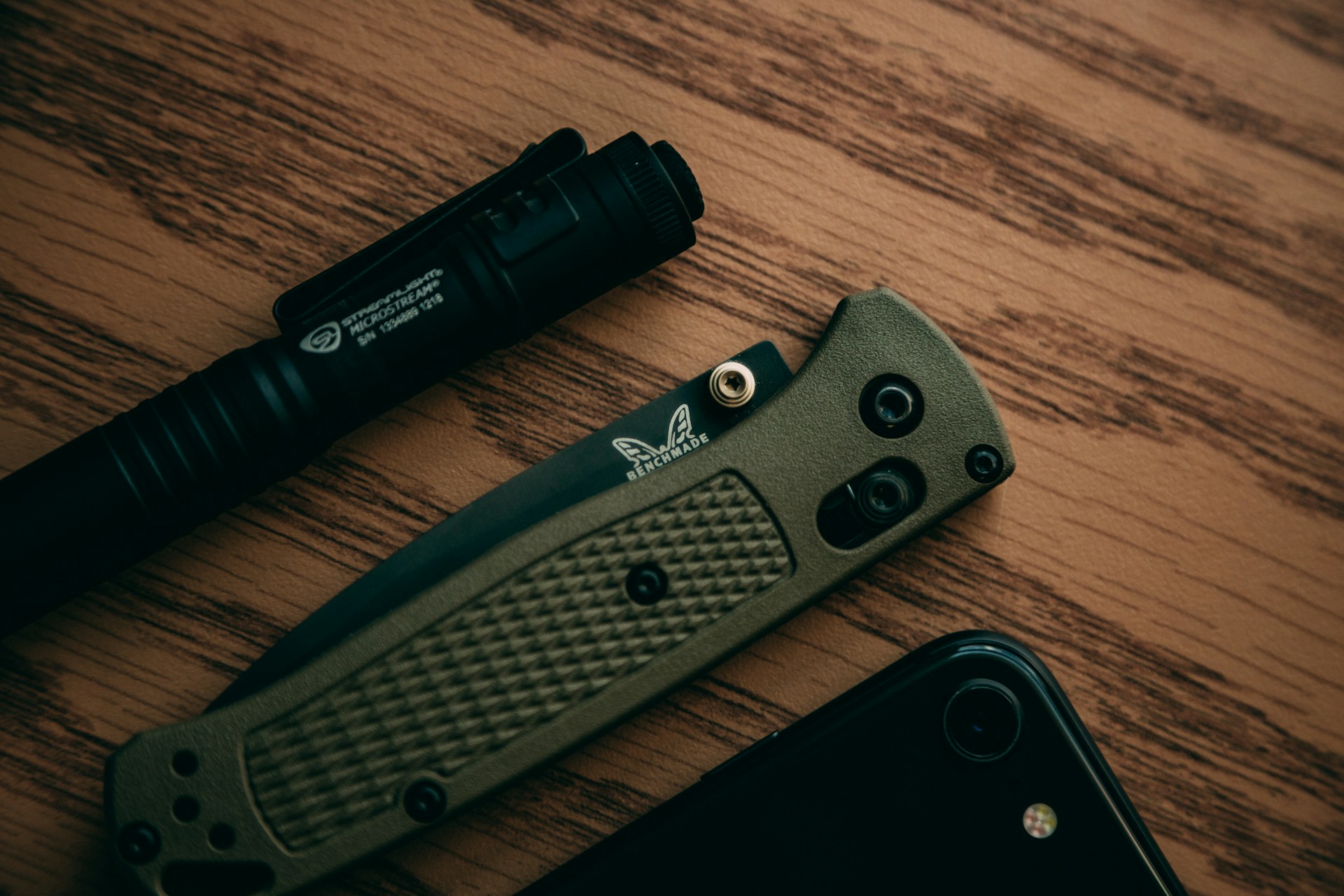
- Benchmade Adamas: G10 handle with an AXIS lock; the 275GY-03 pairs it with a MagnaCut blade.
- Spyderco Para Military 2: textured G-10 scales over nested stainless steel liners.
- Spyderco Lil’ Native: peel-ply-textured G-10 scales with nested stainless steel liners and a Compression Lock.
Micarta: Fabric-Layered Grip That Develops Character
Micarta is “layers of fabric and resin compressed into a durable composite,” per Benchmade, and it “darkens and develops a patina from oils and moisture.” Collectors often value that aging, since each handle ends up looking a little different.
Canvas and linen Micarta differ slightly in texture and look, but both age the same way. Spyderco’s Para 3 in brown canvas Micarta uses “smooth, unpolished Micarta scales” over skeletonized stainless steel liners that “will naturally patina with age and use.” Benchmade’s Dacian fixed blade pairs black canvas Micarta with a MagnaCut blade. You can see the Para 3 and other current Spyderco knives in stock now.
Carbon Fiber: Low Weight With Finish-Dependent Grip
Carbon fiber is “a woven composite of carbon fiber filaments and resin,” which gives it a strong strength-to-weight ratio and a modern look. Its surface is naturally smoother than G10, so makers often add texture.
The Spyderco Native 5 Fluted Carbon Fiber, for example, uses scales “meticulously machined from solid carbon fiber” in a sunburst pattern with a light non-slip texture. Benchmade also makes CF-Elite, which it describes as “a thermoplastic composite reinforced with carbon fiber” that’s “more rigid and lighter than Grivory.” It appears on models like the Shootout OTF.
FRN and Other Molded Polymers: Light and Practical
FRN (fiberglass-reinforced nylon) and Grivory are injection molded. That keeps both weight and manufacturing cost low, which is why they’re common on knives meant to disappear in a pocket.
Spyderco says the FRN handle on its Native Chief Lightweight Salt is “21 percent lighter than its G-10-handled counterpart.” Benchmade describes Grivory as “a glass-filled thermoplastic composite” and uses it on the Bugout, which weighs 1.85 ounces.
What Are the Tradeoffs of Metal Handles?
Metal handles trade added weight for rigidity, strength, and a solid feel in hand. Their main appeal is precision machining and long-term durability.
Titanium: Durable Construction at a Higher Cost
Titanium costs more because it’s harder to machine, but it delivers strength at about half the weight of steel. Benchmade calls 6Al-4V titanium an “aerospace-grade titanium alloy” and states that it “sources this material in the USA.”
Titanium picks up scratches and a worn look with use, and anodized titanium can be heat-colored for finishes collectors love. Medford’s Praetorian T is built on solid titanium frames with .125-inch scales, and it weighs 9.3 ounces, a good example of how a titanium build trades weight for rigidity. Browse current Medford titanium folders to see the range of finishes.
Aluminum: Lower Weight With a Cooler Feel
Aluminum weighs less than titanium or stainless steel and still offers a durable, corrosion-resistant handle. Benchmade uses “aircraft-grade” 6061-T6 aluminum, “anodized for durability,” and notes the anodized finish can scuff or chip under hard use. That’s the main tradeoff against titanium.
Examples include the Benchmade Bugout Aluminum (535BK-4), which pairs a 6061-T6 handle with an M390 blade, and the Microtech Ultratech OTF, which uses 6061-T6 aluminum.
Stainless Steel: Easy Care With Added Weight
Stainless steel handles are easy to clean and resist corrosion, but they’re the heaviest common option. That makes them less common on lightweight EDC folders. Some people like the solid, grounded feel on a smaller knife or a fixed blade where pocket weight matters less.
How Do Wood Handles Hold Up in Daily Use?
Wood handles hold up well with care, but natural wood absorbs and releases moisture with humidity. Left unprotected, that can lead to cracking or warping over time.
Natural Hardwoods: Grain, Warmth, and Moisture Care
Natural hardwoods bring warmth and grain patterns no synthetic fully copies, and every handle looks a little different. That appeals to collectors who want a one-of-a-kind piece.
Keep natural wood out of standing water and the dishwasher, wipe it dry after use, and treat it with a light oil now and then. A food-safe camellia knife oil also protects nearby carbon steel.
Stabilized Wood and Richlite: Resin-Treated Options
Benchmade describes stabilized wood as “natural wood infused with resin to enhance strength,” and the resin helps it resist moisture, temperature changes, and cracking. It keeps the natural grain while needing far less care than raw wood.
Richlite is “made from layered, resin-infused paper,” per Benchmade, with a soft, matte texture. Because it’s dense and resin-bound, it handles moisture well, which is why you’ll see it and similar resin-wood composites on kitchen knives.
Which Handle Fits the Knife You Use?
The right handle depends on the job. A folding EDC knife, a hunting knife, and a kitchen knife each ask different things of a handle.
Folding Knives for Everyday Carry
EDC folders benefit most from light, grippy materials like G10, FRN, or Grivory, since the knife spends most of its life in a pocket. Weight savings matter more here than on a fixed blade carried in a sheath.
Premium folders often use titanium or carbon fiber for a more refined feel at a higher price. Micarta is a good middle ground if you want grip that gets better with age.
Outdoor and Hunting Knives
Outdoor and hunting knives often use stabilized wood, Micarta, G10, or rubbery overmolds because a secure grip in wet, cold, or bloody conditions matters more than saving ounces. Benchmade notes that Santoprene, “a thermoplastic elastomer with rubber-like grip,” suits wet conditions.
Kitchen Knives for Repeated Prep
Kitchen knives need handles that tolerate constant moisture and stay comfortable through repeated cuts. Resin-stabilized wood, Richlite and similar composites, and polymer handles are all common choices. Whatever the material, hand wash and dry kitchen knives instead of running them through the dishwasher.
Choose by Grip and Fit, Not Price Alone
The best handle matches your grip, your climate, and how you’ll use the knife. G10 and FRN give reliable grip and durability at accessible prices. Titanium and carbon fiber add refinement at a premium. Wood and Micarta bring warmth and character with a little more care.
Blade steel matters just as much as the handle for performance and upkeep. If you’re also weighing MagnaCut, S30V, or D2, the blade steel comparison for EDC breaks down edge retention, toughness, and corrosion resistance.
Frequently Asked Questions
What is the best material for a knife handle?
No single handle material is best; the right one depends on how you use the knife. G10 and FRN suit everyday carry folders because they’re light, grippy, and affordable. Titanium suits buyers who want a refined, durable metal frame. Stabilized wood and Micarta suit people who want warmth and a handle that ages with character.
Is G10 or Micarta better for a wet grip?
Textured G10 usually grips better when wet, because makers can mill, stipple, or peel-ply it for aggressive traction, and it doesn’t absorb water. Micarta has a warmer, more natural feel that many people prefer dry, and its grip improves as it wears, but a smooth Micarta scale can feel less secure than heavily textured G10 in soaked hands.
Is carbon fiber stronger than G10?
Carbon fiber has the better strength-to-weight ratio, so it can be lighter for the same stiffness, which is why it shows up on premium, weight-conscious folders. G10 is also very rigid and costs less. For a pocket knife handle, both are durable enough for daily use; the bigger differences are weight, texture, and price.
Does stabilized wood need maintenance?
Stabilized wood needs much less maintenance than raw wood, because resin fills the wood’s pores and helps it resist moisture, temperature swings, and cracking. Wipe it clean, keep it out of standing water, and it will keep its look. A little oil now and then doesn’t hurt, but it isn’t required the way it is for untreated wood.
Are titanium knife handles worth the extra cost?
Titanium handles are worth it if you want a strong metal frame, a refined machined feel, and finishes like anodizing. The extra cost comes from the material and machining time. They don’t outperform G10 or FRN at everyday grip, and a full titanium build can weigh more than a polymer-handled knife.
Feel the Difference In Store
Handle feel is hard to judge from photos. At Sharp Things OKC, you can hold G10, Micarta, titanium, and carbon fiber knives side by side at 6610 N May Ave, or shop folding knives online. Orders placed before 3 pm usually ship the same day.