Best Everyday Carry Knives for 2026: Smart Picks for Every Budget and Use

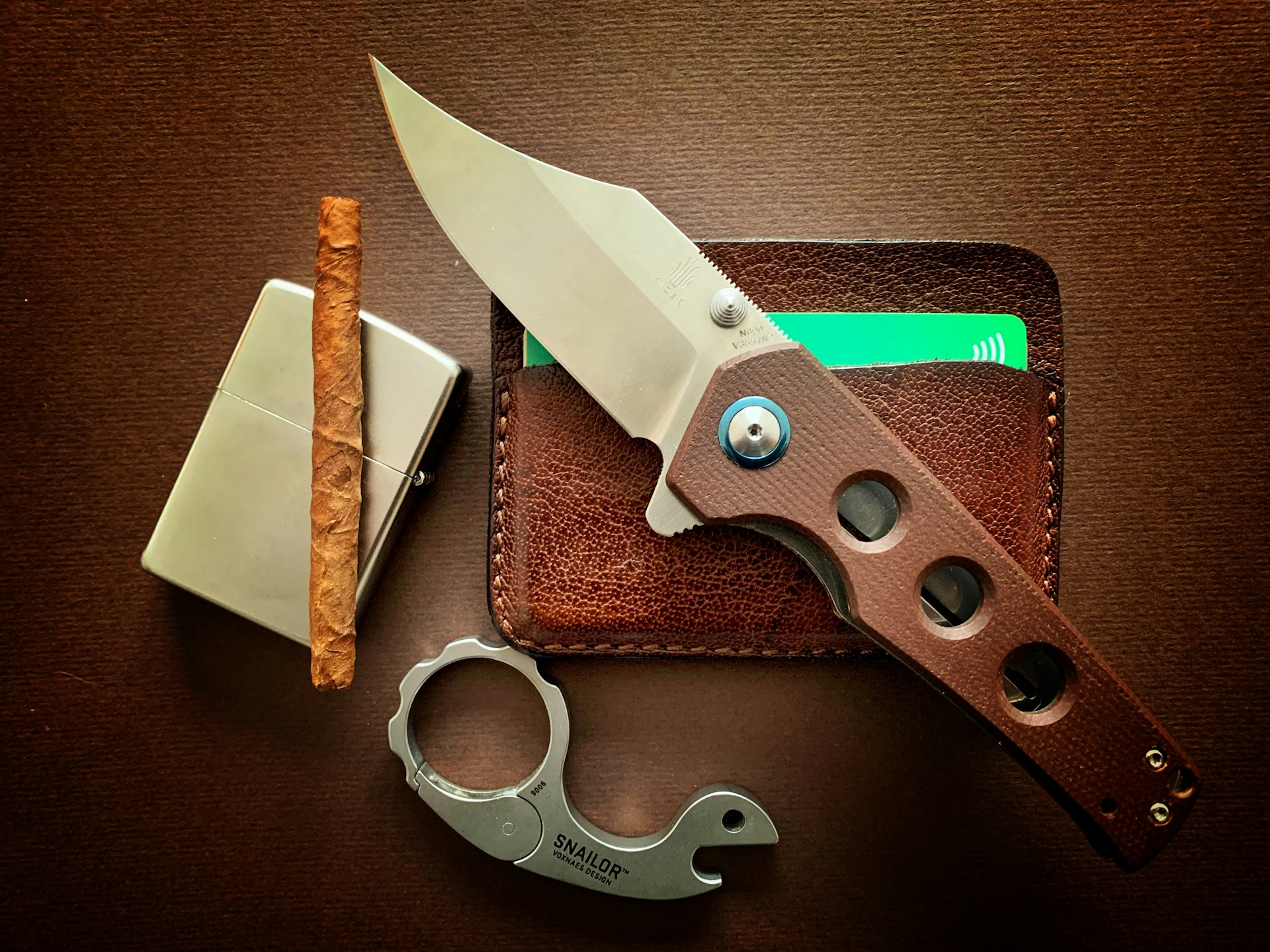
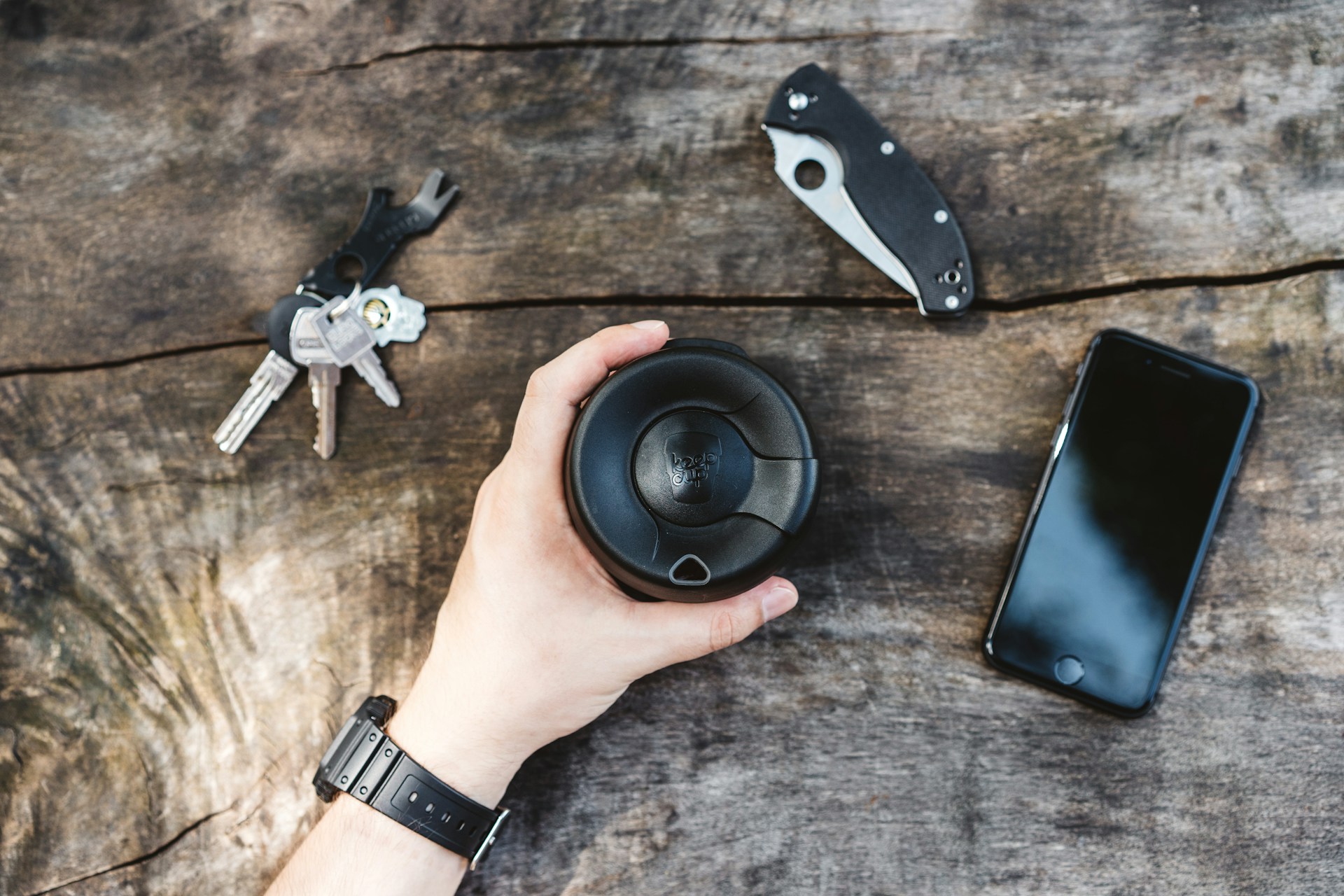
Everyday carry, or EDC, is the small set of tools you keep on you every day so ordinary problems don’t stop you. For most people, a folding knife sits at the center of that kit, alongside a light, keys, and maybe a multitool. If you are new to the term, you are in good company: most people discover it after borrowing someone’s pocket knife and realizing they want one of their own.
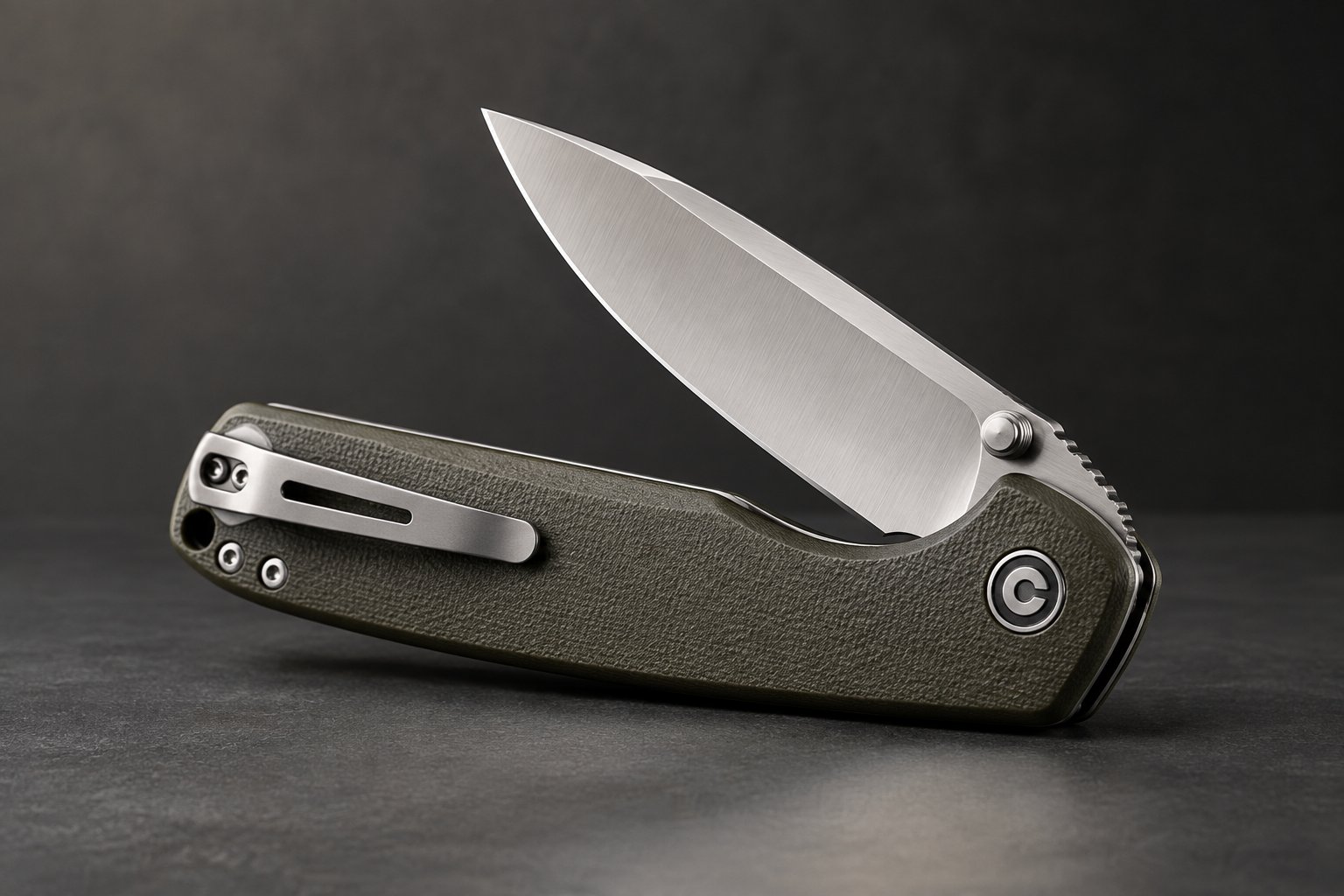
The best everyday carry knives are the ones you forget you are carrying until a box, a zip tie, or a stubborn clamshell package needs opening. That means the right size, a lock you trust, and a steel you can actually maintain. Price matters less than fit, and a $45 folder that rides well beats a $300 folder that stays in a drawer.
Keep reading to learn how to pick EDC knives by budget, task, blade steel, lock type, and carry comfort, plus what to check before your new folder hits your pocket. Buy the knife you will use, not the knife that looks best in a photo.
Top 2026 Picks by Budget and Carry Style
You can get a genuinely good everyday carry pocket knife for under $40, or spend $300 without wasting a dollar. What changes as you climb is steel quality, action smoothness, and fit and finish, not whether the knife cuts.
Think carry style first. A slim compact knife disappears in slacks. A wide-handled folder gives you grip when your hands are cold and wet.
Affordable Folders for First-Time Carriers
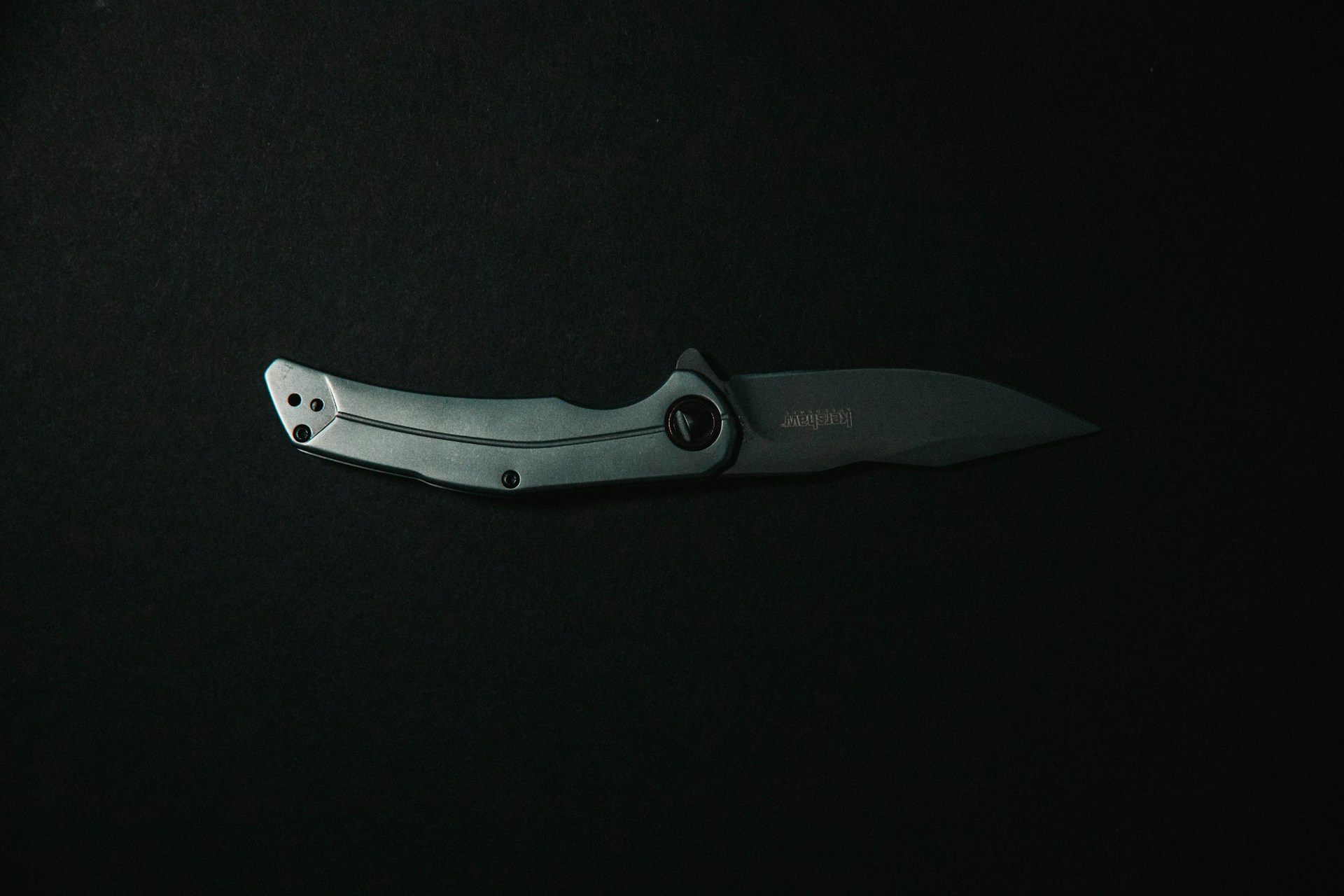
Under $50, you want a simple lock and a steel that sharpens easily. The Kershaw Misdirect and Kershaw Appa both hit that mark with assisted or smooth manual opening and light carry weight. The Gerber Paraframe Mini is even leaner, a skeletonized frame lock that weighs almost nothing.
Expect 8Cr13MoV or similar stainless at this tier. It dulls faster than premium steel but comes back on a cheap ceramic rod in two minutes.
Mid-Range Knives That Balance Materials and Value
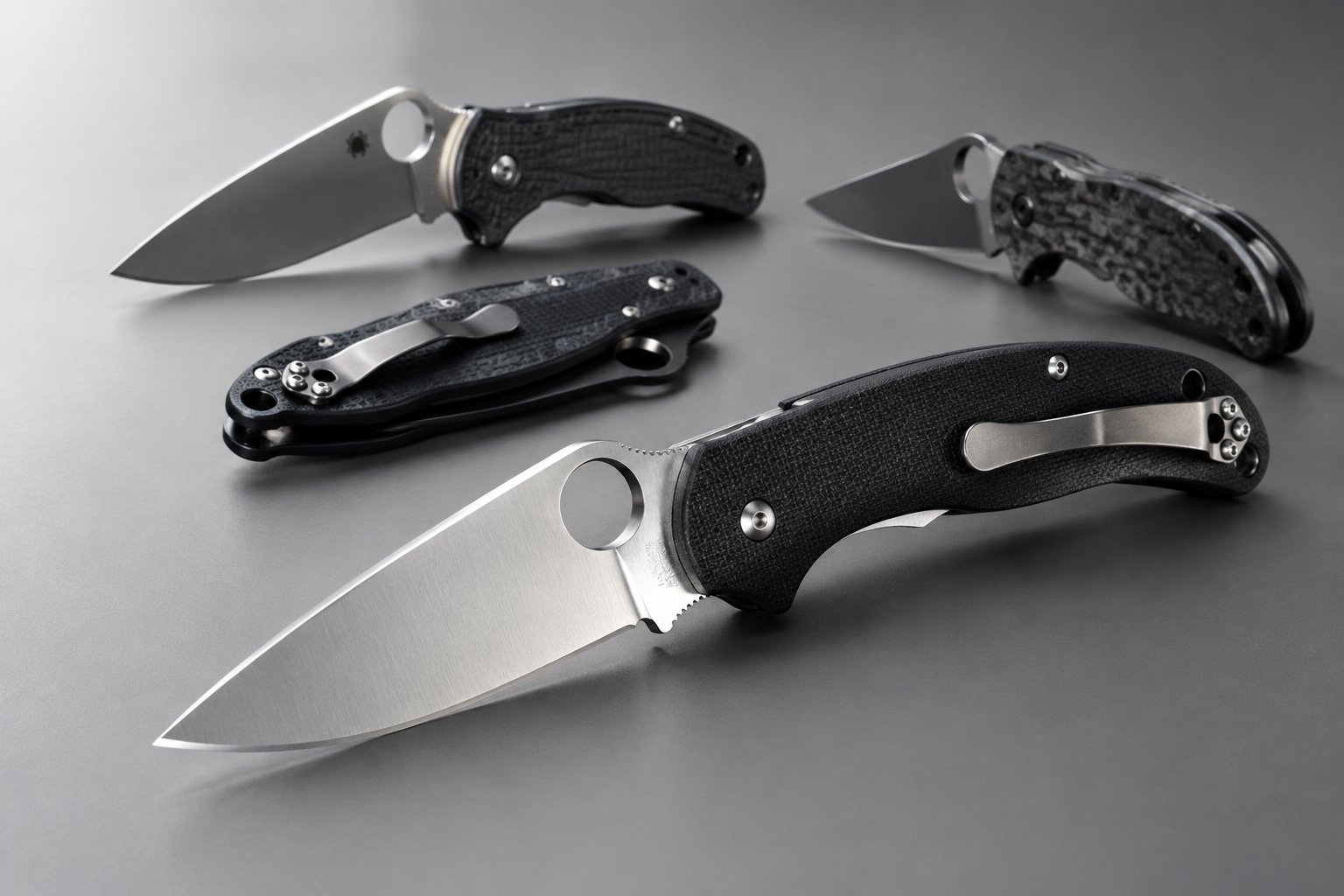
The $75 to $150 range is where most people land and stay. The Hogue Deka runs CPM MagnaCut in some configurations with a smooth crossbar lock and a light polymer handle. The Spyderco Para 3 gives you a compression lock, a big thumb hole, and a blade shape that slices well above its size.
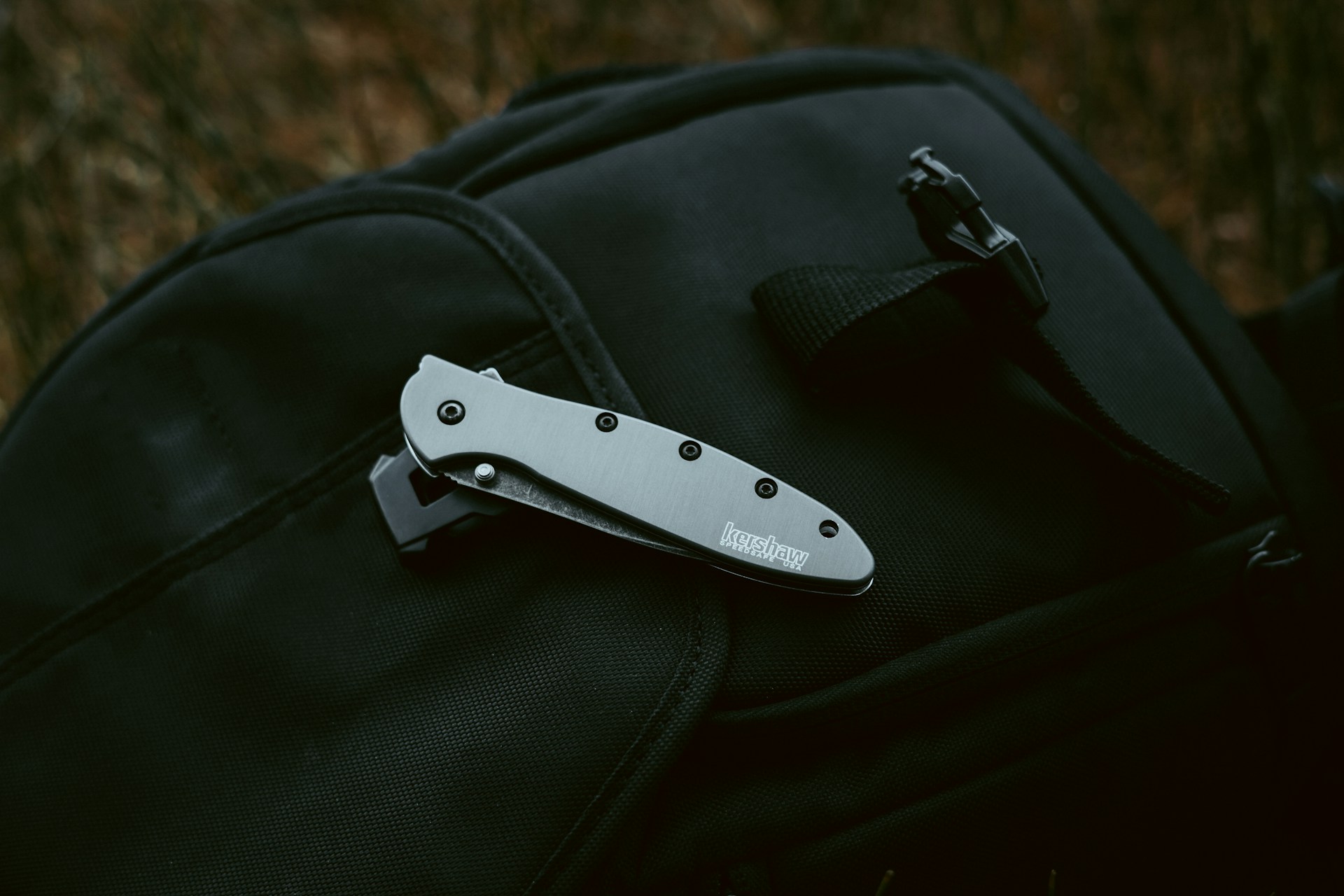
The Kershaw Leek belongs here too if you want something dressier. Slim tip, fast assisted opening, and a profile that never prints in a pocket.
Premium Folders for Demanding Daily Use
At $200 and up, you are paying for steel like CPM-20CV, M390, or S45VN, tighter tolerances, and warranty support that actually shows up. The Benchmade Bugout 535 is the reference point for ultralight carry, roughly under two ounces with a crossbar lock most people can run one-handed and left-handed.
The Spyderco Para Military 2 is the workhorse counterpart: more blade, more grip, more knife in hand. Both hold an edge long enough that you sharpen monthly, not weekly.
Compact and Lightweight Options for Minimalist Carry
If you carry a phone, keys, wallet, and a light, weight adds up fast. A sub-three-inch blade under 2.5 ounces is the sweet spot for minimalist carry.
- Under 2 oz: ultralight folders with polymer or skeletonized frames
- 2 to 3 oz: most compact G-10 folders, the daily default for many carriers
- 3 to 4 oz: full-size folders with steel liners and thicker stock
- Over 4 oz: better suited to belt carry or a bag than a front pocket
Weight is only half the equation. The other half is whether the blade shape matches what you actually cut.
Match the Knife to Your Daily Tasks
The right blade for breaking down cardboard is not the right blade for slicing an apple at your desk. Match geometry to task and everything gets easier.
Most everyday tasks call for a plain edge. Serrations shine on rope and webbing but chew through cardboard and make touch-ups a chore.
Package Duty, Food Prep, and Controlled Cuts
For boxes, tape, and food, a thin, flat-ground drop point or reverse tanto blade around 2.75 to 3.25 inches is hard to beat. A plain edge keeps cuts clean and lets you strop instead of resharpen.
If you slice fruit or sandwiches at work, stick to stainless steels and rinse the blade. Acidic foods will stain lower-chromium steels faster than you expect.
Outdoor Use and More Demanding Utility Work
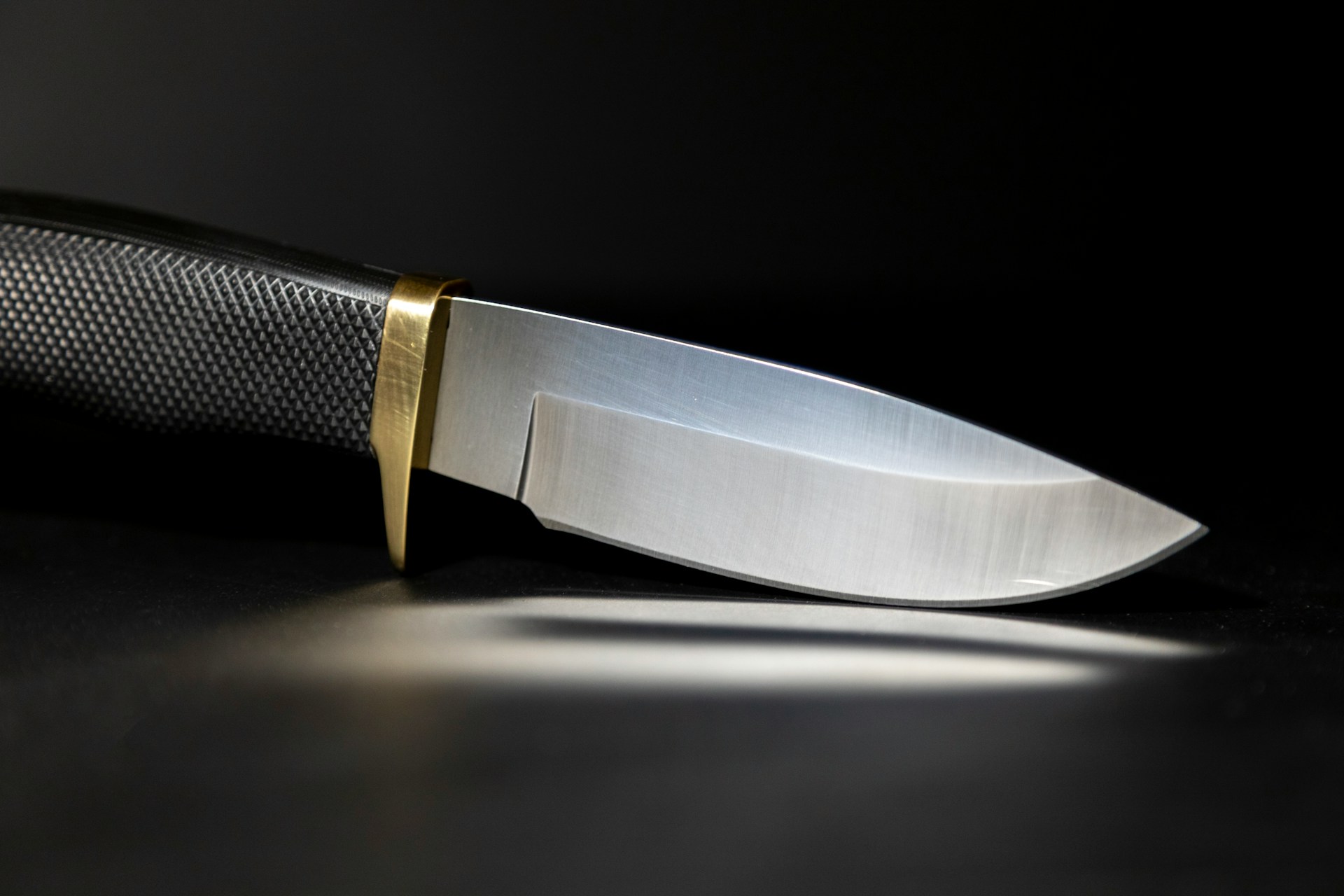
Outdoor use asks more of the blade. Cutting cordage, notching wood, or dressing game favors a thicker spine, a clip-point or drop point profile, and a handle that fills your palm.
A lanyard hole matters here. Wet hands plus a slick handle is how people end up needing stitches instead of a bandage.
When a Tactical-Style Folder or Rescue Features Make Sense
A tactical knife earns its keep if you drive a lot, work near vehicles, or respond to emergencies. Look for a glass breaker tip on the pommel and a hooked seatbelt cutter that works without exposing the main edge.
Tanto blades trade slicing performance for a reinforced tip. That is a real trade, so choose it only if you actually pry or puncture.
- Glass breaker: carbide or hardened steel point; keep it away from your pocket seam
- Seatbelt cutter: serrated hook, sharpen it separately from the main edge
- Bottle opener: saves your blade tip from a job it was never meant to do
- Lanyard hole: retention for wet, gloved, or overhead work
How a Folder Fits Into a Complete EDC Kit
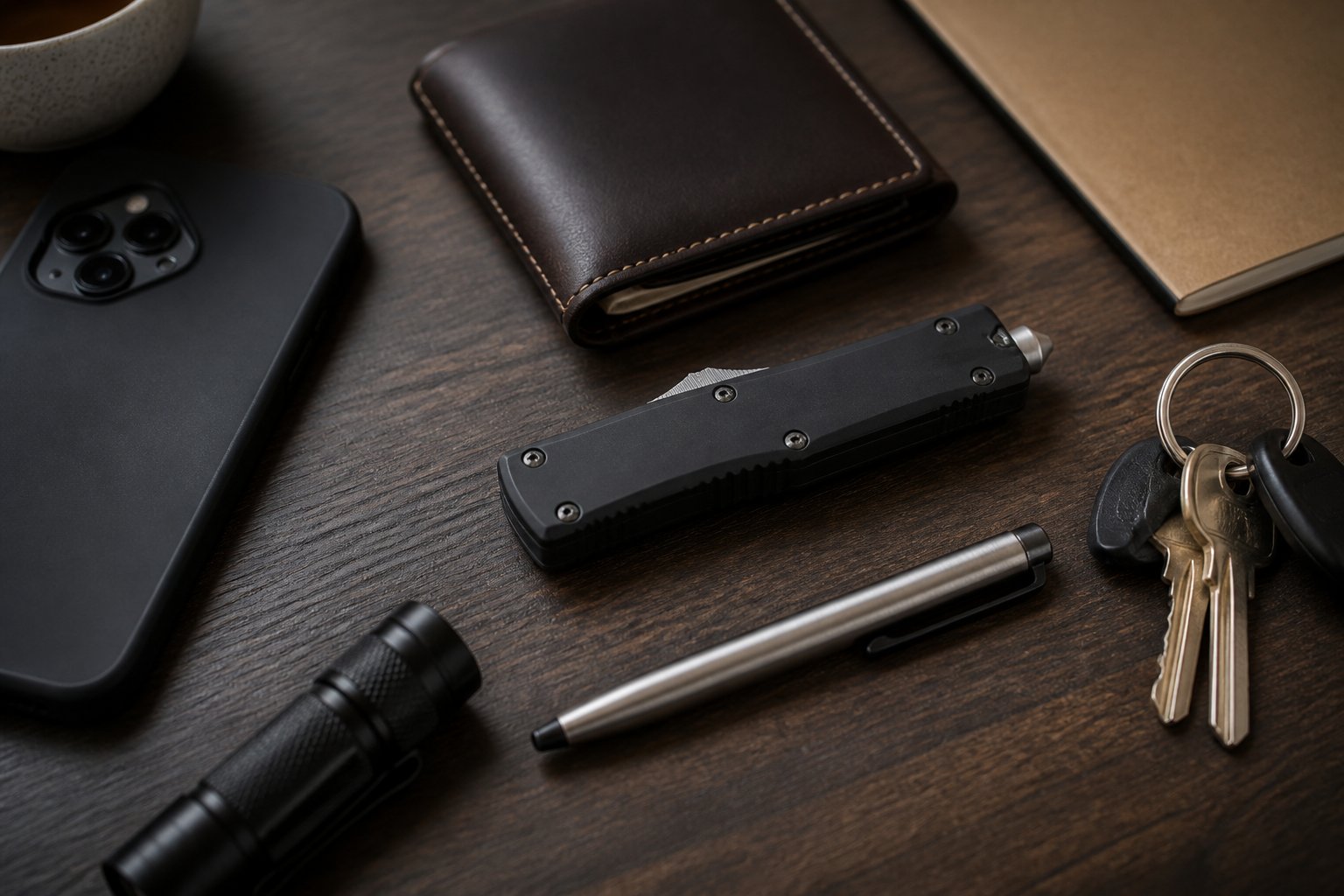
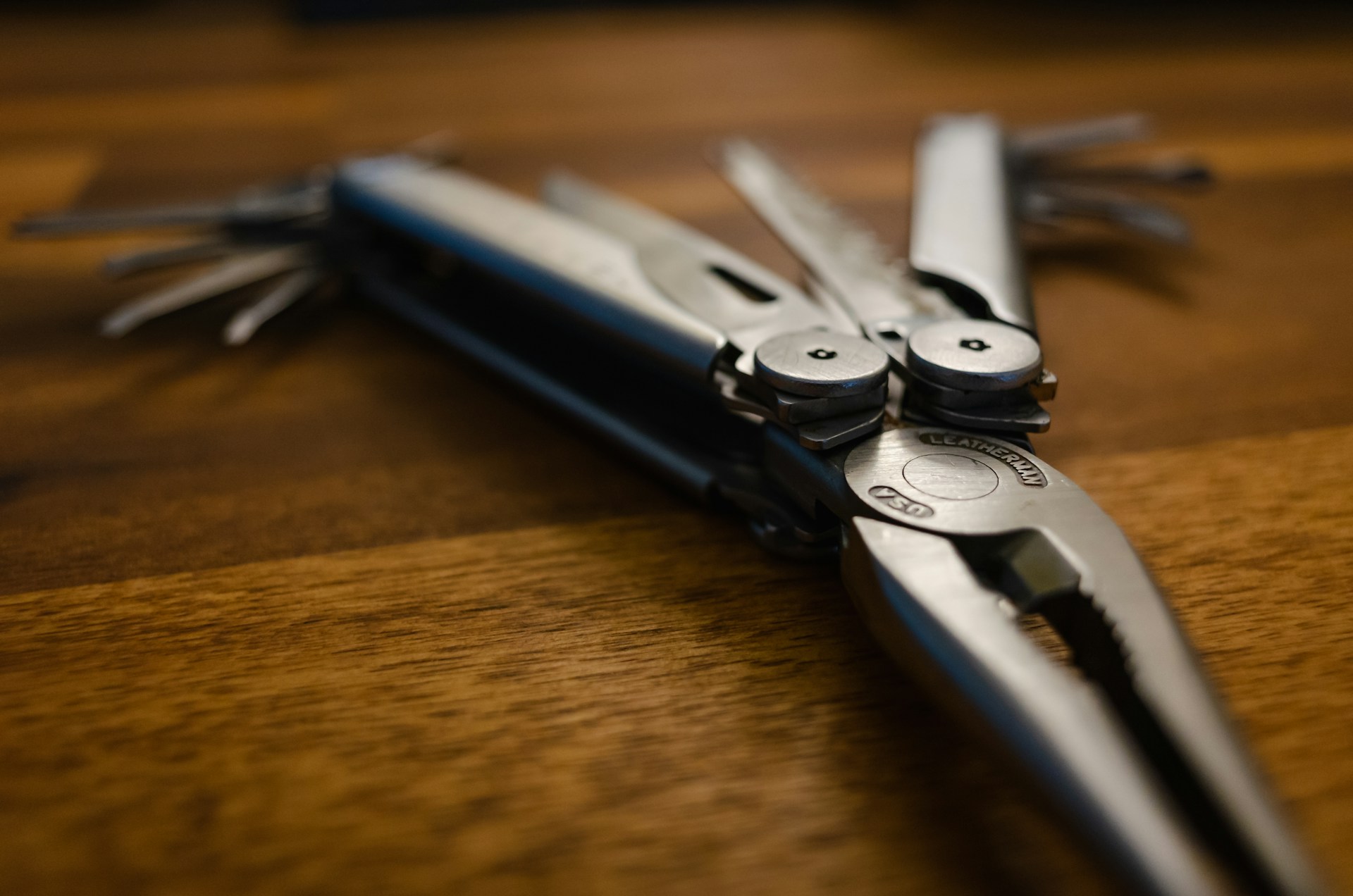
A knife alone is not a kit. Most people settle into a folder, a flashlight, and something for personal safety, then add a multitool if their work demands it.
Flashlights carry more daily weight than people expect, from finding a dropped screw to walking a dark parking lot. Personal-safety keychains and whistles round out the setup without adding bulk.
Once the tool list is settled, the next question is what the blade is made of.
Blade Steel: Balance Edge Retention, Toughness, and Maintenance
No single blade steel wins everything. Edge retention, toughness, corrosion resistance, and ease of sharpening pull against each other, and every steel picks a side.
Heat treatment matters as much as the alloy name. A well-run 14C28N blade outperforms a sloppy S30V blade every time.
Entry-Level Stainless Steels for Easy Sharpening
8Cr13MoV, 7Cr17MoV, 4Cr14, and 420HC stainless steel all sharpen fast on basic gear. That is a genuine advantage when you are learning to maintain an edge.
420HC in particular takes a screaming edge and resists rust well. You just come back to the stones more often.
Performance Steels for Frequent Carry
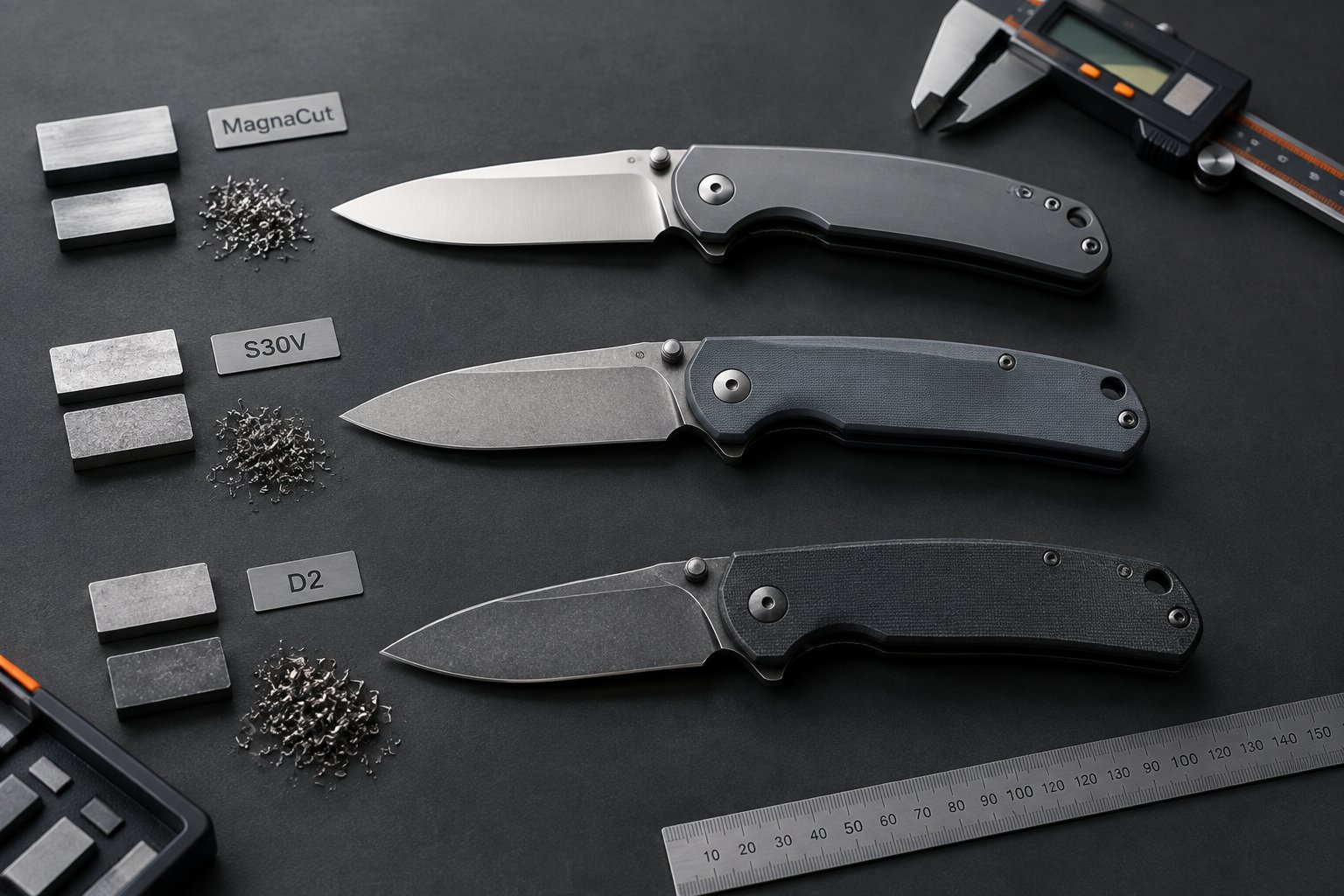
D2 steel, Sandvik 14C28N, and 154CM sit in the practical middle. D2 holds an edge a long time but is semi-stainless, so wipe it dry. 14C28N is the better pick for humid climates or sweaty pockets.
S30V and S35VN step up edge retention with good corrosion resistance. S35VN is noticeably easier to sharpen than S30V, which is why it stuck around.
MagnaCut and Other Premium Steel Options
CPM MagnaCut is the current all-arounder: high corrosion resistance, strong toughness, and edge retention that matches steels far less tough. It is the closest thing to a do-it-all blade material available today.
M390 and CPM-20CV hold an edge longer but demand diamond abrasives. Vanax is the choice if your knife lives near salt water. Read the actual listing specs, since MagnaCut steel appears in many price tiers now.
Why Blade Shape and Edge Geometry Still Matter
A thick blade in premium steel still cuts poorly. Blade quality comes from the grind: a thin behind-the-edge profile means less force and cleaner cuts.
Check stock thickness and grind type before you fixate on the steel stamp. Then check the part your hand actually operates.
Locks and Opening Methods That Feel Right in Hand
The lock is the safety system, and the opening method is how fast you get there. Both should feel natural before you commit money.
Test for blade play in every direction with the knife locked open. A little side-to-side is common; up-and-down is not.
Liner Locks and Frame Locks for Familiar Simplicity
A liner lock uses a spring bar inside the handle. A frame lock, including the integral frame lock, uses the handle slab itself, which makes it stronger under hard grip. Both are simple, proven, and easy to service.
Lockbacks and back locks put the release on the spine. They are ambidextrous by nature and common on traditional patterns.
Crossbar, Compression, and Button Locks for Modern Operation
The axis lock and its crossbar lock relatives let you close the knife with your fingers clear of the blade path. Compression locks on Spyderco folders do the same thing from the side.
Button locks and Duralock designs are fast and satisfying, especially on bearing-equipped folders. Verify the button is stiff enough not to release in your pocket.
Manual, Assisted, and One-Handed Opening Choices
Manual opening covers thumb studs, thumb holes, finger flippers, and the classic nail nick. Ball bearings make flippers feel effortless. Assisted opening adds a spring that finishes the swing once you start it.
One-handed opening is the point of most EDC knives. Ambidextrous operation matters if you are left-handed or often have a full hand.
What to Check for Before Carrying a New Folder
- Lock engages fully with no wobble in either direction
- Blade centers between the liners when closed
- Detent holds the blade shut when you shake the handle
- Pivot is snug but not gritty
- Edge is even from heel to tip
Once the mechanism checks out, the handle decides whether you carry it daily.
Carry Comfort, Handles, and Pocket Access
Comfort is what separates a knife you carry from one you own. A good everyday carry knife should be invisible in the pocket and secure in the hand.
Handle shape beats handle material for grip. Material decides weight, texture, and how the knife ages.
Choosing a Comfortable Handle Material and Shape
G-10 handles offer a grippy texture and a near-zero weight penalty. Micarta warms in hand and develops character over years. Aluminum handles feel solid and cool but get slick when wet.
Glass-filled nylon keeps ultralight folders light and costs the least. It flexes slightly, which some people notice and most do not.
Pocket Clips, Weight, and Discreet Carry
A deep-carry clip buries the handle so only a small tab shows. That is the difference between looking like you have a knife and not.
Check clip tension on the actual pocket you wear. Loose clips lose knives; overly tight clips shred hems.
Left-Handed and Ambidextrous Carry Considerations
A reversible pocket clip should be standard, and most quality folders offer at least tip-up left and right positions. Crossbar and lockback designs are the most user-friendly for left-handed users.
Liner locks are workable but require reaching across the blade path. Test that motion in person before deciding it does not bother you.
Safe Carry Habits and Local Rules to Verify
Blade length limits, automatic knife rules, and concealed carry definitions vary by state and city. Verify your local ordinances before you carry, especially when traveling or entering government buildings.
Close the blade with your fingers out of the path, every time. Habits hold up when you are distracted; luck does not.
Build an EDC Setup You Will Actually Carry
The best everyday carry pocket knives are the ones that survive week three, after the novelty fades. Start small and let real use tell you what to change.
Start With One Reliable Tool and Learn Its Limits
Buy one folder in the $60 to $120 range with a 3-inch blade and a lock you like. Carry it for a month before adding anything else.
You’ll quickly learn whether you need more grip, less weight, or a multitool for screws you keep running into.
Maintain the Edge and Check the Mechanism
Strop weekly; sharpen when stropping stops working. Blow out pocket lint, add a drop of pivot lube, and check the pivot screws quarterly. Edge retention is not permanence. Even MagnaCut needs attention if you cut cardboard all day.
Compare Knives in Person or Order With Confidence
Locking mechanisms, blade length, and handle fill are hard to judge from photos. Holding three folders side by side answers questions a spec sheet cannot.
Sharp Things OKC’s folding knives selection covers every tier discussed here, from the Misdirect through the Bugout. If you cannot get to a counter, read the full specification list and order from a shop that lists steel, weight, and clip positions accurately.
Frequently Asked Questions
What Is the Best Pocket Knife for Everyday Carry?
The best pocket knife matches your tasks, hand size, and local laws. For most people, a 3-inch drop point in a mid-tier stainless with a crossbar or compression lock covers everything.
What Is the Best EDC Knife Under $100?
Look at the Spyderco Para 3 Lightweight, the Hogue Deka, and the Kershaw Leek in that range. All three offer solid steel, reliable locks, and weights that stay comfortable in a front pocket.
Which Blade Steel Is Best for an Everyday Carry Knife?
CPM MagnaCut balances edge retention, toughness, and corrosion resistance better than almost anything else. If budget matters, 14C28N and D2 steel both deliver strong performance for the money.
What Lock Type Is Safest and Easiest to Use on an EDC Knife?
Crossbar and axis-style locks keep your fingers out of the blade path during closing, which makes them the easiest to run safely one-handed. Compression locks and lockbacks are close behind.
What Size Pocket Knife Is Best for Daily Carry?
A 2.75 to 3.25-inch blade handles nearly every everyday task without feeling oversized. Check your state and city blade length rules before going longer.
Which Pocket Knife Brands Make the Most Reliable EDC Folders?
Benchmade, Spyderco, Hogue, Kershaw, and Pro-Tech all build folders that hold up to daily use with real warranty support. Microtech and Heretic Knives lead on the premium automatic side.
Carry It, Use It, Keep It Sharp
Pick the knife that fits your hand, your pocket, and the tasks you actually face. Steel and locks matter, but comfort decides whether the blade rides with you every day or sits in a drawer.
Whether this is your first folder or your fifteenth, the fastest way to know is to hold a few. Sharp Things OKC on N May Ave keeps a deep bench of everyday carry knives across every budget, and the staff will talk steel and lock geometry with you as long as you want.