TASER vs. Stun Gun Differences: Which Fits Your Needs?

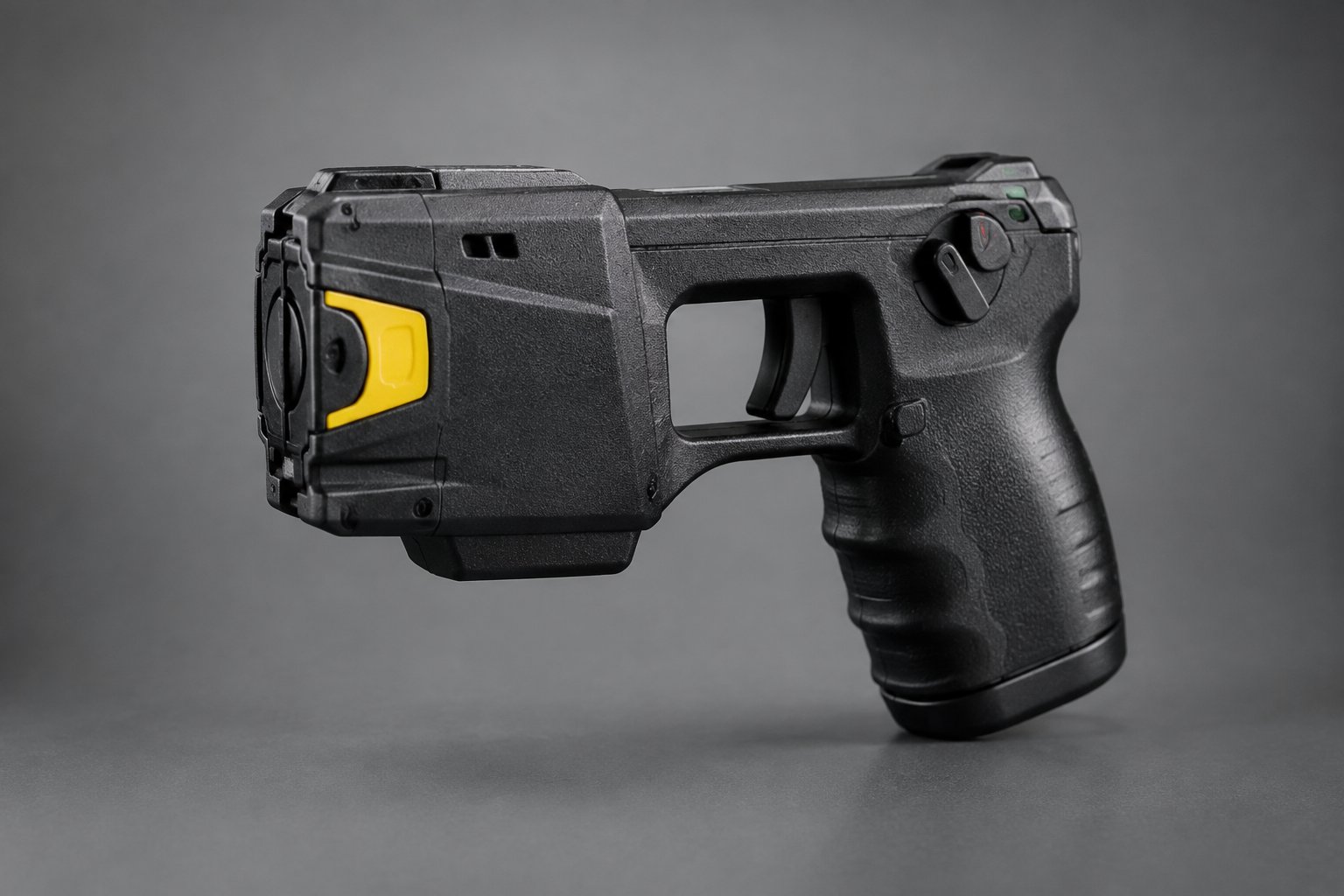
Shopping for personal protection usually starts with one confusing question: what actually separates a stun gun from a TASER? People often use the terms interchangeably, but the mechanics, range, and price tag are not close. Knowing the Taser vs. stun gun differences before you buy is the only way to avoid choosing a tool that doesn’t match how you actually live.
A stun gun asks you to press it against someone. A TASER asks you to aim and pull a trigger from feet away. That single difference changes everything about training, legal exposure, and how much room you get to escape a bad situation.
How Contact Shocks and Probe Systems Work
A stun gun delivers pain through direct contact, while a TASER fires probes that can override muscle control from a distance. That split in mechanism is the real starting point for understanding what each tool actually does.
Why a Contact Stun Gun Relies on Pain Compliance
A stun gun works by pressing two metal contacts against an attacker’s body and sending a high-voltage, low-amperage current into the skin. That current causes intense, localized pain and can disrupt some coordination, but it does not force the muscles to stop working.
This is called pain compliance. The attacker can still fight through it if they are angry, drunk, high, or simply determined enough to push past the discomfort.
Stun guns come in compact shapes like flashlight-style bodies or flat pocket models, and most run on rechargeable lithium batteries. The trade-off is simple: smaller size and lower price, in exchange for needing to get dangerously close to use it.
How TASER Probes Create Neuromuscular Incapacitation
A TASER launches two small probes connected by thin wires and drives an electrical signal into the muscle tissue, not just the skin. That signal interferes directly with the nerves controlling muscle movement, a process called neuromuscular incapacitation.
The result is different from pain alone. A conducted energy device works largely regardless of pain tolerance, mental state, or intoxication, which is a big part of why agencies favor TASERs over contact stun guns for volatile encounters.
The probes can lock out an attacker’s ability to stand or grip, not just make them want to stop.
What the TASER Name Actually Means
TASER is a brand name, not a generic term, and it stands for Thomas A. Swift’s Electric Rifle, coined by inventor Jack Cover after a Tom Swift adventure novel he loved as a kid. Axon Enterprise (formerly TASER International) owns the trademark today, and civilian models like the TASER Pulse 2 and TASER Bolt 2 are the actual products behind the name people use loosely for any electric self-defense device.
Calling every stun device a “taser” is a bit like calling every tissue a Kleenex. It matters here because the two device types are regulated, priced, and built on completely different platforms.
That naming confusion is exactly why range comparisons trip people up next.
Range, Reliability, and the Escape Window
Range is the single biggest functional gap between these two tools, and it changes how much control you have over a confrontation. A stun gun needs skin contact, while a civilian TASER can reach a target from several feet away.
Contact Distance vs. Standoff Distance
A stun gun has zero standoff distance. You have to be close enough to physically press it against an attacker’s body, which means you are already within grabbing range when you use it.
A TASER changes that math. Civilian models like the Pulse 2 and Bolt 2 can fire probes up to 15 feet away, giving you room to stop a threat before they reach you.
- Stun gun: zero standoff, contact only, works at arm’s length
- TASER: up to 15 feet of standoff, works before physical contact occurs
- Both: still require you to hold your ground long enough to activate the device
That gap in reach is also why TASERs cost more and carry tighter legal rules in some states, a trade covered later in this guide.
How Clothing, Probe Placement, and Movement Affect Results
Thick clothing, sudden movement, and poor probe spread can all reduce a TASER’s effectiveness. The probes need enough distance between them on the body to complete a strong neuromuscular circuit, and heavy jackets can blunt that connection.
A stun gun has its own version of this problem. Thick coats or fast movement can prevent the contacts from making firm, sustained skin contact long enough to cause real pain compliance.
Collectors who have handled multiple models know that probe spread distance actually increases the farther the cartridge travels, since the wires separate at a fixed angle as they fly. That is a detail most first-time buyers never think to check on a spec sheet.
Why Every Device Should Be Treated as a Chance to Escape
No device guarantees an attacker will drop and stay down. Both are built to buy you seconds, not to end a threat permanently.
The real value of any stun or TASER device is the opening it creates. That opening only helps if you already have a plan for what happens next: run, get to a locked door, call for help.
Treat every activation as a narrow escape window, not a fight-ending move. That mindset carries directly into how much you should actually spend on training and gear.
Cost, Training, and Everyday Carry Tradeoffs
Price and practice requirements diverge sharply between the two categories, and that gap shapes which one fits your budget and daily habits. Stun guns cost less upfront; TASERs cost more but use a different reload model.
Upfront Price and Replacement Cartridge Costs
Stun guns are the cheaper entry point, often available as a one-time purchase with a rechargeable battery and no ongoing costs. Civilian TASER models like the Pulse 2 run closer to $400, and every model requires replacement cartridges after each use since the probes are single-fire, typically $25 to $60 per pair.
That cartridge cost adds up if you ever fire the device, whether in a real incident or during practice. Buying one or two spare cartridges when you first buy a TASER is a habit collectors know well, but first-time buyers rarely plan for it.
Rechargeable Contact Devices vs. Limited Shots
A stun gun typically offers many activations on a single charge, since it only discharges current, not launching a physical projectile. That makes it a low-maintenance option for someone who wants a device charged and ready without thinking about ammunition.
A TASER’s standoff capability comes at the cost of shot count. Once the cartridge fires, you are down to whatever contact-stun backup mode the model offers, if it has one at all.
- Stun gun: rechargeable, high shot count, no ongoing ammo cost
- TASER: standoff distance, limited shots per cartridge, replacement cost after use
- Hybrid consideration: some TASER models include a direct-contact backup mode once cartridges are spent
What Practice Matters Before You Carry Either Option
Dry-practice with an inert or training cartridge matters more than most buyers expect before carrying a TASER for real. Learning the grip, the safety mechanism, and the trigger pull under stress takes repetition, not a single test at home.
Stun guns need less mechanical practice but still benefit from muscle memory on where the safety switch sits and how to draw it quickly. A device fumbled in a pocket during a real threat is worse than no device at all.
Cost and training both feed into a bigger question that no spec sheet answers: what is actually legal to carry where you live.
Legal, Medical, and Responsible-Carry Considerations
Stun gun and TASER laws vary meaningfully by state, and some states have changed their rules recently. Always confirm current law in your specific state and city before ordering either device.
Why State and Local Rules Must Be Verified Before Ordering
Some states allow both devices with no permit, others require a permit, and a small number restrict or ban them outright. Local city ordinances can add restrictions on top of state law, even in states that allow general civilian ownership.
Laws in this area shift more than buyers expect. Call your local police non-emergency line before ordering to confirm current rules, rather than trusting a guide that may already be out of date.
Recent Legal Changes Do Not Create Nationwide Permission
Hawaii repealed its outright ban on civilian stun gun ownership in 2022, and a federal court struck down Rhode Island’s ban in 2023, loosening restrictions that once made these devices harder to carry legally in those states. That does not mean every state has followed the same path.
A change in one state has no bearing on the rules in a neighboring one. Treat every legal update you read online as a reason to double-check your own state’s current statute, not a signal that restrictions have loosened everywhere.
Carrying a Tool Does Not Replace Awareness or an Exit Plan
A stun gun or TASER is a backup plan, not a replacement for basic situational awareness. Watching your surroundings, avoiding distractions, and identifying exits before you need them prevent more confrontations than any device can.
Medical caution matters here too. People with pacemakers or certain heart conditions should talk to a doctor before carrying or being near either device, since manufacturers themselves flag cardiac risk in product documentation.
Once the legal groundwork is settled, the decision comes down to matching the device to how you actually move through your day.
Matching the Device to Your Personal Safety Plan
The right choice depends on your typical environment, not on which device sounds more capable on paper. Someone walking city blocks at night has different needs than someone working alone in a rural area.
Close-quarters situations, like someone walking you to your car in a parking garage, favor a compact stun gun you can draw and use in a tight space. Outdoor or isolated settings favor a TASER’s standoff distance, since you may have more room to create separation before a threat closes in.
Consider these factors together rather than picking based on price alone:
- Living situation: apartment or urban commute versus rural property or isolated work site
- Physical comfort: confidence drawing and aiming a probe-based device under stress
- Storage needs: a nightstand option differs from a daily-carry pocket option
- Budget for extras: spare cartridges and practice units add real cost to a TASER over time
Holding both formats side by side tells you more than any spec sheet, since grip size, weight, and trigger feel vary noticeably between brands and models.
Choosing With Confidence
The mechanical split between these two tools comes down to contact versus distance, pain compliance versus neuromuscular disruption. A stun gun rewards low cost and simplicity; a TASER rewards standoff range at a higher price with cartridge upkeep.
No device replaces awareness, an exit plan, or knowledge of your local laws, which still vary enough that a quick call to confirm current rules is worth the five minutes. The right pick comes down to your environment, your comfort under stress, and your willingness to practice with the device you choose.
Handling both formats in person, feeling the trigger pull, the grip, and the weight, tells you more than a spec sheet ever will. Stop by Sharp Things OKC to compare a contact stun gun against a TASER side by side, or place a same-day order online before the 3 pm shipping cutoff if you already know which one fits your plan.
Frequently Asked Questions
Is It Better to Carry a TASER or a Stun Gun for Self-Defense?
The better choice depends on your environment and comfort level. A TASER gives you standoff distance and works through pain tolerance, while a stun gun is smaller, cheaper, and simpler for close-quarters use like a parking garage walk.
What Hurts More, a Stun Gun or a TASER?
A stun gun causes sharper localized pain since the contacts press directly against skin. A TASER’s probes cause less pinpoint pain but disrupt muscle control more completely, which is why it works even on people with high pain tolerance.
Can a Stun Gun Stop an Attacker?
A stun gun can stop an attacker through pain compliance, but it is not guaranteed to work if the person is highly motivated, intoxicated, or in an altered mental state. It buys time to escape rather than guaranteeing the person goes down.
Do You Need a Permit to Own or Carry a Stun Gun?
Permit requirements vary by state and sometimes by city; some places require no permit, while others require a background check or license. Checking current local law before ordering is the only reliable way to know your specific requirement.
Are TASER Devices and Stun Guns Legal in Every State?
No, legality is not uniform across the country, and a small number of states restrict or ban civilian ownership of one or both devices. States including Hawaii and Rhode Island have recently changed their laws, so always verify the current rule in your own state before ordering.
Can a Stun Gun Be Used More Than Once?
Yes, most stun guns are rechargeable and support many activations on a single charge, unlike a TASER’s single-use cartridges. That reusability is one of the main reasons stun guns stay a popular lower-cost option for everyday carry.
If you have questions about what’s legal to carry where you live, reach out to the shop before you order.