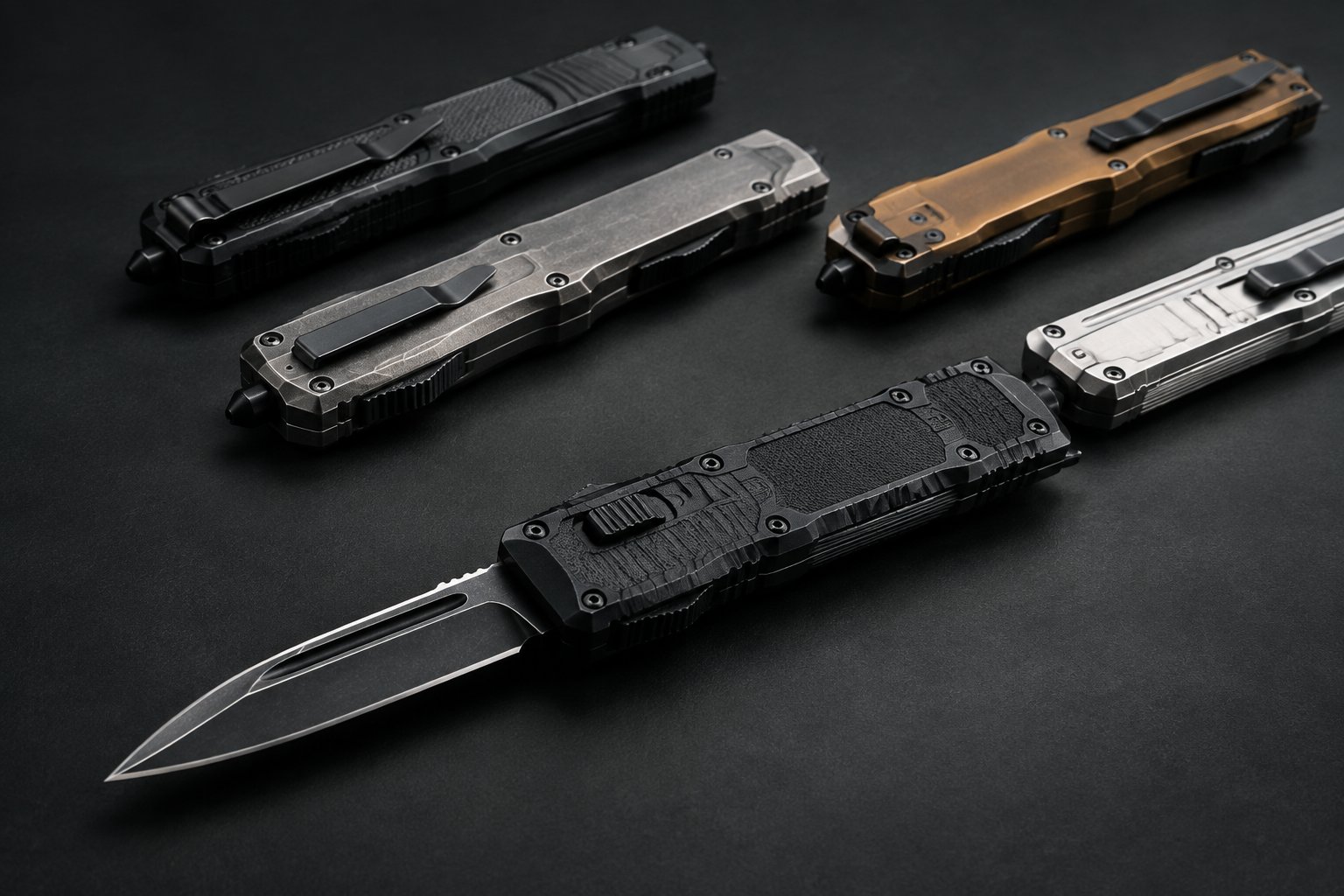
How to Clean and Oil an OTF Knife: Simple Maintenance

Most OTF knives that start firing slowly or sticking aren’t broken. They’re dirty, and pocket lint, dust, and grit work their way into the blade channel every day you carry the knife, which is the real reason a once-snappy automatic starts to feel sluggish.
Learning how to clean and oil an OTF knife takes less than ten minutes once you know the routine. You do not need to disassemble the mechanism, void a warranty, or buy specialty tools to keep a double-action or single-action OTF firing the way it did on day one.
A clean track and a few drops of the right oil fix the vast majority of OTF performance problems, no disassembly required. The rest of this guide walks through the exact steps, the tools worth having on hand, and the mistakes that turn a quick cleaning into an expensive repair.
What You Need Before You Start
You need four things: compressed air, a light non-gumming oil, a microfiber cloth, and a few cotton swabs. Nothing fancy, nothing you cannot find at a hardware store or already own.
Basic Supplies for Routine OTF Care
A can of compressed air is the workhorse of OTF maintenance. It clears lint and dust from the blade channel without touching internal parts you should never have to reach.
Add a microfiber cloth for wiping the blade and handle, plus cotton swabs for the tight corners where the blade meets the handle opening. A soft-bristle brush, like an old toothbrush, helps loosen debris before the air blast does its job.
- Compressed air (canned or a small electric duster)
- Light gun oil or a dedicated knife lubricant
- Microfiber cloth
- Cotton swabs
- Soft-bristle brush
Why Thin, Non-Gumming Lubricant Matters
Thin oil flows into the track and stays fluid; thick oil traps grit and slows the fire. This is the single biggest mistake new OTF owners make when they reach for whatever oil is already in the garage.
Gun oils like Rem Oil are popular because they penetrate the mechanism without leaving sticky residue. Heavier oils and greases do the opposite of what you want; they attract dust and slowly gum up the spring and track.
Manufacturer recommendations vary on some specifics, like whether a general-purpose product such as WD-40 is acceptable, so check your specific maker’s published guidance rather than assuming one rule applies to every brand.
Safety Checks Before Handling the Blade
Always treat the blade as sharp and the mechanism as loaded before you start cleaning. Point the knife away from your hands and body every time you cycle the action, even during routine maintenance.
Check that the blade locks fully open and fully closed before you begin. A blade that stops halfway or feels loose in the track is telling you something before you even reach for the oil.
That half-open blade you just noticed is usually a debris problem, not a mechanical one, and clearing it is the next step.
Clear Debris From the Blade Channel First
Cleaning always comes before oiling, because oil poured onto dirt just creates a paste that clogs the track faster. Every reliable OTF maintenance routine starts with getting the debris out first.
Position the Handle So Dirt Falls Out
Hold the knife with the blade opening pointed downward so gravity helps pull lint and grit out of the channel. This sounds basic, but it makes a real difference in how much debris the next steps actually remove.
Cycle the blade open and closed a few times in this position before you introduce any air or tools. You will often see visible lint or pocket fuzz fall free just from this movement alone.
Use Compressed Air Without Driving Grit Deeper
Short, controlled bursts of compressed air pull debris out instead of packing it further into the track. Long, continuous blasts can actually push grit deeper into the mechanism, which defeats the purpose.
Aim the nozzle into the blade opening and the seams where the handle meets the blade channel. A soft brush used first to loosen debris, followed by air to clear it, works better than air alone.
If your knife picked up tape residue, sticker glue, or something stickier than lint, rubbing alcohol on a swab handles it. Microtech specifically recommends alcohol for adhesive residue rather than trying to scrub it out dry.
Wipe the Blade and Handle Opening
A dry microfiber cloth removes surface dust from the blade spine and edge before oil goes anywhere near the mechanism. Wipe from spine to edge, never dragging your finger along a live edge.
Use a cotton swab around the handle opening to catch what the air missed. This is also a good moment to check for rust spots, especially on carbon-adjacent tool steels that see moisture exposure during EDC use.
- Wipe the blade dry, spine to edge
- Swab the handle opening corners
- Check for early rust spots near the pivot
- Confirm no lint remains visible in the channel
Once the channel looks clean and dry, the knife is ready for a small, controlled amount of oil.
Apply Oil Without Slowing the Action
A drop or two of thin oil placed directly into the blade channel is all a healthy OTF mechanism needs. Adding more oil usually just slows and messes up the action without improving protection.
Where to Place One or Two Small Drops
Apply oil where the blade enters the handle and, if visible, along the exposed part of the track when the blade is extended. Avoid pouring oil into the button or fire control itself unless your manufacturer specifically says to.
The oil’s job here is partly to grab and lift debris, not purely to lubricate metal-on-metal contact, which is why a small amount placed precisely matters more than flooding the mechanism.
How Many Times to Cycle the Mechanism
Fire the blade open and closed five to ten times after applying oil so it spreads evenly through the track. You should feel the action smooth out within the first few cycles if the oil is doing its job.
Point the blade away from yourself during this step, every time, no exceptions. If the action still feels gritty after ten cycles, that usually points to debris the first cleaning pass missed, not a lubrication problem.
How to Remove Excess Oil
After cycling, wipe off any visible oil on the blade or handle exterior with a clean microfiber cloth. Microtech’s guidance is explicit: avoid over-lubrication, and blow out any excess with compressed air rather than leaving it in the track.
A knife that looks freshly oiled on the outside is often over-oiled on the inside. Collectors who show and handle knives regularly know this detail well: a dry-to-the-touch exterior with a smooth internal action marks a properly serviced OTF, not a shiny one.
Getting the oil level right solves most performance issues, but a few habits can undo all of that progress fast.
Avoid the Mistakes That Cause Misfires
Heavy grease, over-oiling, and unnecessary disassembly cause more OTF problems than normal wear. Knowing what not to do protects the knife as much as the cleaning steps themselves.
Why Heavy Grease and Too Much Oil Cause Problems
Grease and thick oils create drag inside a mechanism built for speed, and drag shows up as a slow or incomplete fire. A lubricant too thick for the mechanism restricts the blade and prevents it from firing correctly.
Over-oiling causes a similar problem even with the right product. Excess oil pools in the track, mixes with new lint, and forms a paste that is harder to remove than dry lint ever was.
- Grease or thick oil: causes drag and slows fire
- Too much thin oil: attracts lint, forms paste over time
- Vegetable or cooking oil: goes rancid, never use it
- General-purpose oils like WD-40: acceptable per some makers, discouraged by others; check your maker
When Not to Disassemble an OTF Knife
Most OTF knives should never be opened by the owner unless the manufacturer explicitly says it is safe to do so. Automatic mechanisms hold spring tension, and reassembling a track incorrectly can create a genuinely dangerous misfire risk, not just a cosmetic problem.
Compressed air and light oil through the existing openings handle most cleaning needs without ever touching the internal track.
How to Reset a Blade That Will Not Lock
A blade that will not lock open or closed is usually slightly off track, and this is a safety feature, not a failure. Most OTF knives are designed to disengage rather than jam when something gets caught in the mechanism.
Gently guide the blade back into alignment by hand while cycling the fire control, following your specific model’s reset method if one is published. If the blade still will not seat correctly after a full cleaning and reset attempt, stop and call in professional service.
A Clean Track Keeps an OTF Reliable
A pocket-carried OTF needs this cleaning routine roughly every one to two weeks under normal daily use. Knives carried in dusty, sandy, or wet environments need it more often, sometimes after every outing.
The interval isn’t a fixed calendar date; it depends on how much lint and grit your specific pocket, belt clip, or sheath feeds into the blade opening. A knife carried loose in a jeans pocket collects more lint than one carried in a dedicated sheath.
- Daily EDC pocket carry: clean every 1 to 2 weeks
- Work or outdoor use in dust or sand: clean weekly or after each use
- Occasional or drawer-stored carry: check monthly, oil lightly every few months
- After any exposure to moisture, sweat, or saltwater: clean immediately
How Often Should You Service a Pocket-Carried OTF?
Frequency depends more on your carry habits than the knife itself. A knife carried against keys and coins in the same pocket picks up debris faster than one carried alone in a designated slot.
Watch the fire speed as your indicator. The moment a blade that used to snap out crisply starts to feel a half-beat slower, that is your cue to clean it, regardless of how many days have passed since the last service.
When Manufacturer Service Is the Better Fix
Send the knife back to the manufacturer when cleaning and light oiling do not restore normal action after two attempts. This usually points to a genuine internal issue, like a shifted track or a spring losing tension, rather than a debris problem.
Most major OTF makers, Microtech included, offer factory service specifically because internal repairs on a spring-loaded mechanism carry real risk if handled by someone without the right training. A knife that misfires even when clean and lightly oiled has told you everything you need to know about where the problem actually lives.
Keeping Your OTF Ready When You Need It
A clean blade channel and a couple of drops of the right oil solve most OTF performance complaints. Lint and grit, not failing springs, are behind most slow or inconsistent fires, and a ten-minute routine every week or two keeps that from becoming a real problem.
Skip the heavy grease, skip unnecessary disassembly, and let compressed air and a thin, non-gumming oil do the work they are designed for. If a knife still will not lock or fire correctly after a proper cleaning, that is the signal to stop troubleshooting and get eyes on it in person.
Sharp Things OKC keeps maintenance oils and cleaning supplies on hand and can walk you through a stuck mechanism at the counter if a home cleaning doesn’t solve it. Same-day orders placed before the 3pm shipping cutoff ship that day, so a fresh bottle of the right oil doesn’t have to wait on a slow mechanism.
Frequently Asked Questions
How do I clean an OTF knife without taking it apart?
Point the blade opening downward, cycle the blade a few times to loosen debris, then use short bursts of compressed air to clear lint from the channel. Follow with a microfiber cloth and cotton swabs for the corners; this handles nearly all routine cleaning without opening the handle.
What oil should I use on an OTF knife?
A light, thin, non-gumming oil like a quality gun oil works best because it flows into the track without attracting extra dirt. Avoid heavy oils, grease, and vegetable-based oils, which either restrict the action or go rancid over time.
Can I use Rem Oil on an OTF knife?
Yes, Rem Oil is widely recommended, including in Microtech’s own maintenance guidance, because it is light enough to lubricate without gumming the mechanism. Apply it sparingly, one or two drops in the blade channel, then cycle the action and wipe off any excess.
Why does my OTF knife fire slowly after I oil it?
Slow firing after oiling usually means you applied too much oil or the oil is too thick for the mechanism. Wipe off the excess, cycle the blade several times, and confirm you used a thin oil rather than grease or a heavy lubricant.
How do I clean a Microtech OTF knife?
Use compressed air to clear lint, rubbing alcohol on a swab for tape or adhesive residue, and a light gun oil applied into the opening before cycling the knife, following Microtech’s published maintenance guide. Avoid over-lubrication and never disassemble the mechanism without factory guidance.
How often should I clean and lubricate an OTF knife?
Most daily-carried OTFs need cleaning every one to two weeks under normal use, more often in dusty, sandy, or wet conditions. Let the knife’s firing speed guide you; any noticeable slowdown means it is time to clean it, regardless of the calendar.
If a home cleaning doesn’t fix it, bring the knife in, and the staff can inspect the mechanism in person before you decide on factory service.