Benchmade AXIS Lock: How the Crossbar Works and How to Run It

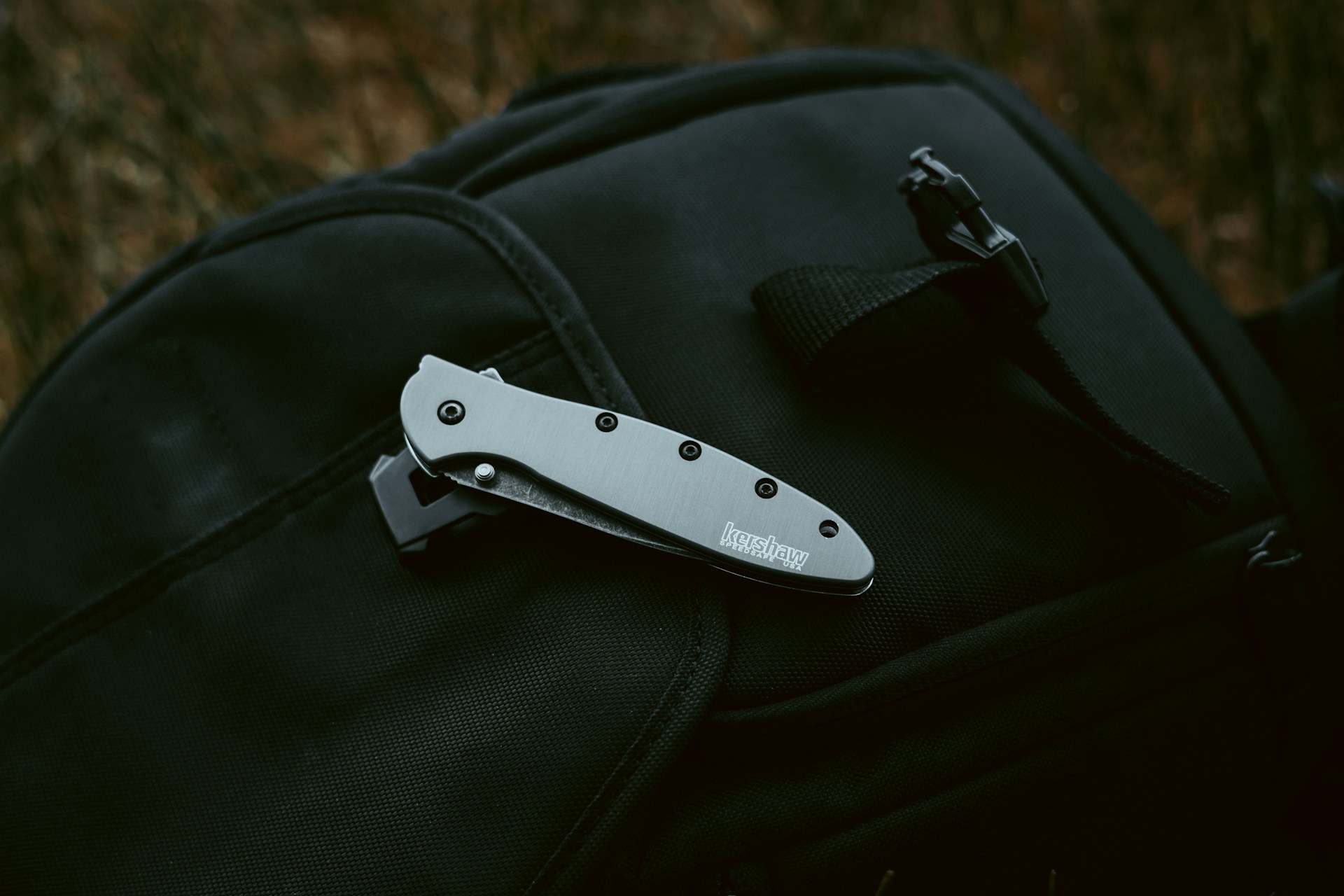
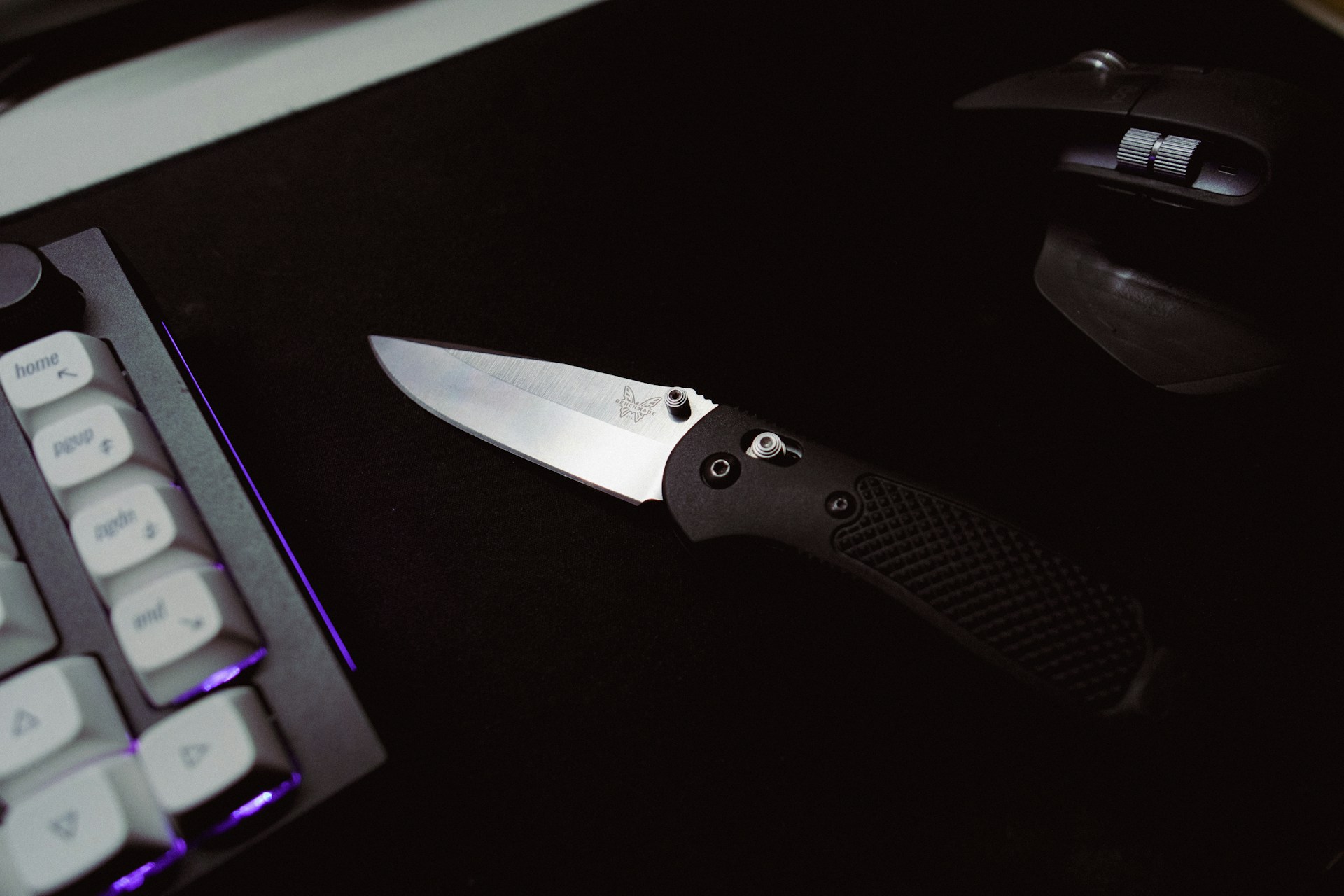
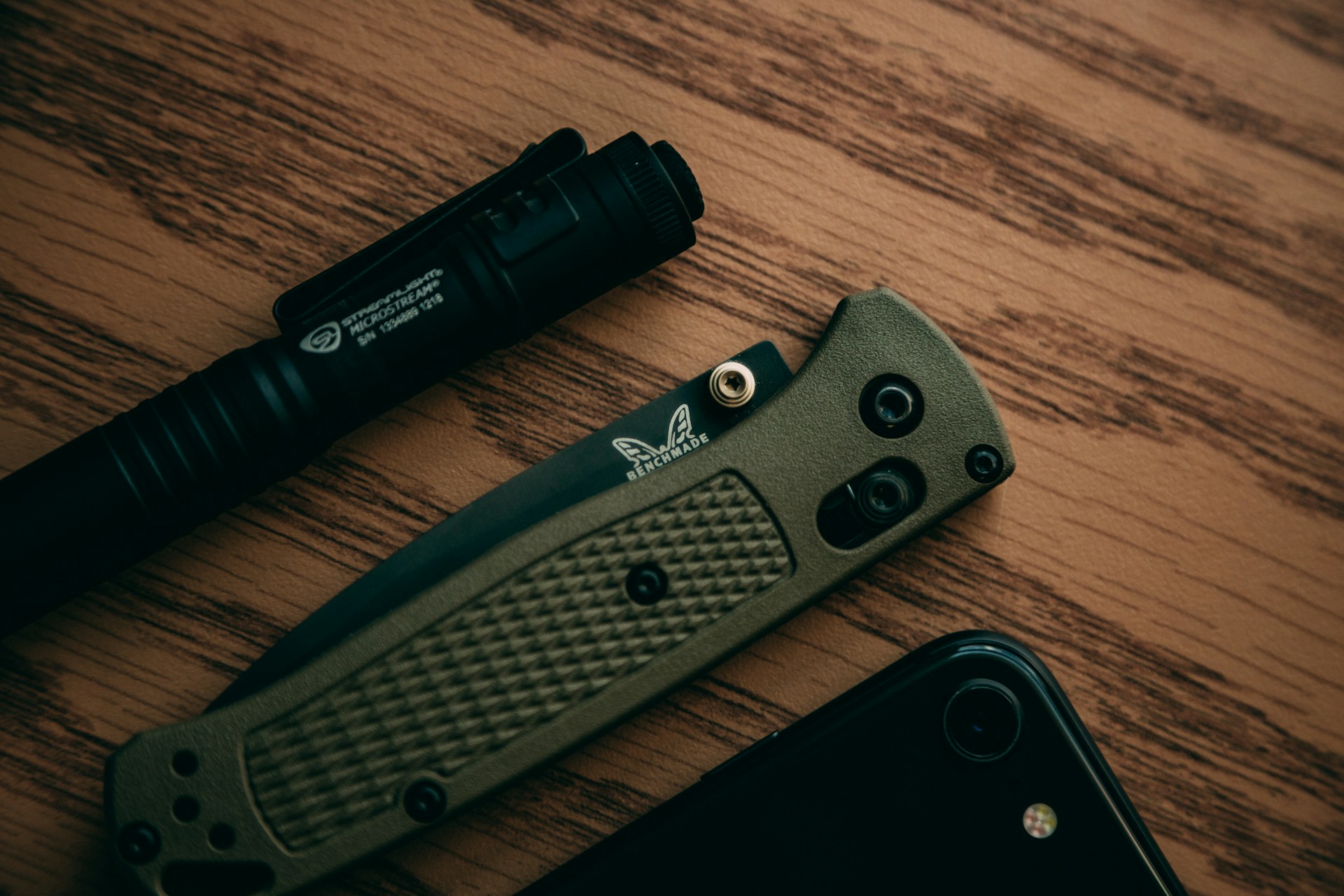
Pick up almost any Benchmade folder and you will find a small steel bar poking out of both sides of the handle, just behind the blade. That bar is the Benchmade AXIS lock. Draw it rearward and the blade is released to pivot. Let go and the springs snap it forward into a notch in the blade, locking it open. That one moving part is why so many people can open and close a Bugout or Griptilian one-handed in either hand without ever putting a finger in the blade’s path.
This guide covers what is inside the mechanism, how it came about, the versions Benchmade builds today, and how to keep it working smoothly.
The Parts Inside an AXIS Lock
Benchmade describes the AXIS as a crossbar lock. Here are the pieces that matter:
- The lock bar. A hardened steel bar that spans the handle from one liner to the other. Both ends stick out of the handle so you can grab it from either side.
- The slots. The liners have a short slot cut into them. The bar rides forward and back in those slots.
- The springs. On the classic design, two Omega-shaped wire springs, one on each side, push the bar forward. Newer designs use different springs (more on that below).
- The tang notch. The back of the blade, called the tang, has a ramp and a notch. When the blade opens, the bar slides into that notch and wedges there.
Because the bar sits behind the blade instead of inside the grip area, your fingers never need to be in front of the edge to release it. That is the single biggest safety advantage people notice coming from other designs.
What Happens When You Open and Close It
Here is the sequence, step by step:
- Closed. The bar presses against the tang, which also holds the blade shut with light tension.
- Opening. As you push the thumb stud, the tang’s ramp pushes the bar back against its springs.
- Locking. When the blade reaches full open, the notch lines up with the bar, and the springs snap it forward. You hear and feel a click.
- Releasing. Pull the bar back with your thumb. The notch is now clear, and the blade can rotate.
- Closing. Keep the bar pulled back and let the blade swing toward the handle, then release the bar once your fingers are clear.
With the bar held back, the blade swings freely in both directions. That free swing is what makes AXIS knives so fun to flick open and closed, and it is also why you should keep fingers out of the blade’s arc while doing it.
Where the Benchmade AXIS Lock Came From
According to Benchmade, the AXIS lock was developed by custom makers Bill McHenry and Jason Williams, who had their first breakthrough in 1996 and began the patent process. The mechanism debuted on the Benchmade 710 in 1999. After the patent expired, many other makers adopted similar crossbar locks, but the AXIS name and design remain Benchmade’s.
For the 25th anniversary, Benchmade released the SEVEN | TEN, a modern tribute to that first knife. The Benchmade SEVEN | TEN in MagnaCut brings the original recurve profile back with current materials.
Three Generations of Springs
The bar has stayed the same in concept, but the springs behind it have changed:
- Omega springs. The original design uses wire springs, and Benchmade’s AXIS collection page still describes the classic lock as driven by “two proprietary Omega-style springs.”
- AXIS 2.0 and the Numega spring. Benchmade’s newer design swaps the wire Omega springs for a hardened, leaf-spring-style piece of steel. Benchmade says the Numega was tested to over one million cycles with no signs of wear or fatigue, and the lock bar on this version has ramped studs for better grip.
- Torsion AXIS. Found on the Narrows and the Bugout Vapyr, this version replaces the Omega springs with a precision coil spring.
You do not need to know which generation your knife has to use it. It matters mainly when ordering parts or sending a knife in for service.
See the mechanism in person: the easiest way to understand the AXIS is to work one, so stop by Sharp Things OKC on N May Ave to try several models, or browse the Benchmade lineup online.
AXIS Assist, Auto AXIS and the AXIS Flipper
The same crossbar shows up in several opening styles across Benchmade’s catalog:
- Manual AXIS. You open the blade with a thumb stud. This is the Bugout, Griptilian and Osborne.
- AXIS flipper. A small tab on the back of the blade lets you flip it open with your index finger. Benchmade’s Lowden uses this setup for a fast, snappy opening.
- AXIS Assist. You start the blade moving, then a spring takes over and finishes the opening. Benchmade notes that spring-assisted blades still have to be started by the user and are biased toward staying closed. The PSK and Barrage are Benchmade’s flagship examples.
- Auto AXIS. Pulling back the lock bar fires the blade open with consistent spring power. That makes it an automatic, which is regulated differently in many places.
If you are weighing an assisted knife against an automatic, our breakdown of assisted opening vs automatic knives explains the difference, and laws vary by location.
One-Hand Handling Tips
A few habits make any AXIS knife easier and safer to run:
- Opening: use the thumb stud on a manual knife. Once it is broken in, a firm push gets the blade to lock without any wrist flick.
- Closing: draw the bar rearward, tip the knife edge-down, and let gravity swing the blade partway. Release the bar and guide the blade home with your fingers on the handle, not on the spine near the edge.
- Gravity opening: with the bar held back, many AXIS knives will drop open with a small wrist movement. It is fun, but do it over a soft surface while you learn.
- Checking lockup: with the blade open, press gently on the spine. A healthy AXIS lock does not move. If the blade shifts, look for lint in the bar slots before assuming something is broken.
Honest Strengths and Trade-Offs
The strengths are real. The design is ambidextrous by nature, the release is away from the edge, and Benchmade’s mechanism guide credits it with “excellent strength and reliability.” Since the bar engages from both liners, there is no single thin spring tab taking all the load.
The trade-offs are small but worth knowing. The open slots in the handle let pocket lint and grit reach the springs, so an AXIS knife likes occasional cleaning. On older Omega-spring designs, a spring can break after many years. Benchmade lists internal mechanisms including the AXIS lock under its lifetime warranty for defects, so a failed spring on normal use is a service request, not a reason to retire the knife.
Cleaning and Lubricating an AXIS Lock
Most sticky AXIS bars are dirty, not damaged. A simple routine fixes them:
- Rinse the handle under warm water while working the bar back and forth. Avoid soaking the whole knife.
- Blow or shake out the water and let it dry fully, blade open.
- Put one small drop of lubricant on each end of the bar where it meets the liner slots, and one at the pivot.
- Work the bar and the blade 20 or 30 times, then wipe away anything that seeps out.
Too much oil attracts dust, which is the problem you were trying to fix. Our folder cleaning walkthrough goes further on routine care, and Benchmade’s LifeSharp service will clean, oil and adjust the knife for free if you would rather send it in.
Why the AXIS Has Lasted
The AXIS lock is simple to use, works the same for both hands, and keeps fingers away from the edge on release. A spring-driven bar and a notched tang is about as straightforward as a mechanism gets, which is why it has stayed at the heart of Benchmade’s folders for more than two decades.
Try an AXIS knife before you buy: come to Sharp Things OKC at 6610 N May Ave, open 9AM to 9PM daily, to work the lock on Bugouts, Griptilians and Osbornes back to back, or order an AXIS flipper like the Lowden in M390 through SharpThings.com.
Frequently Asked Questions
Is the AXIS lock ambidextrous?
Yes. The bar passes through both sides of the handle, so you can release it with either thumb. Most manual AXIS models also carry a thumb stud on each face of the blade, so a lefty opens it as naturally as a righty.
What should I do if my AXIS lock feels gritty or slow to return?
Clean it before anything else. Rinse grit from the bar slots, dry the knife, add a tiny amount of lubricant to each end of the bar, and cycle it. If the bar still sticks or does not return on its own, a spring may need attention, which Benchmade handles through its service program.
Can I replace AXIS springs myself?
Benchmade’s care guide routes any cleaning or repair that requires disassembly through a warranty request. Taking a knife apart and fitting aftermarket parts can affect how Benchmade treats it for service, so the safest route for a broken spring is to send the knife to Benchmade.
Do OTF knives from Benchmade use the AXIS lock?
No. Benchmade’s out-the-front knives, such as the Shootout, use a separate double-action automatic mechanism, where the blade both fires out and retracts through the front of the handle. The AXIS lock is used on folding knives that pivot open.
Why does my AXIS knife hold the blade closed?
On a closed knife, the spring-loaded bar presses against the tang, which adds light tension that keeps the blade from swinging open in your pocket. Pulling the bar back removes that tension, which is why the blade drops freely when you hold the bar.