Knife Types Explained: Match the Blade to the Job

You are standing over a cutting board with a serrated knife, trying to dice an onion, and it is going badly. Or you are at the truck, opening a taped box with a tanto tip that keeps skating off the seam. The knife was simply built for a different job than the one you asked of it.
Most people buy a knife by category name and hope for the best. That works until the job gets specific. Blade shape, grind, steel, and handle all pull in different directions, and the label on the box rarely explains which way.
Once you can read blade geometry, every knife in the case tells you what it is good at before you touch it. In this guide, you’ll discover how blade shapes and grinds change the way a knife cuts, which kitchen knives actually earn a slot in the block, and how folders and fixed blades split the workload. Buy for the cut you make most, not the one you imagine making.
Read the Blade Before You Read the Label
Every knife tells on itself. The shape of the tip, the angle of the grind, and the thickness behind the edge decide what the knife does well long before the brand name matters.
Blade Shape, Tip Strength, and Cutting Control
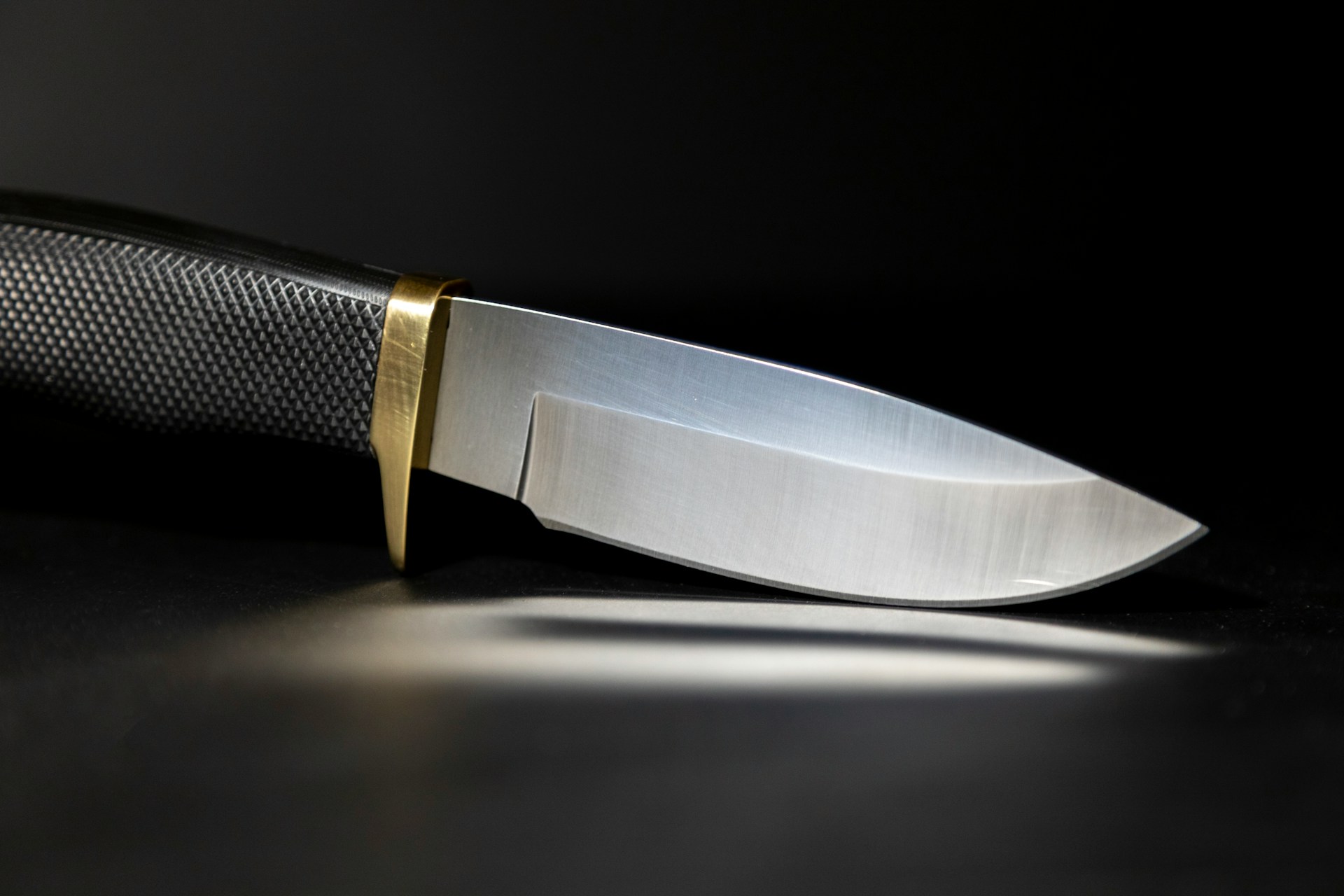
A drop point has a spine that curves gently down to the tip. That gives you a strong point and a wide belly, which is why it is popular among hunting knives and everyday folders. A clip point cuts the spine away near the front, creating a finer tip that pierces better but chips easier.
Spear point blades sit symmetrically, splitting the difference between piercing and slicing. Tanto shapes trade the belly for a reinforced, angled tip that survives abuse and hard punctures. A sheep’s foot has no point at all, which is exactly why rescue crews carry it.
Trailing-point and hawkbill blades both curve in opposite directions. A trailing point sweeps upward, giving you extra cutting edge for skinning long strokes. A hawkbill curves down and pulls material into the edge, which is why it shows up on rope and cord cutters.
Edge Styles and Grinds
A plain edge push-cuts cleanly and sharpens easily. A serrated blade tears through rope, webbing, and bread crust, but it needs a tapered rod or a shop to bring back. A partially serrated knife splits the difference and does neither job perfectly.
Grind matters as much as shape. A double-bevel blade is symmetrical and cuts straight, standard on most Western knives. A convex grind rounds the shoulders behind the edge, adding strength and helping the material fall away rather than bind. This blade info page breaks down finishes like stonewash, satin, and coated in more depth if you want the full picture before you shop.
Then there is the granton edge, those oval scallops on a slicer or santoku. They reduce suction so potatoes and salmon release instead of sticking. They do not make the knife sharper.
Steel, Heat Treatment, and Edge Retention
Steel is a set of trade-offs, never a ranking. Carbon steel and high-carbon steel take a very fine edge and sharpen fast, but they rust if you leave them wet. Stainless steel offers corrosion resistance and less babysitting, usually at the cost of ultimate sharpness.
Heat treatment decides whether the steel lives up to the label. The same alloy can be tough and reliable or brittle and chippy, depending on its hardness. That is why two knives in the same steel can behave nothing alike.
Here is the practical split:
- Edge retention first: powder steels like CPM-S45VN or MagnaCut hold an edge longer and resist rust well.
- Easy upkeep first: 8Cr13MoV, 14C28N, or AUS-8 dull sooner but come back to sharp in a few passes.
- Fine slicing first: high-carbon, thin Japanese steels get scary sharp, and they demand that you dry them.
- Hard use first: tougher steels like 3V shrug off impacts rather than chipping at the edge.
MagnaCut, in particular, was engineered to close the usual trade-off between toughness and corrosion resistance rather than just split the difference, which is part of why it and similar modern powder steels show up on more premium folders every year.
Handle Construction, Tang, and Balance
A knife handle you cannot hold securely makes every other spec irrelevant. G-10 and Micarta grip well when wet and shrug off weather. Wood feels better in the hand and needs oil and attention.
Tang construction decides how much force the knife survives. A full tang runs the length of the handle and takes prying, batoning, and lateral load. A partial or rat-tail tang keeps weight down but gives up strength where it counts.
Balance is the part you can only judge by feel. A blade-forward kitchen knife lets weight do the chopping, which changes everything about kitchen work.
Kitchen Blades That Earn Their Counter Space
A knife block full of ten knives usually means you use three. Pick the ones that match how you actually cook.
The Chef’s Knife, Gyuto, and Santoku
The chef’s knife is the workhorse: 8 to 10 inches, curved belly, built for rocking through onions and herbs. Western versions run thicker and heavier, which helps with dense squash and hard root vegetables.
A gyuto is the Japanese take on the same idea. Thinner stock, harder steel, a flatter profile, and a finer edge angle. It slices with less effort and asks you to keep it off bone.
The santoku knife is shorter, usually 5 to 7 inches, with a flatter edge and a rounded tip. Push-cutting works better than rocking, and the shorter blade suits small boards and smaller hands.
Vegetable Knives, Cleavers, and Nakiri
A nakiri knife is a flat, rectangular vegetable blade with no belly at all. It drops straight down through cabbage and carrots, leaving a clean, edge-to-edge cut. No rocking, no sawing.
A vegetable cleaver looks similar but goes thinner and taller, closer to a Chinese chef’s knife. It scoops chopped food off the board, which is half the appeal. A meat cleaver is the opposite tool: thick, heavy, and designed to cut through poultry bone.
Do not confuse the two. A thin vegetable cleaver will chip on a joint.
Small Prep and Serrated Knives
A paring knife handles what your hands need to control: peeling, hulling, deveining, trimming fat. Three to four inches is plenty. A utility knife, sometimes called an all-purpose knife, at 5 to 7 inches, is ideal for sandwiches, tomatoes, and citrus.
A bread knife needs a long blade and aggressive serrations to slice bread without crushing the crumb. A tomato knife is a short, serrated blade, often forked at the tip, for skins that resist a plain-edged knife. Butter knives and steak knives round out the table side.
Meat, Fish, and Sushi Specialists
A boning knife is stiff and narrow, ideal for working around joints in poultry and pork. A fillet knife flexes, which is what you want when filleting fish along the rib line. Butcher knives take the heavy breakdown work.
For carving meat, a long carving knife with a narrow profile gives you clean, uniform slices off a roast. A yanagiba knife, also called a salmon knife in some shops, is single-beveled and designed for a single long pull cut on sashimi.
An oyster knife functions more like a pry tool: a short, blunt point that pops hinges without snapping.
Sharp Things OKC’s kitchen knives selection covers most of the categories above if you want to compare a few side by side.
Folding Blades for Pocket and Everyday Work
Folding knives trade a bit of strength for the ability to disappear into a pocket. For 90 percent of daily cutting, that trade is the right one.
Everyday Carry Folders and Pocket Knives
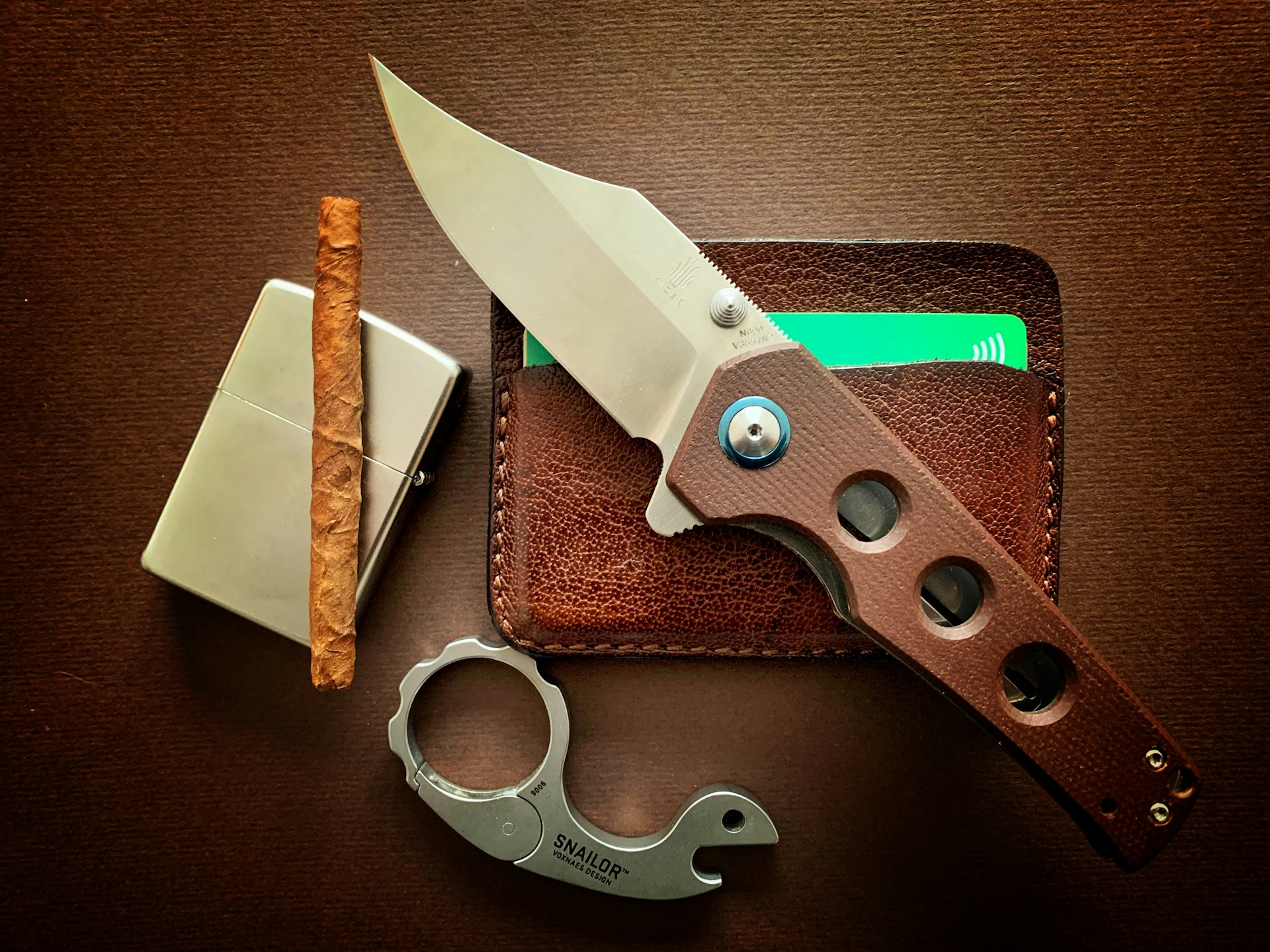
An EDC folder lives or dies on how easily you carry it. A 3-inch drop point in a pocket clip covers boxes, tape, zip ties, and food. Deep-carry clips keep the knife from broadcasting itself.
Weight matters more than people expect. Medford titanium framelock knives run heavy and feel bombproof. Benchmade’s lighter aluminum or G-10 builds vanish in a pocket, which means you actually keep them on you. Sharp Things OKC’s folding knives selection carries both, along with Microtech, Kizer, and several other brands worth comparing side by side.
Lock Types, Opening Systems, and Safe Carry
The lock is the safety system. Liner locks and frame locks use a spring bar that snaps behind the tang, simple and easy to close one-handed. The Benchmade AXIS lock uses a spring-loaded bar and works ambidextrously with no finger in the blade path.
Microtech button locks and out-the-front automatics deploy with a thumb press and lock hard. Automatic knife laws vary by state, so know your local rules before you order. Slipjoints have no lock, which keeps them legal in more places.
Butterfly knives, gravity knives, and some automatics carry extra restrictions in certain jurisdictions. Check before you carry, not after.
Purpose-Built Utility, Rescue, and Multi-Tool Options
Rescue knives combine a blunt sheepsfoot tip with serrations, sometimes plus a seatbelt cutter and glass breaker. The blunt tip is intentional so you can cut a belt off someone without stabbing them.
A replaceable-blade utility knife means you swap in a fresh blade instead of sharpening the old one, which is exactly what makes it fast for drywall, carpet, and cardboard all day. Multi-tools trade blade quality for pliers, drivers, and scissors in one package.
Tactical Styling Versus Practical Cutting Needs
Plenty of tactical knives are excellent tools with black coatings and aggressive lines. Plenty of others are all styling and no cutting geometry. A thick tanto with a steep grind looks serious and struggles with an apple.
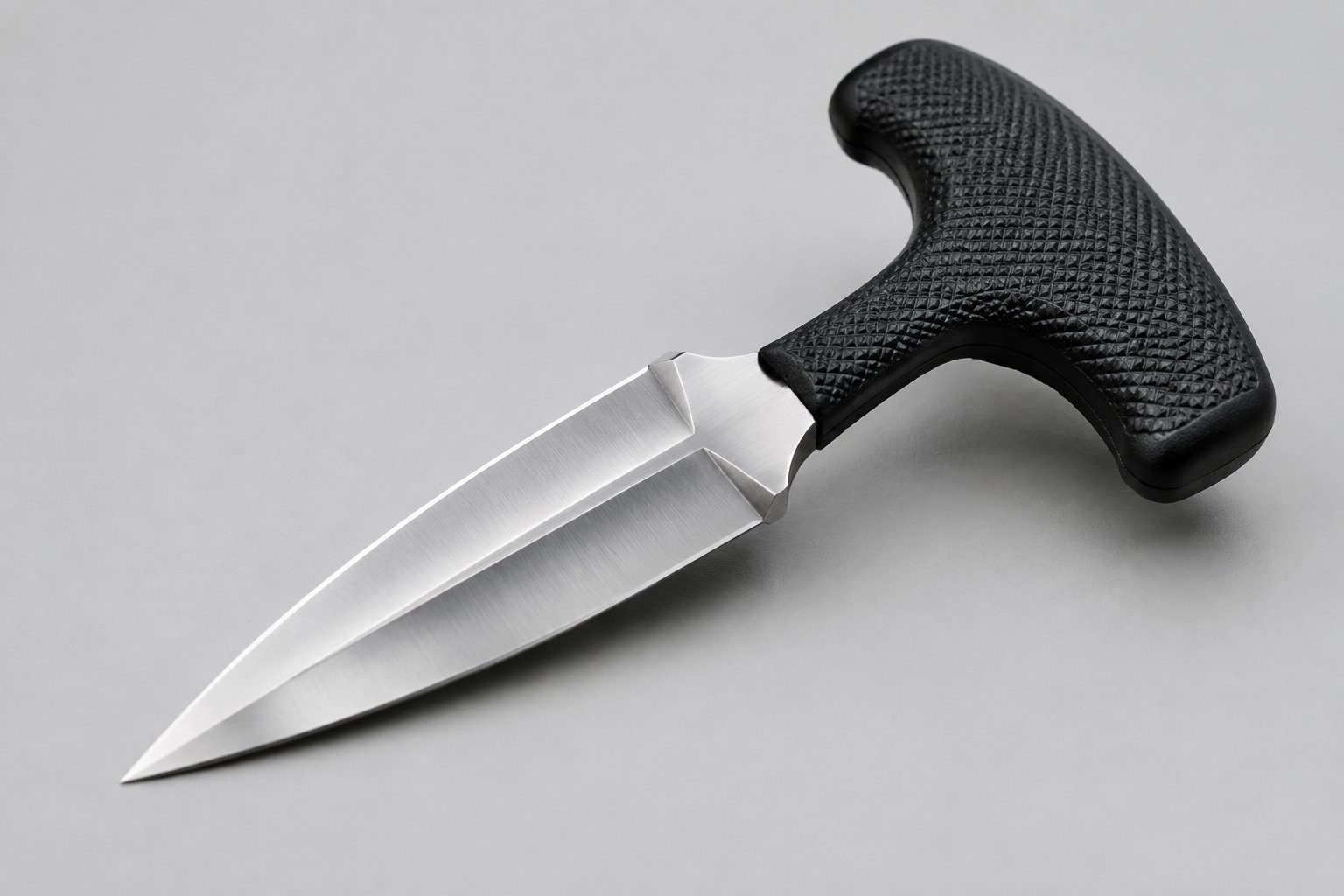
Stiletto, dagger, dirk, karambit, and boot knife designs all trace back to fighting, not utility. Some, like the karambit, do real work cutting cord and webbing with that hooked blade. Others are collector pieces, and that is a legitimate reason to own one.
Just be honest about which one you are buying. When the work gets heavier than a folder can handle, you need something with no moving parts.
Fixed Blades for the Field, Camp, and Hard Use
Fixed blades have no lock to fail and no pivot to loosen. The strength comes from the tang running through the handle.
Hunting and Skinning Profiles
A drop-point hunting knife does most of the work for field dressing. A strong tip, a useful belly, and no fussy geometry. A skinning knife with a trailing point puts more of the curved edge in play for long, sweeping strokes under the hide.
A gut hook helps open a cavity without puncturing organs, but it also snags and complicates sharpening. Many hunters skip it and use a careful tip instead.
Survival and Camp Knife Priorities
Camp knives need a 4- to 6-inch blade, a full tang, and a spine you can strike a ferro rod on. Skip the hollow handle. A 90-degree spine and a comfortable grip matter more than any survival gimmick.
For wood carving and feather sticks, a Scandi or convex grind that bites into the grain beats a thin slicing profile. High-carbon steels like 1095 and 3V take abuse well. In wet climates, corrosion resistance moves up the list fast.
Choppers, Kukris, and Machetes
A machete is a long, thin blade for clearing brush and green vegetation. Light in the hand, weak on hardwood. A kukri puts the weight forward with a forward-angled bend, which turns wrist motion into chopping force.
Camp choppers land between the two: thicker stock, shorter blade, ground to split kindling without folding.
When a Fixed Blade Beats a Folder
Reach for a fixed blade when the task involves impact, prying, or blood. No pivot to clean, no lock to trust, no gap where gunk collects. Sheath carry also means the blade is ready with one hand.
A folder still wins on pockets and social settings. For most people, the real answer is both, sized to the job. Sharp Things OKC’s fixed-blade knife selection covers everything from hunting drop points to 3V-steel camp knives.
Choose for the Work, Then Carry It With Confidence
The decision gets simple once you name the cut you make most often and buy the geometry that serves it. Everything else is preference.
A Practical Matchup for Common Cutting Tasks
Daily box opening and general tasks: a 3-inch drop point folder in stainless steel with good corrosion resistance. Vegetable prep in volume: a thin, flat nakiri or santoku. Roasts and briskets: a long carving knife; nothing else comes close.
Field dressing and camp work: a full-tang drop point fixed blade with a grippable handle. Rope, webbing, and cord: serrations or a hawkbill.
Care Habits That Protect Any Blade
Wash by hand, dry immediately, and keep carbon steel oiled. Dishwashers ruin handles and temper. Run a honing rod weekly on kitchen knives to realign the edge before it needs real work.
When honing no longer helps, move to a whetstone at 15 to 20 degrees per side. Use 15 degrees for thin Japanese kitchen knives, and closer to 20 for hard-use folders and outdoor knives. Our sharpeners section stocks whetstones and rods for either job. Store blades in a block, sheath, or magnetic strip, never loose in a drawer.
Frequently Asked Questions
What Are the Eight Basic Kitchen Knives and What Is Each One Used For?
Chef’s knife for general chopping, paring knife for detail work, utility knife for mid-size tasks, and bread knife for crusty loaves. Add a boning knife for joints, a fillet knife for fish, a carving knife for roasts, and a cleaver for bone and heavy produce. Most home cooks lean on the first four.
Which Knife Styles Are Essential for a Beginner Kitchen Setup?
An 8-inch chef’s knife, a 3.5-inch paring knife, and a serrated bread knife handle nearly everything. Buy three good ones instead of a twelve-piece block of mediocre steel. Add specialists only when a task keeps frustrating you.
What Is the Difference Between a Chef’s Knife, Santoku, and Nakiri?
A chef’s knife has a curved belly built for rocking cuts. A santoku is shorter and flatter, better for push-cutting on a small board. A nakiri is fully flat and rectangular, made for straight up-and-down vegetable chopping.
Which Pocket Knife Blade Shape Is Best for Everyday Carry?
A drop point wins for most people because it balances a strong tip with a useful belly. A sheepsfoot or Wharncliffe is better if you cut mostly flat material like cardboard and never pierce. Skip a steep tanto unless you actually need tip strength.
What Lock Types Are Available on Folding Knives, and Which Are Strongest?
Common options include liner lock, framelock, AXIS-style bar locks, button locks, and lockbacks. Framelocks and bar locks generally test strongest in the real world. Any well-made lock is stronger than the cutting task, so pick the one that closes safely for you.
How Do I Choose the Right Blade Length and Knife Size for My Needs?
For pocket carry, 2.5 to 3.5 inches is enough for daily cutting and stays legal in most places. Camp and hunting fixed blades work best from 4 to 6 inches. Longer than that, and you are buying a chopper, not a knife.
Handle the Right Blade Before You Decide
Specs get you close. Grip, balance, and how the lock feels under your thumb close the deal, and none of that shows up on a product page.
Sharp Things OKC keeps Microtech, Benchmade, Medford, and more in the case for exactly that reason. Local readers, come into the OKC store on N May Ave and hold a few before you decide.