What Is a Santoku Knife Used For? A Practical Guide for Home Cooks

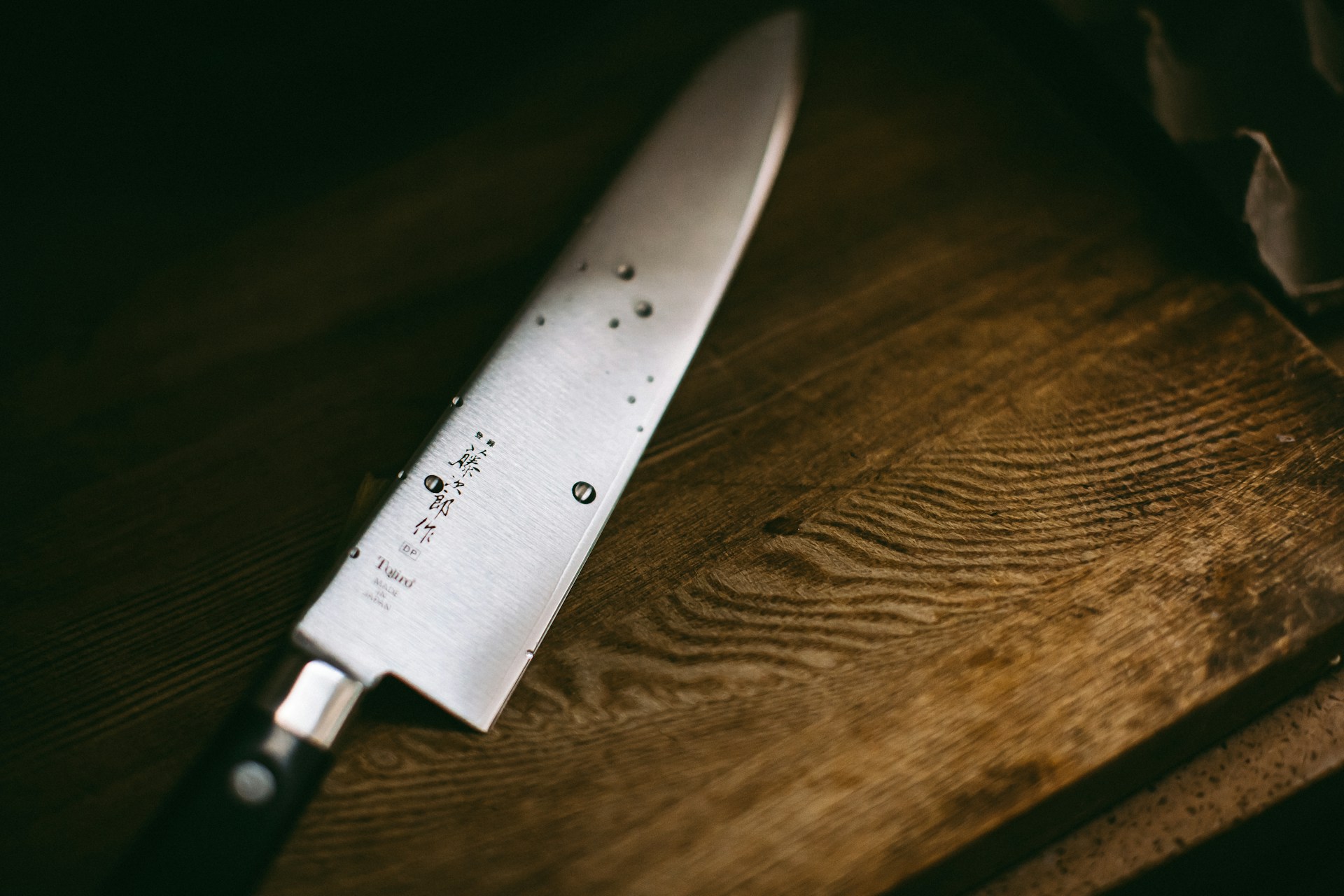
The quick answer to “what is a santoku knife used for” is this: thin, fast, controlled cuts on a cutting board. It slices vegetables paper thin, dices onions into even cubes, minces herbs and garlic, and portions boneless meat and fish. Its flat edge and wide blade make it a push-and-chop knife rather than a rocking knife, and that one detail explains almost everything it does well.
Below, you will find the jobs it handles best, how to move it on the board, the few tasks to hand off to another blade, and how it stacks up against a chef’s knife.
Why the Shape Decides the Job
Pick up a santoku next to a Western chef’s knife and three differences jump out.
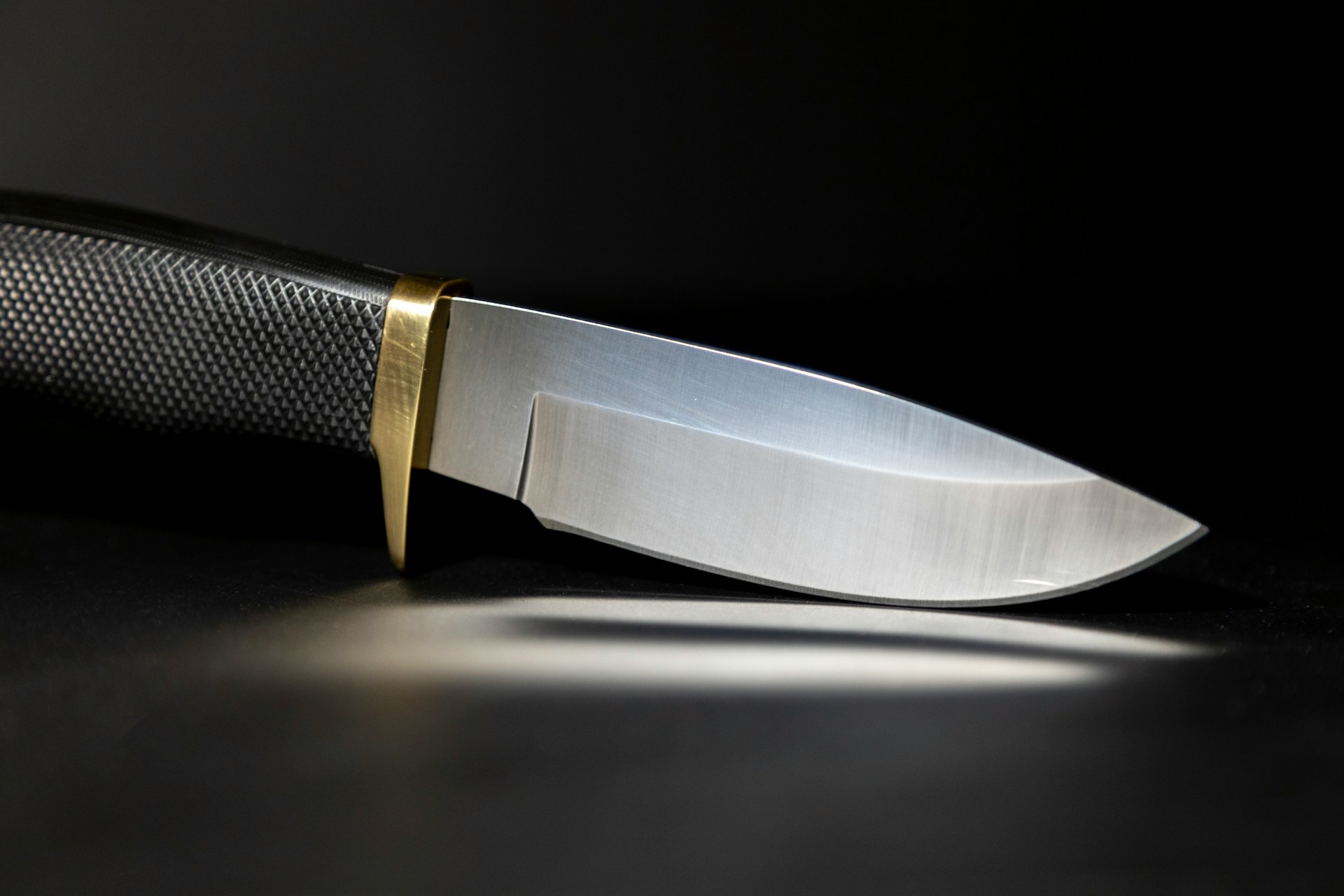
The edge is nearly flat. A chef’s knife has a long curve, or belly, that lets you rock the blade from tip to heel. A santoku has only a gentle curve near the front, so most of the edge meets the board at once.
The tip drops down. Instead of rising to a sharp point, the spine curves down to meet the edge. Cooks often call this a sheepsfoot style tip. It keeps the point out of the way and puts more usable edge in front of your fingers.
The blade is tall and short. Most santokus run 5 to 7 inches long, with a blade height that gives your knuckles room to clear the board. That height also turns the blade into a handy scoop for carrying chopped food to the pan.
The name is usually translated from Japanese as “three virtues.” Some say that means slicing, dicing and mincing. Others say it means meat, fish and vegetables. Either reading lands in the same place: it is a general kitchen knife built for everyday prep.
What Is a Santoku Knife Used For: The Jobs It Handles Best
Slicing vegetables thin and even
This is where a santoku shines. The flat edge lets you make straight down or forward cuts that leave every slice the same thickness. Cucumbers, zucchini, radishes, carrots and potatoes for a gratin all come out clean. Cabbage for slaw is a great test, since a sharp santoku shaves it into fine ribbons in a few passes.
Dicing onions, peppers and celery
Dicing is a series of straight cuts in three directions, and a flat edge is perfect for straight cuts. Make your horizontal and vertical cuts with the tip region, then chop across. The tall blade keeps your guiding hand well above the board, which makes it easier to keep cubes even.
Mincing garlic, shallots and herbs
With no big belly to rock, you mince with a quick up-and-down tap chop. Gather the pile with the spine side, chop again and repeat. Fresh parsley, cilantro and basil stay greener when the edge is sharp, because the blade cuts the leaves instead of bruising them.
Portioning boneless meat and fish
A santoku slices chicken breasts into strips for a stir fry, cuts pork into cubes for kabobs and portions salmon fillets. Use long forward strokes rather than pressing straight down, and let the blade do the work. Leave bones and joints to a heavier blade.
Scooping and transferring
It sounds minor, but the wide blade earns its place every night. Slide it under a pile of diced onion and carry it straight to the skillet without dropping half on the counter.
See a few santokus side by side: blade height, weight and handle shape feel very different once you hold them, so drop into our N May Ave store any day between 9AM and 9PM and try several before choosing, or look through our kitchen knife selection online.
The Cutting Motion That Gets the Most From a Santoku
People who complain that a santoku feels awkward are usually trying to rock it like a chef’s knife. The flat edge does not roll, so rocking just lifts the tip off the board and leaves cuts that are not quite finished.
Use these two motions instead:
The push cut. Start with the tip area resting on the food and push the knife forward and down in one smooth stroke, so the blade travels through the food as it lowers. Lift, move back and repeat. This is the main motion for slicing vegetables.
The tap chop. Keep the blade level and bring it straight down, lifting it just enough to clear the food each time. Short, fast, light. This is the motion for mincing and for finishing a dice.
For both, use a pinch grip: thumb and the side of your index finger on the blade just ahead of the handle, the other three fingers around the handle. Curl the fingertips of your other hand under, so your knuckles guide the side of the blade. That grip gives you far more control than holding the handle like a hammer.
Hollow Edge Dimples and What They Do
Many santokus have a row of oval dimples ground just above the edge, often called a hollow edge or Kullenschliff. The pockets let a little air between the blade and wet food, which helps slices of potato, cucumber or cheese fall away instead of clinging to the steel. They do not make the knife sharper, and they work best on moist, dense foods.
The Lamson 7 inch Premier Forged santoku with Kullenschliff edge is a good example of the format. Lamson lists it with a forged blade of German 4116 stainless steel hardened to 58 on the Rockwell C scale, a 2 inch tall blade and a black G-10 handle, made in Massachusetts.
Jobs to Hand Off to Another Knife
A santoku covers most nightly prep, but it is not the right tool for everything:
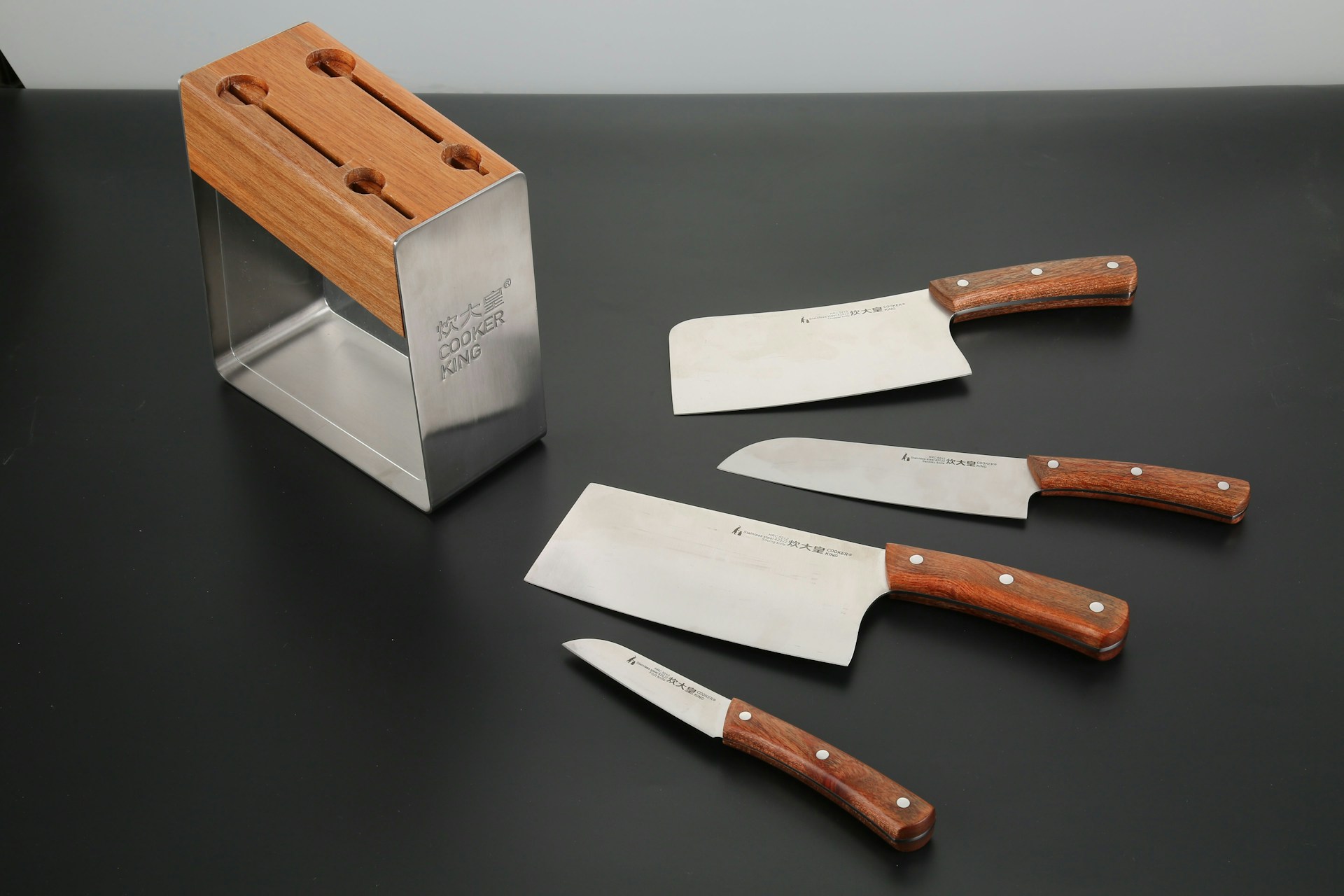
- Bones and frozen food. The thin edge can chip or roll if you twist it against bone. Use a cleaver or a heavier knife.
- Winter squash and big pumpkins. A short, thin blade can wedge and stick in very hard, dense produce. A longer, heavier chef’s knife gives you more power behind the cut.
- Crusty bread. A serrated bread knife cuts the crust without crushing the crumb.
- Peeling and in-hand work. A paring knife is safer and easier when the food is in your hand rather than on the board.
- Long slices from big roasts. A 5 to 7 inch blade runs out of length on a large brisket or ham. A slicing or carving knife does it in one stroke.
Santoku vs Chef Knife: How to Choose
Both are all-purpose kitchen knives, so the santoku vs chef knife decision comes down to how you like to cut.
| Santoku | Chef’s knife
|
|
|---|---|---|
| Edge profile | Mostly flat | Curved belly |
| Main motion | Push cut and tap chop | Rocking and slicing |
| Typical length | 5 to 7 inches | 8 to 10 inches |
| Tip | Rounded, dropped point | Sharp, upswept point |
| Feel | Lighter, nimble | Longer reach, more heft |
| Best fit | Vegetable-heavy cooking, smaller hands, smaller boards | Big batches, large produce, cooks who like to rock |
Choose a santoku if you cook a lot of vegetables, prefer a lighter knife, have a smaller cutting board or simply like the chopping motion. Choose a chef’s knife if you like rocking through herbs, often break down large items or want the extra reach. Plenty of cooks own both and reach for the santoku most nights. Our guide on how to choose a kitchen knife covers how these blades fit together in a small set.
Steel, Edge Angle and Care
Santokus are made in both Western and Japanese styles. Japanese-style knives often use harder steel with a thinner edge, which feels very sharp but asks for more care around bones and hard foods. German-style stainless such as 4116 is a bit softer and more forgiving, and it hones back easily. Those steel names and Rockwell numbers can look like alphabet soup, and our plain-English rundown of kitchen steels and hardness decodes them.
Whatever the steel, the care routine is the same:
- Hand wash it in warm, soapy water and towel it off as soon as you finish. Lamson, for one, says its knives are not dishwasher safe.
- Cut on wood or plastic, never glass, stone or a plate.
- Hone regularly so the flat edge stays straight along its length.
- Store it in a block, on a guard or in a slot, not loose in a drawer.
Where a Santoku Earns Its Spot
A santoku is a flat-edged, all-purpose knife for slicing, dicing and mincing on the board, plus portioning boneless proteins. Use push cuts and tap chops instead of rocking, keep it away from bones and frozen food, and it will handle most of your nightly prep with speed and control.
Try the grip before you buy: pick up a santoku in one hand and a chef’s knife in the other at Sharp Things OKC on N May Ave, and compare the flat edge against the curved belly side by side. You can also browse the full Lamson kitchen range, santoku included, at SharpThings.com.
Frequently Asked Questions
Can a santoku knife cut meat?
Yes, it handles boneless meat well, including chicken breasts, pork loin and beef for stir fry. Use long forward strokes and avoid cutting through bone or joints, which can chip the thin edge.
What size santoku should I buy?
Seven inches suits most home cooks and standard cutting boards. A 5 to 5.5 inch santoku is easier for small hands and small kitchens, while it gives up some reach on big piles of vegetables.
Is a santoku good for left-handed cooks?
Most Western-made santokus have a symmetrical edge, sharpened the same on both sides, so they work in either hand. Some Japanese knives have an asymmetric or single-bevel grind, so check the edge before buying if you cut left-handed.
Why do some santokus have a dimpled blade?
The dimples form small air pockets between the steel and the food. That reduces suction, so wet slices of potato, cucumber or cheese release from the blade more easily. The effect is helpful but modest.
Can I use a santoku on a glass cutting board?
Avoid it. Glass, stone and ceramic surfaces are far harder than knife steel and roll or chip a thin edge quickly. Wood or a quality plastic board keeps the edge sharp much longer.