What Is EDC? Everyday Carry Culture, Essential Gear, and Why It Matters Today

You keep seeing the letters EDC in comment sections, gear videos, and product titles, and nobody stops to define them. Maybe a coworker flipped open a folder to cut a zip tie and called it his EDC knife. Maybe you searched the term and got hit with photos of festival wristbands instead.
EDC stands for everyday carry: the small set of items you keep on you daily because they solve real problems, not because they look good in a photo.
That definition is simple, but the culture behind it runs deep, and the gear ranges from a five-dollar keychain light to a Microtech automatic with M390 steel. Plenty of people spend years refining a three-item pocket setup.
Keep reading to learn what everyday carry actually means, why the philosophy caught on, which gear categories matter, and how to build a kit without turning your pants into a tool bag. Fair warning from behind the counter: most people carry too much for the first six months, then trim it down and never look back.
The Pocket-Ready Philosophy
Everyday carry is a filtering habit more than a shopping list. If an item earns its space by doing something useful on an ordinary Tuesday, it belongs. If it just rides along, it does not.
That is why the EDC crowd talks about intent so much. A pocket knife that opens boxes, trims loose threads, and cuts kids’ snack packages open is a tool. A knife you never touch is a paperweight with a clip.
Utility, Preparedness, and Personal Routine
Utility comes first. A folder handles cutting, a flashlight handles darkness, a pen handles paperwork the phone cannot sign.
Preparedness is the second layer, and it is less dramatic than the internet suggests. It usually looks like a light during a power outage or a pocket tool tightening a loose cabinet hinge before it falls off.
Then there is routine, which people underestimate. Your carry should mirror your actual day: a nurse, an electrician, and a teacher will build three different kits. A pocket organizer or a watch may matter more to you than any blade, and that is a legitimate answer.
The Difference Between Essentials and Pocket Clutter
Clutter is anything you carry out of habit rather than use. Receipts, a dead lighter, a second knife you never open, that odd bottle opener from a trade show.
A simple test: carry a setup for two weeks and note what you actually reach for. Anything untouched gets pulled. That single exercise fixes more overloaded pockets than any gear purchase.
Once you separate tools from ballast, the obvious question is why so many people suddenly care.
Why Everyday Carry Culture Has Taken Off
Everyday carry went mainstream because the gear got dramatically better and the internet gave people a place to compare it. Ten years ago, a pocket knife with premium steel was a specialty order. Now S45VN and CPM MagnaCut show up on production folders you can hold in a shop.
There is also a practical driver. People noticed that fixing a small problem yourself, right then, beats waiting on someone else.
From Niche Hobby to Mainstream Interest
For decades, this was just living prepared. Your grandfather carried a Case slipjoint and a handkerchief and never used the term.
The shift came when manufacturing caught up with enthusiast demand. Benchmade’s AXIS lock, Spyderco’s thumb hole and full-flat grinds, and modern powdered steels raised the floor for what a mid-priced folder could do.
Materials followed. G-10, Micarta, titanium, and carbon fiber replaced stamped steel handles, so knives got lighter, grippier, and far more pleasant to carry all day.
Function, Personal Style, and Online Gear Communities
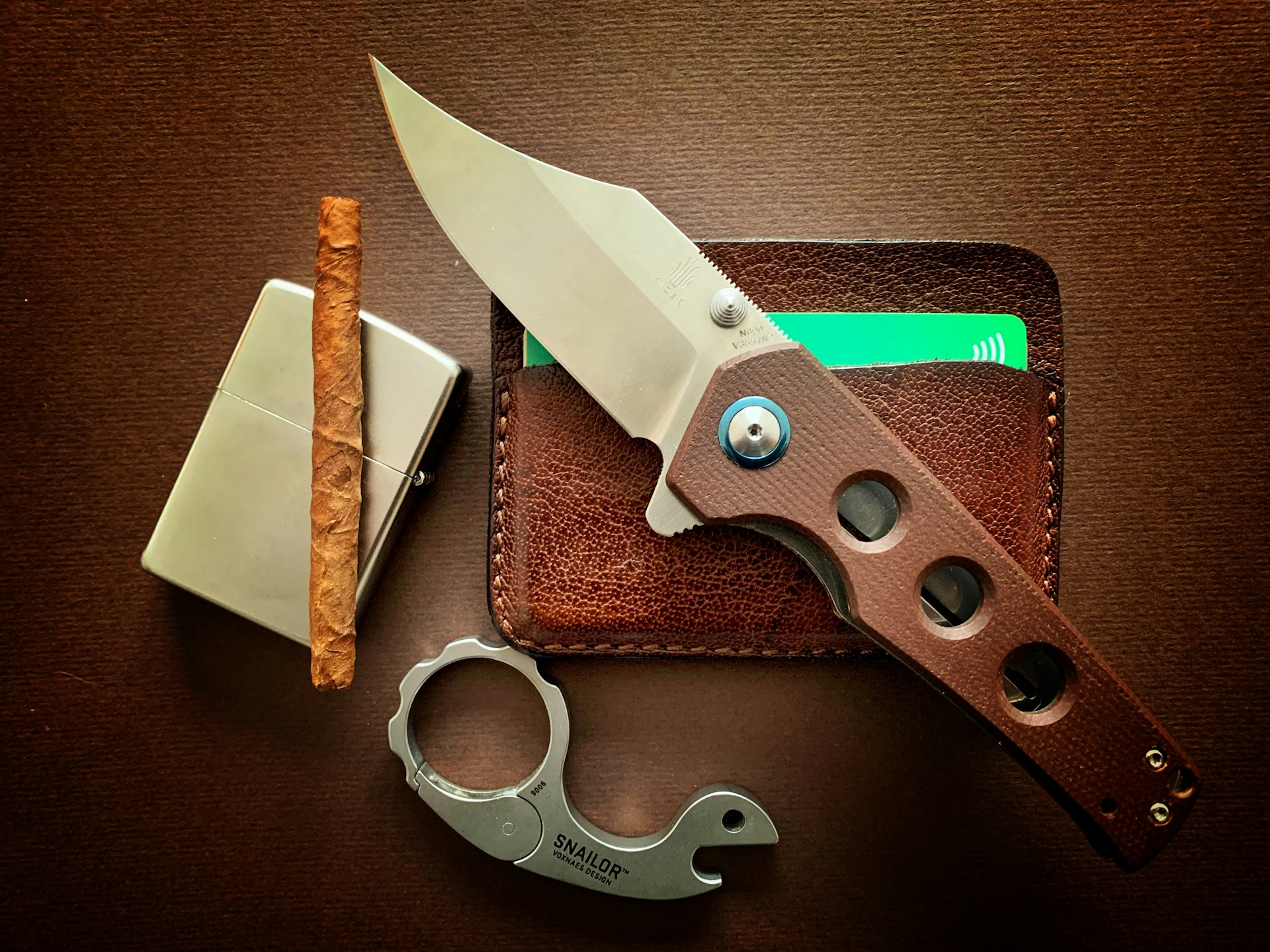
Pocket dump photos did a lot of the work here. Seeing someone’s carefully chosen watch, wallet, light, and folder laid out on a desk makes the idea legible at a glance.
Style became part of it, honestly. What you carry says something, the same way boots or a jacket do, and enthusiasts trade opinions on scale, texture, and clip placement with real passion.
The credibility piece matters too. When people who carry a Pro-Tech automatic or a Heretic OTF daily discuss it, buyers learn what specs feel like in hand instead of on paper.
Which brings up the practical question: what actually goes in a kit?
Core Gear Categories for a Useful Kit
Most everyday carry setups fall into a handful of categories. You will not need all of them, but knowing the map helps you spot the gaps in your own pockets.
Here is the working breakdown:
- Cutting tool: a folding knife, fixed blade, or automatic for daily tasks
- Light: a dedicated flashlight with real output and a lasting battery
- Multitool: pliers, drivers, and scissors in one pocketable unit
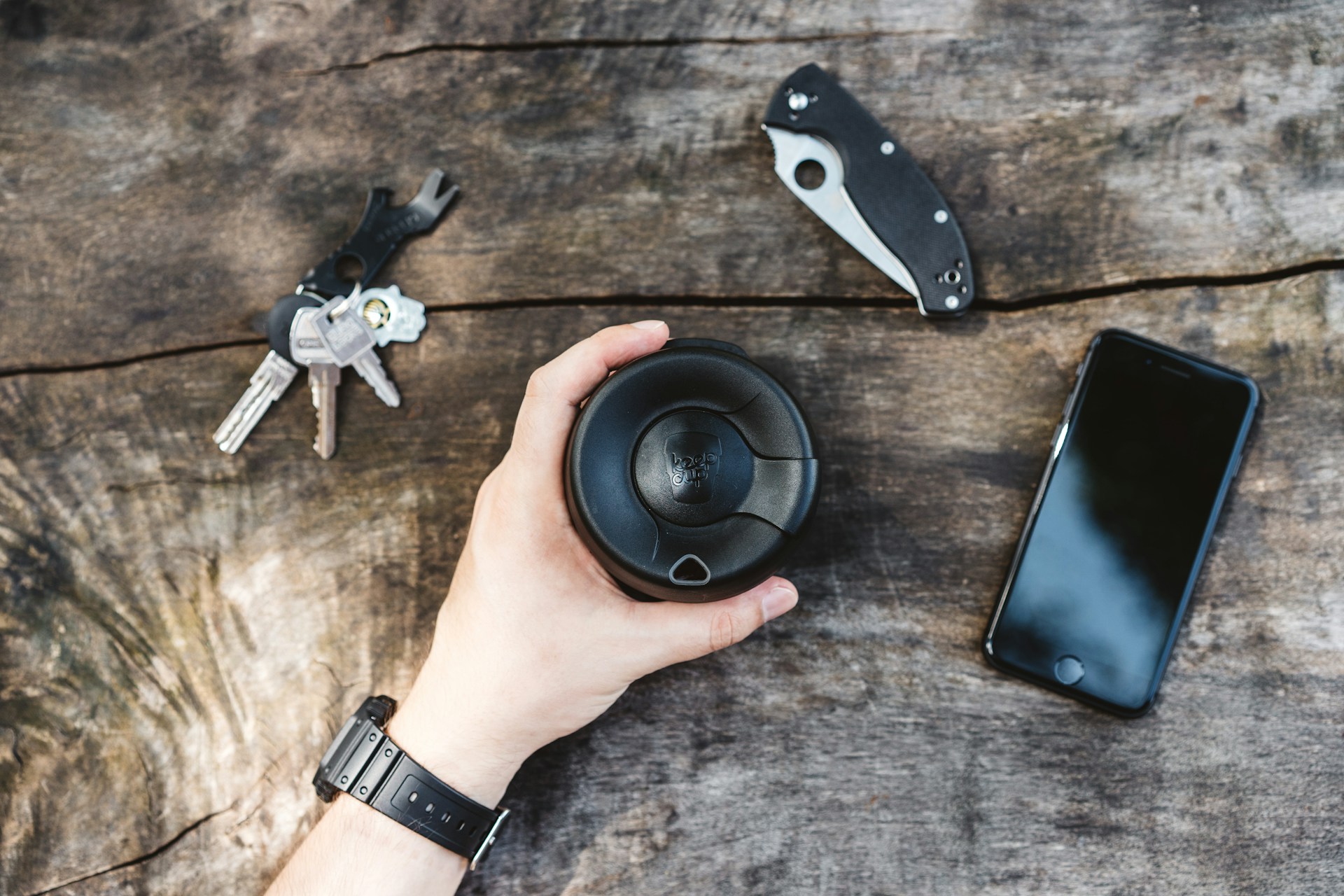
- Carry essentials: phone, slim wallet, key organizer
- Organization: a pocket organizer or pouch when your kit outgrows your pockets
- Personal safety: whistle, safety keychain, or similar low-profile option
- Timekeeping and notes: a watch and a small pen or notebook
Folders and Compact Cutting Tools
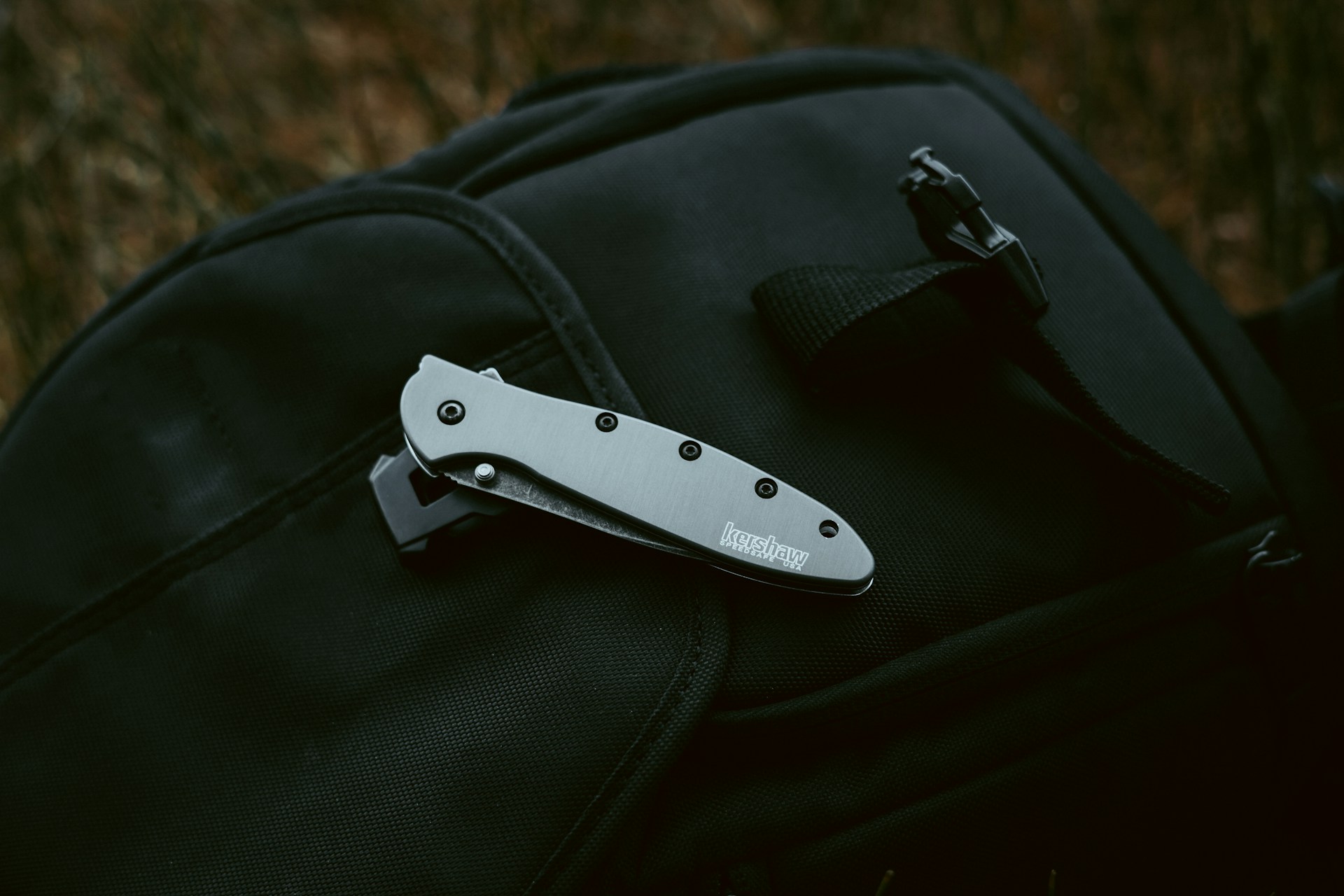
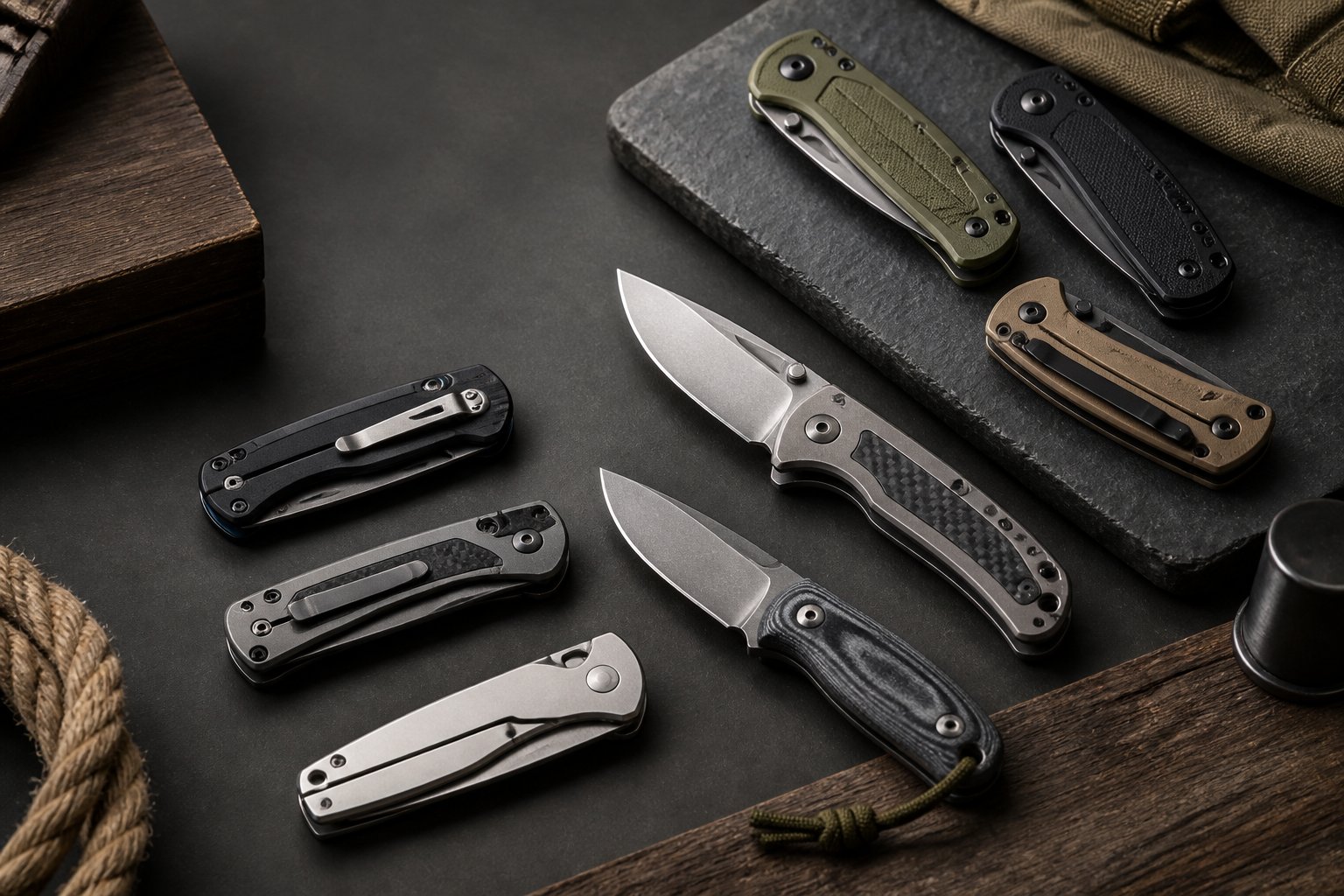
A folder anchors most kits. Look at three things: blade length, lock, and steel.
Blade length between 2.5 and 3.5 inches covers nearly everything, opens boxes, and stays socially unremarkable. Lock choice matters for feel: liner locks are slim, AXIS-style locks open with either hand, and button locks on automatics are fast.
Steel is a trade-off, not a ranking. CPM MagnaCut balances edge retention and corrosion resistance beautifully; M390 and CPM-20CV hold an edge a long time, and simpler steels sharpen easily on a pocket stone.
Out-the-front automatics from Microtech or Heretic Knives are a different experience entirely: fast, satisfying, and worth handling before buying. Sharp Things OKC’s folding knives and automatic knives selections cover both ends of that range.
Flashlights, Multitools, and Personal-Safety Items
A real flashlight beats a phone screen every single time. Multiple output modes, a dedicated cell, and a pocket clip make it usable, and rechargeable models remove the battery hunt. Some NEBO lights add a laser pointer or come intrinsically safe rated for hazardous environments.
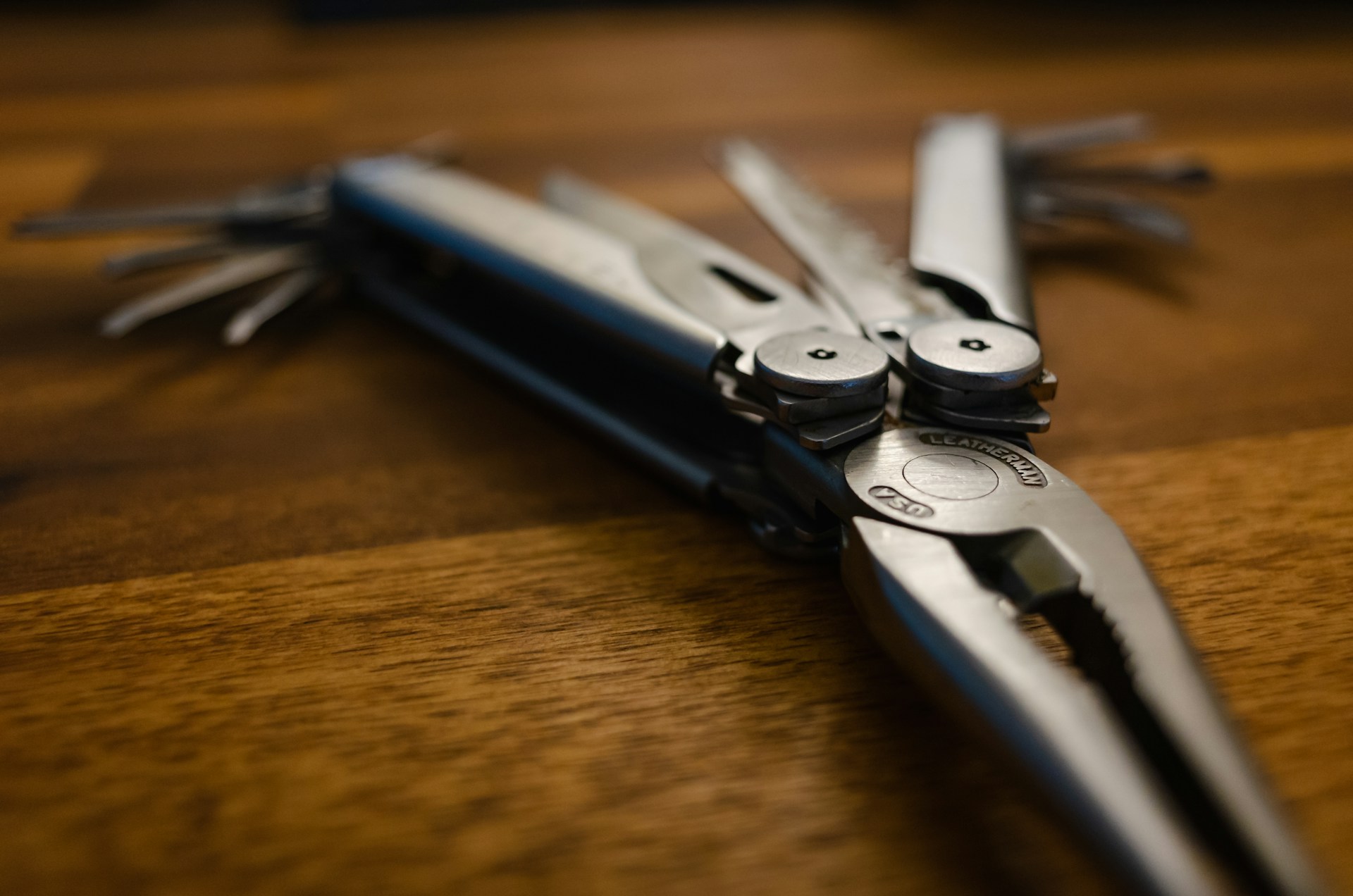
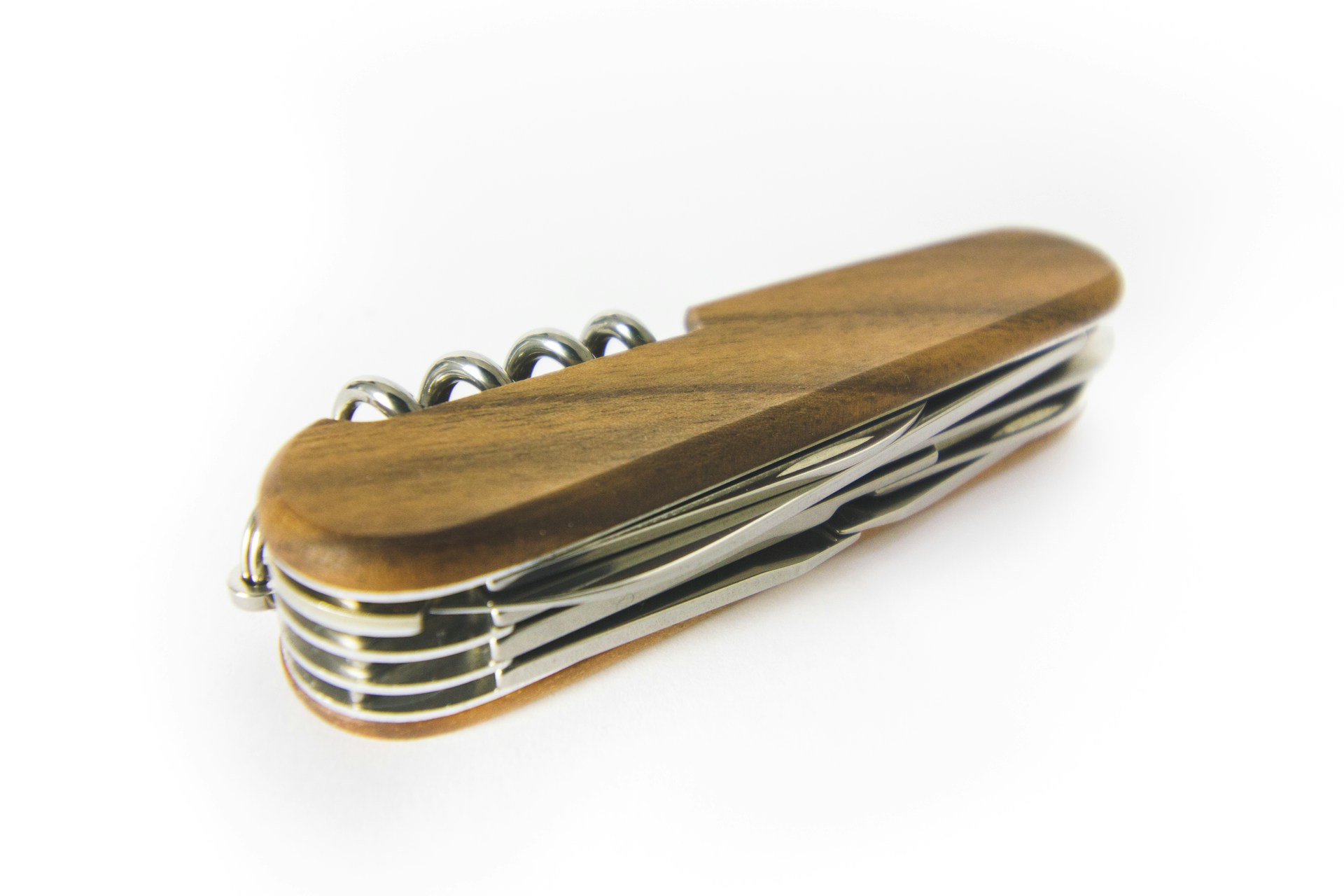
Multitools cover the jobs a knife cannot. Pliers, a Phillips driver, and scissors solve loose screws, snipped tags, and stripped wire, though a dedicated blade will always cut better than the folded-in one.
Personal safety items stay simple on purpose: an emergency whistle or a safety keychain, small enough that you never leave it behind.
Knowing the categories is the easy part. Choosing between them without overloading yourself is the harder skill.
Building a Carry Setup Without Overpacking
Start with two items, not seven. A knife and a light solve a surprising percentage of daily friction, and you can add from there once you see what you actually miss.
The goal is a kit that disappears until you need it. Anything you notice all day, in a bad way, will get left on the dresser.
Match Each Item to a Real Daily Task
Write down the last five times you needed a tool and could not find one. That list is your buying guide, and it is more accurate than any top-ten roundup.
If you break down cardboard constantly, a slicer or a thin high-flat-grind folder earns its keep. If you work in a dim mechanical room, spend your money on the flashlight and get a modest knife.
Office workers often land on a lightweight folder, a slim wallet, and a compact light. Trades folks lean toward a sturdier blade, a multitool, and a brighter clip light.
Size, Weight, Access, and Local Carry Rules
Weight decides what you carry long term. A 3-ounce folder gets carried daily; a 6-ounce one gets carried on weekends.
Access matters just as much. Deep-carry clips ride discreetly, pocket organizers keep a light and pen from rattling loose, and a watch beats digging out your phone for the time.
Then there is the legal side, and it is genuinely local. Blade length limits, automatic and OTF restrictions, and fixed-blade carry rules vary by state and sometimes by city or building. Check your own jurisdiction before you buy, and ask questions at a shop that knows the products well.
One more source of confusion deserves clearing up, because half the internet means something totally different by those three letters.
Electric Daisy Carnival and Everyday Carry: One Acronym, Two Meanings
Search EDC, and you will get two universes: pocket tools and a massive electronic music festival. Both are legitimate uses of the acronym, which is why gear articles usually start by ruling out the other.
Electric Daisy Carnival is the festival. Everyday carry is the gear practice. Same three letters, zero overlap.
Under the Electric Sky With Insomniac
Electric Daisy Carnival is produced by Insomniac, founded by Pasquale Rotella, and traces back to a 1997 warehouse party in Los Angeles. It has grown into one of the world’s largest electronic music festival brands.
The signature phrase is “under the electric sky,” and it fits. Sets run dusk till dawn beneath enormous stages, carnival rides, art installations, and fireworks, with the sunrise closing things out.
Insomniac calls attendees headliners, a term it uses on purpose to put the crowd at the center rather than the DJs.
EDC Las Vegas, EDC Orlando, and the Headliner Community
EDC Las Vegas is the flagship, held each May at the Las Vegas Motor Speedway across three nights, drawing hundreds of thousands of ravers. EDC Orlando is the smaller sibling, typically a two-day fall event in Florida.
Both share the dusk-to-dawn format, the daisy branding, and a community culture built on kandi trading and PLUR. Neither has anything to do with what is clipped to your pocket.
Now that we’ve sorted out both meanings, the gear question is the one worth finishing.
Start With the Gear That Earns Its Pocket Space
If you take one thing from all of this, make it the filter: buy the item that solves a problem you already have. Not the trending one, not the one with the highest steel score on a chart.
For most people starting out, that is a comfortable folder with a lock you trust and a small flashlight with a real battery. Handle a few before committing. Blade shape, clip tension, and how a knife feels closed in your palm are things no spec sheet communicates. A Spyderco thumb hole and a Benchmade AXIS lock deploy very differently, and you will have a preference within thirty seconds of holding both.
From there, the kit grows honestly. You add a multitool because you keep meeting loose screws, or a pocket organizer because your light and pen keep wandering. That is everyday carry working the way it should: gear chosen by use, refined over time, and eventually so ordinary you forget it is there until it saves your afternoon.
Frequently Asked Questions
What does the EDC event acronym stand for?
In the festival context, EDC stands for Electric Daisy Carnival, the electronic dance music event produced by Insomniac. In the gear world, EDC means everyday carry. Context tells you which one someone means.
What happens at an Electric Daisy Carnival festival?
Hundreds of DJs perform across multiple large-scale stages, usually from dusk till dawn, with carnival rides, art installations, and pyrotechnics. Attendees are called headliners and often trade kandi bracelets.
Where is EDC Las Vegas held?
EDC Las Vegas takes place at the Las Vegas Motor Speedway just outside Las Vegas, Nevada. The speedway grounds host multiple stages, rides, and installations across the festival footprint.
When is EDC Las Vegas each year?
The flagship event is traditionally held in May over three nights, running overnight and ending around sunrise. The promoter announces dates for editions such as EDC Las Vegas 2026 in advance.
What should first-time attendees bring to EDC?
Comfortable broken-in shoes, a hydration pack if permitted, earplugs, sunscreen, and a portable charger. Check the official prohibited items list first, since bag rules and restrictions change year to year.
What is the difference between EDC Las Vegas and EDC Orlando?
EDC Las Vegas is the largest edition, a three-night May event at a motor speedway. EDC Orlando is smaller, typically a two-day fall festival in Florida with fewer stages and a shorter run.
Ready to Build a Carry You Actually Use?
Everyday carry starts with noticing what you reach for and choosing better versions of those few things, whether that means a $40 folder or a Microtech OTF you have been eyeing for a year.
If you are in Oklahoma City, come hold a few options before you commit. Sharp Things OKC is on N May Ave, open seven days a week, and the staff will talk steel, locks, and clip preference with you as long as you want.
Start with one item that solves one real problem. The rest of the kit builds itself.