Everyday Carry Knives: Which Folder Earns Your Pocket?

Everyday Carry Knives: Which Folder Earns Your Pocket?
You are standing in a checkout line with a package in your hand and no way to open it. Your keys are in one pocket, your wallet in the other, and the third pocket sits empty. That empty pocket is the whole conversation, and the real question is which knife you’ll still be carrying past week two.
Sharp Things OKC exists for exactly that decision. The staff carries knives daily, so you get a straight answer on whether that 4-ounce titanium framelock will still be on your belt in March. You can hold a few options at the N May Ave store, or order online and skip the guesswork about what a 3-inch blade really feels like in hand.
In this guide, you’ll discover how blade length and weight decide whether a folder stays in rotation, which everyday carry knives are worth buying at $30, $120, and $300, and how steels like D2, S35VN, and MagnaCut actually perform. You’ll also learn which lock types hold up and when a utility knife beats a nice folder. Buy the knife you will carry, not the one that looks best in a photo.
What Earns a Spot in Your Pocket
The knife you carry every day is the one that never annoys you. Weight, clip tension, and how fast you can get it open matter more than the spec sheet.
Most people overbuy on size first. A 4-inch blade looks capable in the case and feels like a brick after sitting for two hours. The folders that survive long-term rotation are usually modest, smooth, and boring in the best way.
Right-Size Blade Length and Overall Weight
For daily use, a blade between 2.5 and 3.5 inches is ideal for nearly everything you cut. Under 2.5 inches, you start losing slicing length on boxes and cordage. Past 3.5 inches, the handle gets long enough to tent your pocket.
Weight is the quieter dealbreaker. Anything under 3 ounces disappears. Between 3 and 4.5 ounces is comfortable for most people in jeans or work pants.
Above 5 ounces, you need a real reason: heavy use, a titanium frame you love, or a belt-carry setup. Collectors accept the weight. First-time buyers usually stop carrying.
One-Handed Access, Pocket Clip, and Ergonomics
You will almost always have something in your other hand. That makes one-handed opening non-negotiable for a working folder.
Thumb studs are simple and reliable, and they work through gloves. Flippers using a ball-bearing pivot open faster and give you a satisfying snap, but they need a stronger detent. Thumb holes, like the round opener on Spyderco models, are easy to find without looking.
The pocket clip decides whether you tolerate the knife at all. Look for these traits:
- Deep carry so only a small tab shows above the seam
- Reversible mounting for tip-up or tip-down, left or right
- Moderate tension that holds firm without shredding your pocket hem
- A rounded handle spine where your palm rests during hard cuts
The Daily Jobs an EDC Blade Should Handle
Realistically, you cut tape, cardboard, zip ties, blister packs, food, and loose threads. Those jobs reward a thin, keen edge far more than a thick tactical grind.
You also want a blade that closes safely with one hand when your other one is full of groceries. That is a lock design question, and it changes what you should buy at each price.
Picks at Every Price Point
Good folders start around $30, and the jump in quality from $30 to $130 is bigger than the jump from $130 to $400. Here is where your money actually goes.
Every pick below names the steel, handle, and mechanism, because those three specs predict how the knife will behave a year in.
Budget Folders Under $35 That Skip the Junk
The Civivi Elementum is the standard answer. You get a 2.96-inch D2 or S35VN tool-steel drop point, depending on the run, G-10 or micarta scales, a liner lock, and a ball-bearing flipper that runs smoother than the price suggests. D2 holds an edge well but has lower corrosion resistance, so wipe it dry.
The Ontario RAT II is the other honest buy. A 3-inch AUS-8 blade, nylon handle, thumb studs, and a liner lock, all under 3 ounces. AUS-8 dulls faster than D2 but sharpens back in minutes on a basic stone.
CRKT fills out this tier with slim assisted flippers on ball-bearing pivots. At this price, you are buying a knife you can lose without pain, which matters when you are still learning what size you like.
Mid-Range Workhorses With Better Steel and Action
The Benchmade Bugout is the lightweight benchmark. A 3.24-inch blade (S30V on standard runs, with M390 and CPM S90V showing up on premium versions), a Grivory or aluminum handle, and the AXIS lock put it as light as roughly 1.85 ounces on the base model, remarkably light for a full-size folder.
Spyderco earns its place here too. The Para 3 pairs CPM S45VN with a compression lock and a G-10 handle, and the Delica 4 in VG-10 has been a daily carry standard for decades.
Step up slightly, and the Benchmade 940 Osborne delivers a reverse tanto in S30V with an aluminum handle. It is thin, elegant, and cuts above its size. This is where premium materials start showing up without a collector’s budget.
Premium Pieces Built for Long-Term Carry
Above $250, you are buying tighter tolerances, better ergonomics, and steels like MagnaCut or CPM-20CV. Chris Reeve built its reputation on the Sebenza and its titanium framelock, with hand-fit lockup you can feel.
Medford goes the other direction: thick titanium construction, heavy stock, and a framelock built like a vault. Microtech dominates the automatic side with fast, precise action and hardened detail work.
Sharp Things OKC stocks Benchmade, Spyderco, Civivi, Medford, and Microtech in the case at the N May Ave store, which matters because premium folders are about feel. A Medford weighs more than the page suggests until you hold it. Which brings up format: is a folder even the right tool for your day?
Choose the Format That Fits Your Day
A folding knife covers about 90% of tasks, but the other 10% is where people ruin good blades. Matching format to task saves your edge and your money.
Folding Blades for Most Everyday Tasks
Folders win because they are safe to pocket, legal in most places, and sharp enough for detail work. A 3-inch drop point handles food prep, packages, cords, and light outdoor jobs without complaint.
The trade-off is a pivot and a lock, both moving parts that collect lint and need occasional care. Accept that, and a good folder will last for decades. Sharp Things OKC’s folding knives selection is a good starting point once you know your size and steel preference.
Automatic Knives for Fast, Controlled Deployment
Automatic knives fire the blade with a button or slider, so deployment takes one motion with zero wrist flick. If you work gloved, one-handed, or on a ladder, that speed is genuinely useful.
Side-openers and out-the-front models both exist, and Microtech is the name most carriers know. Autos cost more and demand cleaner internals, since grit slows the spring. Sharp Things OKC’s automatic knives selection covers both styles.
They also carry legal baggage that folders do not, which is worth checking before you order.
Utility Knives for Cardboard and Dirty Work
If you break down boxes daily, use a utility knife. A replaceable utility blade is thin, cheap, and disposable, while a box cutter costs nothing to keep razor-sharp.
Cardboard is loaded with clay and glue that dull steel fast. Feeding your S45VN folder into a pallet of boxes is a waste of good steel.
When a Multi-Tool Makes More Sense Than a Dedicated Folder
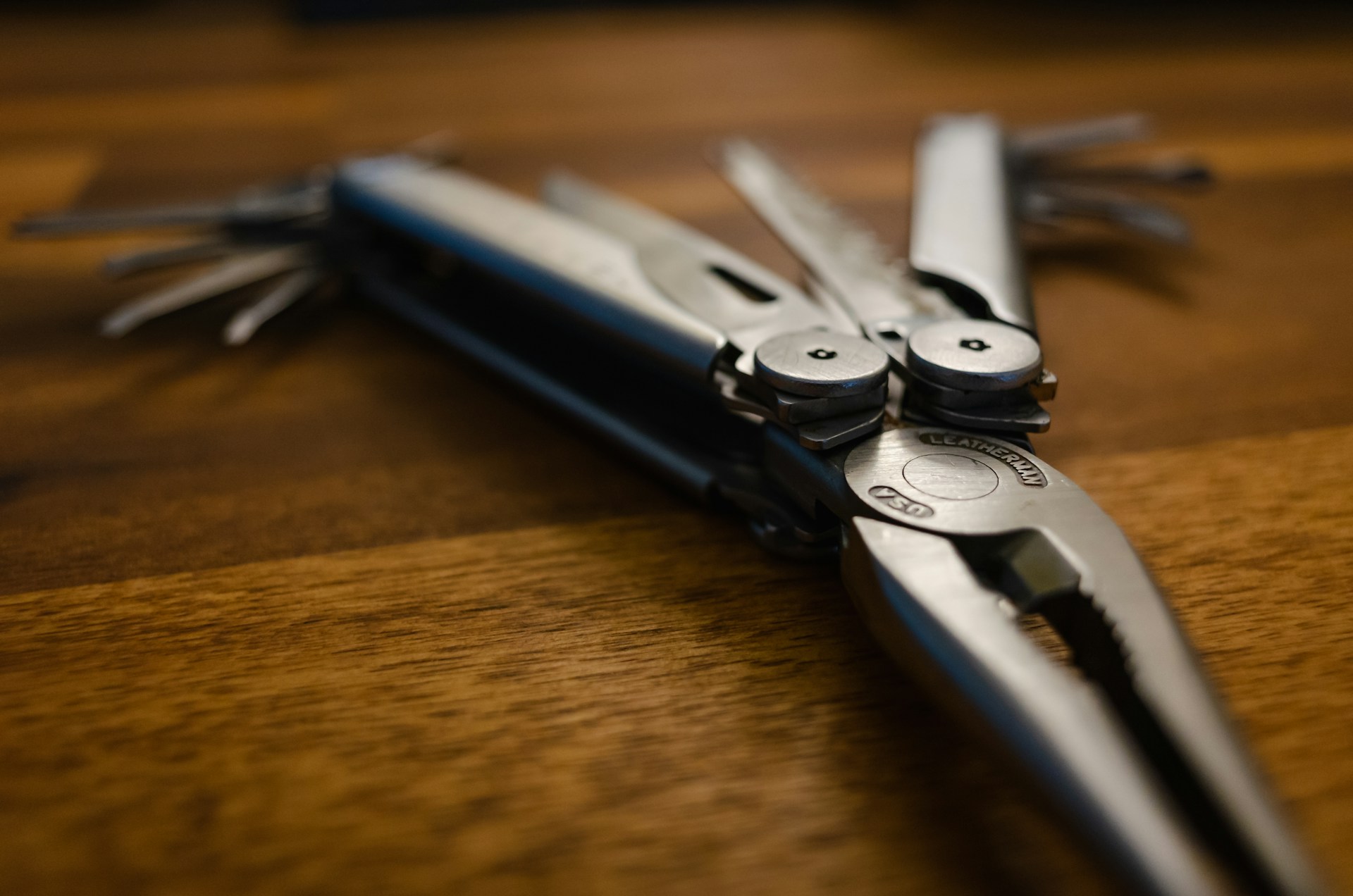
A multi-tool wins when cutting is not your main problem. Pliers, drivers, a wire stripper, scissors, and a bottle opener solve issues a blade cannot touch.
The compromise is a shorter, thicker blade with worse ergonomics. Many people carry both: a slim folder for cutting, a multi-tool in a bag or on a belt. Once you pick a format, the specs decide performance.
Read the Specs That Change Performance
Three specs actually change how a knife performs: steel, blade shape, and lock. Everything else is preference.
Blade Steel, Edge Retention, and Corrosion Resistance
Steel is a trade-off between edge retention, toughness, corrosion resistance, and ease of sharpening. Nothing maxes all four.
- D2 tool steel: strong edge retention, low corrosion resistance, budget-friendly
- CPM S35VN: balanced all-rounder, sharpens reasonably, great for daily carry
- CPM-20CV: the edge-retention specialist among common EDC steels, but noticeably less tough and more prone to micro-chipping than MagnaCut
- MagnaCut: trades a little of 20CV’s raw edge retention for roughly double the toughness and excellent stainless behavior, which is why it’s become the current EDC favorite
- Carbon steel: takes a screaming edge, will patina and rust if neglected
If you sweat, fish, or work outdoors, prioritize corrosion resistance over pure edge retention.
Blade Shapes for Slicing, Piercing, and Controlled Cuts
A drop point blade is the default for good reason. Strong tip, generous belly, and easy control on cardboard and food alike.
A clip-point blade gives you a finer, more precise tip for detail work and picking at knots. A spear point splits the difference and pierces cleanly, which suits piercing-heavy tasks. Reverse tantos, like the 940, trade some belly for a very strong point.
Locks and Opening Systems You Can Trust
Liner locks are simple and cheap to build, and a good one is plenty strong for daily use. A frame lock uses the handle slab itself, which is why titanium frame locks feel so solid.
The AXIS lock and Spyderco’s compression lock both let you close the blade without putting fingers in its path. That safety edge matters when you close a knife fifteen times a day.
Whatever you pick, the lock only stays reliable if you carry and maintain it correctly.
Carry It Responsibly and Keep It Useful
A knife is a tool, and how you carry and use it decides whether it stays legal, safe, and sharp.
Check Local Rules Before Carrying an Automatic
Folding pocket knives under 3 inches are legal to carry in most U.S. jurisdictions. Automatic knives are treated differently in some states and cities, so check your state statute and any local ordinance before ordering.
Location restrictions apply regardless of the knife: schools, courthouses, airports, and many government buildings are off limits. Rules change, so verify rather than assume.
Use the Right Tool Instead of Forcing the Blade
Most broken folders were used as pry bars. Tips snap, locks loosen, and pivots go sloppy when you twist a blade sideways.
Keep a small pry tool or screwdriver in your bag for that job. Do not cut wire, staples, or drywall with a nice edge, and do not throw a folding knife.
Clean, Inspect, and Maintain Your Folder
Pocket lint plus oil turns into paste inside a pivot. Rinse or brush the channel, dry it, then add one drop of light oil on each side of the pivot.
Check the lock every month or so. Open the knife, apply light pressure to the spine, and make sure there is no blade play or slip. Snug the pivot and clip screws if they back out, and keep the edge touched up so you never have to force a cut.
Frequently Asked Questions
What Makes a Good Knife for Everyday Carry?
A blade between 2.5 and 3.5 inches, a weight under about 4.5 ounces, one-handed opening, and a lock you trust. Comfort beats specs, because a knife you leave at home cuts nothing.
Which Blade Steel Holds an Edge Best for Daily Cutting Tasks?
CPM-20CV leads for raw edge retention among common EDC steels. MagnaCut gives up a small amount of that retention in exchange for roughly double the toughness and better rust resistance. CPM S35VN is the easier-to-sharpen middle ground, and D2 gives strong retention on a budget.
Should I Choose a Folding Knife or a Fixed Blade for Daily Carry?
For most people, a folder wins on pocketability, discretion, and legality. Fixed blades are stronger and faster to draw, but they need a sheath and belt space, which suits outdoor work more than office or errand days.
What Lock Type Is Safest and Easiest to Use One-Handed?
The AXIS lock and Spyderco’s compression lock both let you close the blade without your fingers crossing the edge path. Frame locks are extremely strong, and liner locks are simple and fine for normal daily cutting.
What Blade Length Is Practical and Legal for Carrying in My Area?
Around 3 inches is the practical sweet spot and rarely creates legal problems in most U.S. jurisdictions. Some cities set stricter limits, so check your state and local rules, as well as building restrictions near courthouses and schools.
Which American-Made EDC Knife Brands Are Worth the Money?
Benchmade for light, refined folders like the Bugout and 940 Osborne, Microtech for automatic deployment, Medford for heavy titanium builds, and Chris Reeve for hand-fit framelocks. Each represents a different carry philosophy, not a ranking.
Make Your Next Pocket Choice Count
Pick the blade length and weight you will actually tolerate, then choose steel and lock around how you cut. That order gets people to a folder they carry for years.
If you are buying your first EDC knife, start around $30-$60 and learn your preferences before spending more. If you are adding a precision piece, Benchmade, Microtech, and Medford each solve a different problem: light carry, fast deployment, and near-indestructible build.
Sharp Things OKC carries the brands you are looking for. Come into the N May Ave store and hold a few before you decide.