Multi-Tool or Pocket Knife? Pick the Right EDC Setup

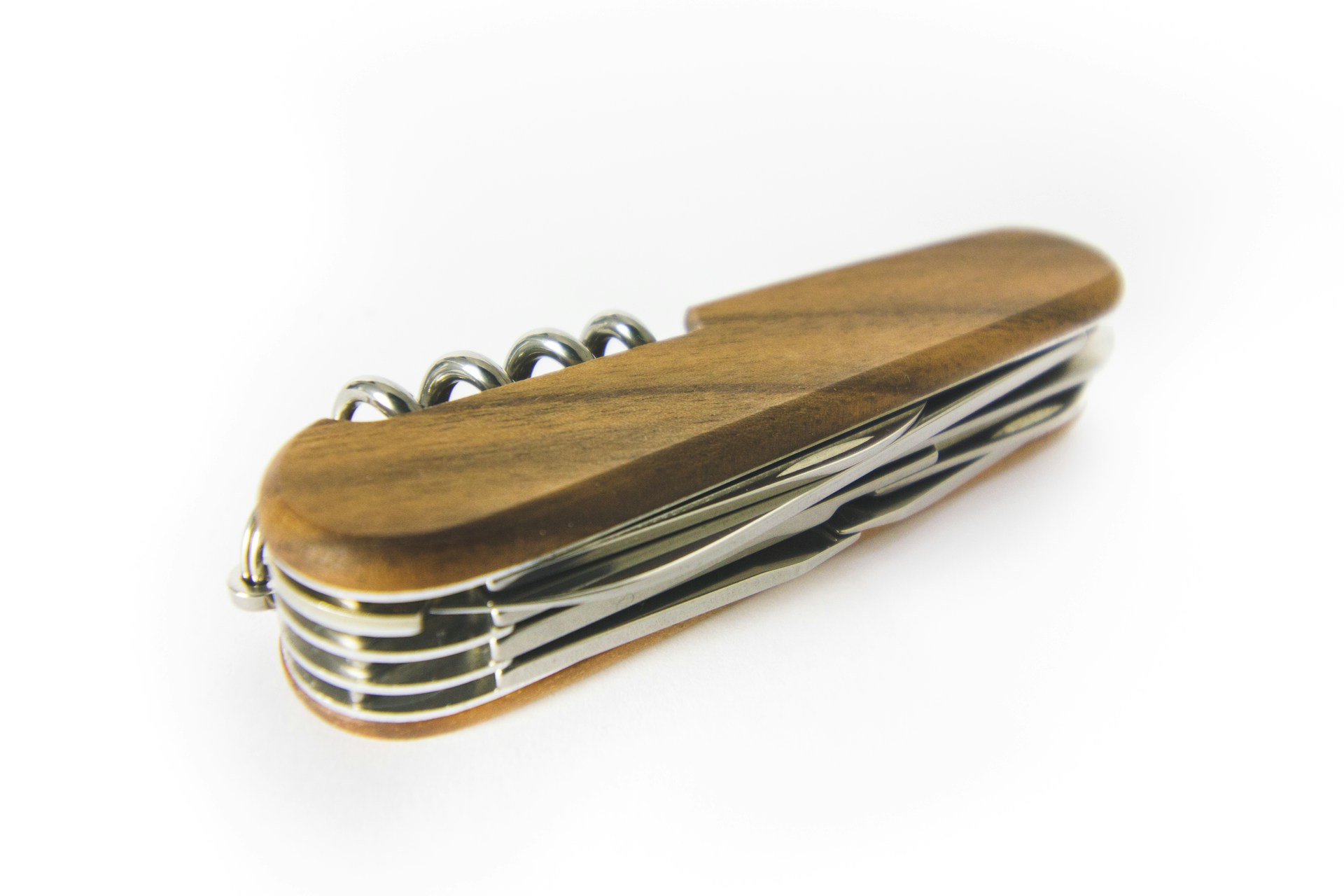
You are standing in front of a package with taped seams, a loose cabinet screw, and a phone that will not fit its new case. Your pocket knife handles one of those three. That gap is exactly where the multi-tool argument starts, and it is a fair question whether one belongs in your pocket next to a blade or in place of it.
Sharp Things OKC stocks multi-tools and everyday carry gear alongside knives, so this is a conversation that often happens across the counter. The honest way to think about a multi-tool is as a set of pliers that also carries a blade. Knowing that up front changes what you shop for.
In this guide, you’ll discover what the tool functions on a multi-tool actually do, how full-size, slim, and keychain formats trade capability for comfort, and which models are worth your attention. Buy for the two or three tools you will use weekly, not the twenty printed on the box.
What You Get Beyond a Dedicated Knife
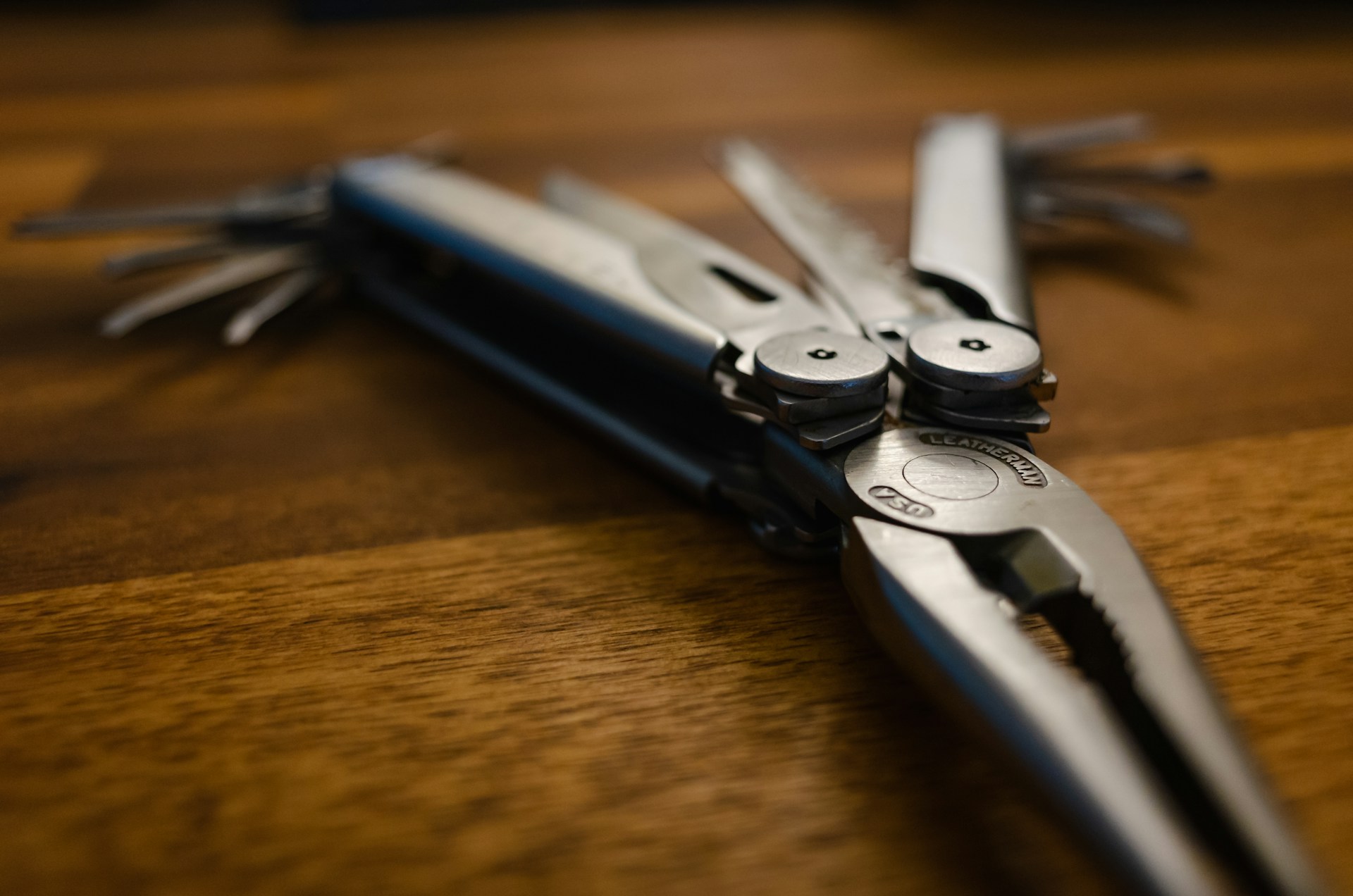
Pliers. That is the short version. Everything else on a multi-tool is a bonus you may or may not touch, but pliers are the reason the category exists at all.
A folding knife cuts. It does not grip a stripped bolt head, pull a splinter, or twist a wire nut. Once you have needle-nose pliers riding in your pocket, small problems stop becoming trips back to the garage.
Pliers and Cutters for Small Repairs
Needle-nose jaws handle the fiddly stuff: fishhooks, cotter pins, hot grill grates. Wider plier jaws behind them give you grip on nuts and fasteners.
Wire cutters sit at the base of the jaws, where quality separates models. Cheap tools use cutters milled into the soft-handle steel, and they dull or chip quickly.
Better tools use replaceable wire cutters, small hardened inserts held by a screw. When they wear out, you swap them rather than retire the tool. Some models include a wire-stripper notch and a crimper for connectors.
Spring-loaded pliers are worth noting too. The jaws reopen on their own, so you can work one-handed while your other hand holds the part.
Drivers and Openers for Daily Fixes
Most multi-tools carry a flat driver, a Phillips screwdriver, and often a small eyeglass driver. The better designs skip fixed drivers for a bit driver with a swappable bit holder.
That matters more than it sounds. A fixed Phillips is one size. A bit driver takes standard bits, so you can match the screw instead of camming out and chewing the head.
Bottle and can openers complete the list. They sound like filler until a road trip or a camp kitchen proves otherwise.
Blades, Scissors, Saws, and Files
The knife blade on a multi-tool is usually 2.5 to 3 inches long and made of 420HC stainless steel. That steel is soft by modern folder standards, but it sharpens easily and resists rust well.
Many models pair a plain edge with a serrated knife blade for rope, webbing, and seatbelts. A locking knife blade is non-negotiable if you plan to use it under pressure.
Here is what the secondary implements are genuinely good for:
- Scissors: better than a blade for packaging, thread, tape, and first aid
- Saw: small branches, PVC, drywall in a pinch
- File: a diamond-coated file works on metal and hardened edges; a wood file shapes soft material
- Awl: punches leather, canvas, and belt holes
- Pry bar: protects your blade tip from work it was never meant to do
Some outdoor and rescue models add a gut hook, a ruler, or a window breaker. Whether those earn pocket space depends entirely on how big a tool you are willing to carry.
Choose the Right Size for Your Carry
Size is the deciding factor in whether the tool stays with you. A capable multi-tool left in a drawer helps no one.
Weight and thickness matter more than tool count. Most people who abandon a multi-tool do it because of the pocket bulge, not the feature list.
Full-Size Tools for Real Work
Full-size models run roughly 8 to 10 ounces and 4 inches closed. You get full-length plier jaws, real leverage, and usually 15 to 20 implements.
These carry best on a belt in a nylon sheath or clipped to a bag. Dropping a half-pound tool in a front pocket next to your phone gets old by lunch.
If you work with your hands, the weight buys you something. Leverage on a stuck fastener is a function of handle length, and there is no shortcut around that.
Slim Pocket Tools for Daily Carry
Slim models cut the weight roughly in half, around 5 ounces, by trimming the tool count to 7 or 8. The pliers stay. The redundant drivers go.
Most include a pocket clip, which changes carry entirely. Clipped in a front pocket, a slim tool disappears the way a folder does.
The trade-off is honest: shorter plier jaws, less grip, and fewer implements. For opening boxes, tightening screws, and cutting zip ties, you will not miss them.
Mini and Keychain Options for Light Tasks
Keychain tools weigh about 2 ounces and attach to a carabiner clip or key ring. Scissors are usually the star, not the pliers.
They handle threads, tags, packaging, and tiny screws. They will not turn a rusted bolt, and multi-tool reviews that pretend otherwise are not being straight with you.
A mini tool works best as a supplement. Which raises the obvious question: which specific models actually deliver on these formats?
SOG and Victorinox Models Worth Knowing
Leatherman invented the plier-based multi-tool in 1983, and the format it created (pliers plus a fold-out blade and driver kit) remains the industry template that every other maker builds on. Sharp Things OKC’s multi-tool case centers on SOG and Victorinox, both of which build on that same plier-and-blade format and give you a real reference point for judging fit.
SOG PowerAccess Deluxe as the Full-Feature Baseline
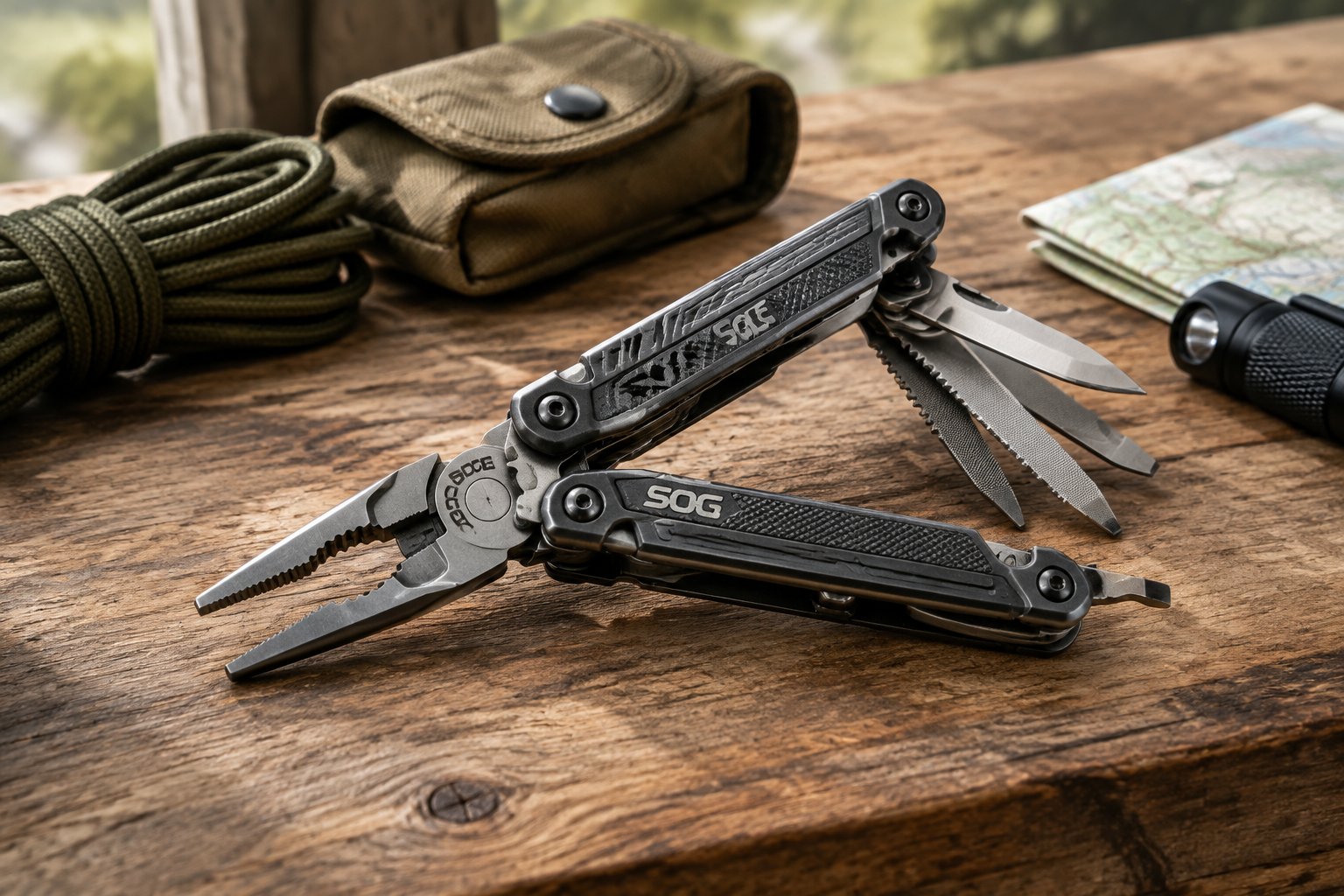
The SOG PowerAccess Deluxe pairs compound leverage plier jaws (SOG’s geared design that multiplies your grip strength) with a 12-piece swappable bit kit rather than fixed drivers. That bit kit is exactly the upgrade worth paying for: you match the screw instead of camming out on the wrong size.
It comes in stainless steel and in both a plain stonewash and black finish. At full size, it wants a sheath or a bag rather than a front pocket. Consider it the standard against which other tools are measured.
Ruike LD31 for a Lighter Pocket Setup
The Ruike LD31 takes the opposite approach: a folding-knife-forward multi-tool with a 12C27 drop point blade and a G10 handle, built for someone who wants a pocket clip and a knife that happens to carry tools, not the reverse.
For someone who already leans on a dedicated folder for cutting and just wants a few backup implements along for the ride, this is the natural pairing.
Victorinox Swiss Tool Spirit Plus Ratchet for Specialized Carry
The Victorinox Swiss Tool Spirit Plus Ratchet sits at the premium end. Its standout feature is a genuine ratcheting bit driver built into the plier handle, which turns fasteners faster and with more control than a standard swappable bit holder.
It is a heavier, jobsite-oriented tool rather than a slim EDC piece. If your week involves actual mechanical work rather than box-opening, the ratchet earns its price.
Other Proven Formats to Compare
A few other formats worth knowing so you can judge fit:
- SOG PowerLitre: a lighter stonewash stainless option in the same plier-based family
- Victorinox SwissTool X: a compact stainless multi-tool built around the same ratchet-adjacent driver philosophy
- Classic Victorinox Swiss Army Knife tools: no pliers, but genuinely excellent scissors, saws, and blades in a slim, pocket-friendly package
The right pick depends less on brand loyalty and more on what your week actually looks like.
Match Features to Work and Weekends
Start with the tasks you repeat. The implements you use monthly should drive the buy, not the ones you might use someday.
Everyday Repairs and Package Duty
If your week is boxes, batteries, and loose screws, you need scissors, a bit driver, and a blade. Plier size barely matters.
A slim tool with a pocket clip covers this completely. Skip the saw and the file; they will collect lint.
Electrical and Jobsite Tasks
Electrical work requires specific tools: a wire stripper, a crimper, and replaceable wire cutters that stay sharp. Full-size handles give you the leverage to actually cut solid copper.
Look for a bit driver rather than fixed drivers. Terminal screws come in sizes fixed blades never match.
Camping, Hiking, and Emergency Readiness
Camping, hiking, and backpacking reward a saw and a locking blade. Weight becomes the enemy fast on multi-day trips.
A fire starter or ferro rod and an emergency whistle add real value on longer trips. Corrosion resistance matters more when the tool lives in a damp pack.
Fishing and Vehicle Kits
Fishing favors needle-nose reach for hook removal and cutters that handle braided line. Rust protection is the whole ballgame near saltwater.
Vehicle kits are different. A window breaker, a serrated seatbelt blade, and a pry bar earn their space in a glovebox where weight does not matter.
Whatever you land on, the tool only helps if it works when you open it.
Carry Safely and Keep It Working
A multi-tool with unlocked implements will close on your fingers. That is the single most common injury in this category, and it is preventable.
Locks, Access, and Hand Placement
Locking tools hold each implement open under load. Cheap tools rely on friction alone, which fails exactly when you push hard.
Outside-accessible blades let you open the knife without unfolding the handles. That is as much a safety feature as a convenience.
Keep your fingers off the pivot line when closing. Fold implements deliberately, one at a time.
Steel, Edge Care, and Corrosion Control
420HC offers easy sharpening and solid corrosion resistance at the expense of edge retention. Premium steels on higher-end tools hold an edge longer but demand more from a knife sharpener.
Wipe the tool dry after wet work. A drop of light oil on the pivots keeps the action smooth and slows rust in the joints.
A basic blade sharpener handles a 420HC edge in minutes. Touch it up before it gets dull rather than after.
Warranty Coverage and Replacement Parts
Leatherman backs its tools with a 25-year warranty (40 years if you register as a Leatherman Insider), a useful industry benchmark even if you’re shopping other brands. Several competitors offer their own lifetime or multi-decade coverage on manufacturing defects.
Warranties cover defects, not abuse. But replaceable wire cutters and swappable bits mean the wear parts are yours to fix without a claim.
Frequently Asked Questions
What Should I Look for in an Everyday Carry Multi-Tool?
Prioritize locking implements, a bit driver over fixed drivers, and replaceable wire cutters if you cut wire regularly. Weight and a pocket clip decide whether you carry it daily. Tool count is the least useful number on the package.
Which Multi-Tool Is Best for Daily Carry?
A slim, folding-knife-forward option like the Ruike LD31 is the easiest to carry every day, with a pocket clip and a real drop-point blade. A full-size tool like the SOG PowerAccess Deluxe is better if you want compound-leverage pliers and a full bit kit, and do not mind a sheath.
Are Full-Size Multi-Tools Better Than Compact Pocket Models?
Full-size tools give real leverage on stuck fasteners and thick wire, which compact models cannot match. Compact tools win on carry comfort, and a tool you actually have on you beats one in a drawer.
What Tools Should a Good Multi-Tool Include?
At minimum: needle-nose pliers, wire cutters, a locking knife blade, a Phillips screwdriver or bit driver, and scissors. Add a saw and file for outdoor use, and a wire stripper for electrical work.
Can a Multi-Tool Replace a Dedicated Knife or Screwdriver?
For light tasks, yes. For anything sustained, no. A multi-tool blade is shorter with a less comfortable grip, and its drivers lack the torque and reach of a real screwdriver.
What Is the Difference Between a Folding Multi-Tool and an Electric Oscillating Tool?
They share a name and nothing else. A folding multi-tool is a pocket-carried hand tool built around pliers. An oscillating tool is a corded or battery-powered tool that vibrates its blades to cut and sand.
Build a Carry Kit You Will Actually Use
The strongest everyday carry setup for most people is a dedicated folder plus a slim multi-tool. The knife cuts better. The tool grips, drives, and snips.
Carry that combination for two weeks and track what you reach for. If the multi-tool never leaves your pocket, drop to a keychain model. If you keep wishing for more leverage, step up to a full-size tool like the SOG PowerAccess Deluxe.
A Ruike LD31 and a pocket clip folder cover most days without a bulge either pocket will notice. That balance beats a tool with twice the implements you never open.
Sharp Things OKC carries multi-tools and everyday carry gear at the N May Ave store, where you can open the pliers and feel the weight before you commit. Browse the full multi-tool selection.