Paring Knife Uses: The Small Knife That Handles the Fiddly Work

Hull a pint of strawberries, peel an apple in one long ribbon, devein a pound of shrimp, then score the skin on a duck breast. A chef’s knife can technically do all of that, but it will feel like signing your name with a broom. Most paring knife uses come down to one idea: precise cuts on small food, often held in your hand instead of resting on the board.
Below are the jobs it does best, grouped by how you hold the food, followed by the grips, the blade shapes and the few things to keep it away from.
Paring Knife Uses in Your Hand
These are the jobs a big knife simply cannot do safely. The food sits in your palm or between your fingers, and the knife moves toward your thumb in short, controlled strokes.
Peeling round fruit and vegetables. Apples, pears, potatoes, turnips and citrus all peel cleanly with a sharp 3 to 4 inch blade. Rotate the food against the edge rather than moving the knife around the food.
Hulling strawberries. Push the tip in at an angle beside the stem, turn the berry against the blade, and the green top lifts out in a small cone with almost no waste.
Coring. Quarter an apple or pear, then cut the core out of each piece with a short curved stroke. The same move works for tomato cores and the woody base of a pepper.
Removing eyes and blemishes. The tip digs out potato eyes, bruises on apples and spots on peaches without losing much good flesh.
Trimming small items. Brussels sprouts, green beans, radishes and mushroom stems are quicker to trim in hand than on the board.
Paring Knife Uses on the Cutting Board
A paring knife is not only an in-hand tool. On the board it handles small, precise cuts where a big blade would be clumsy.
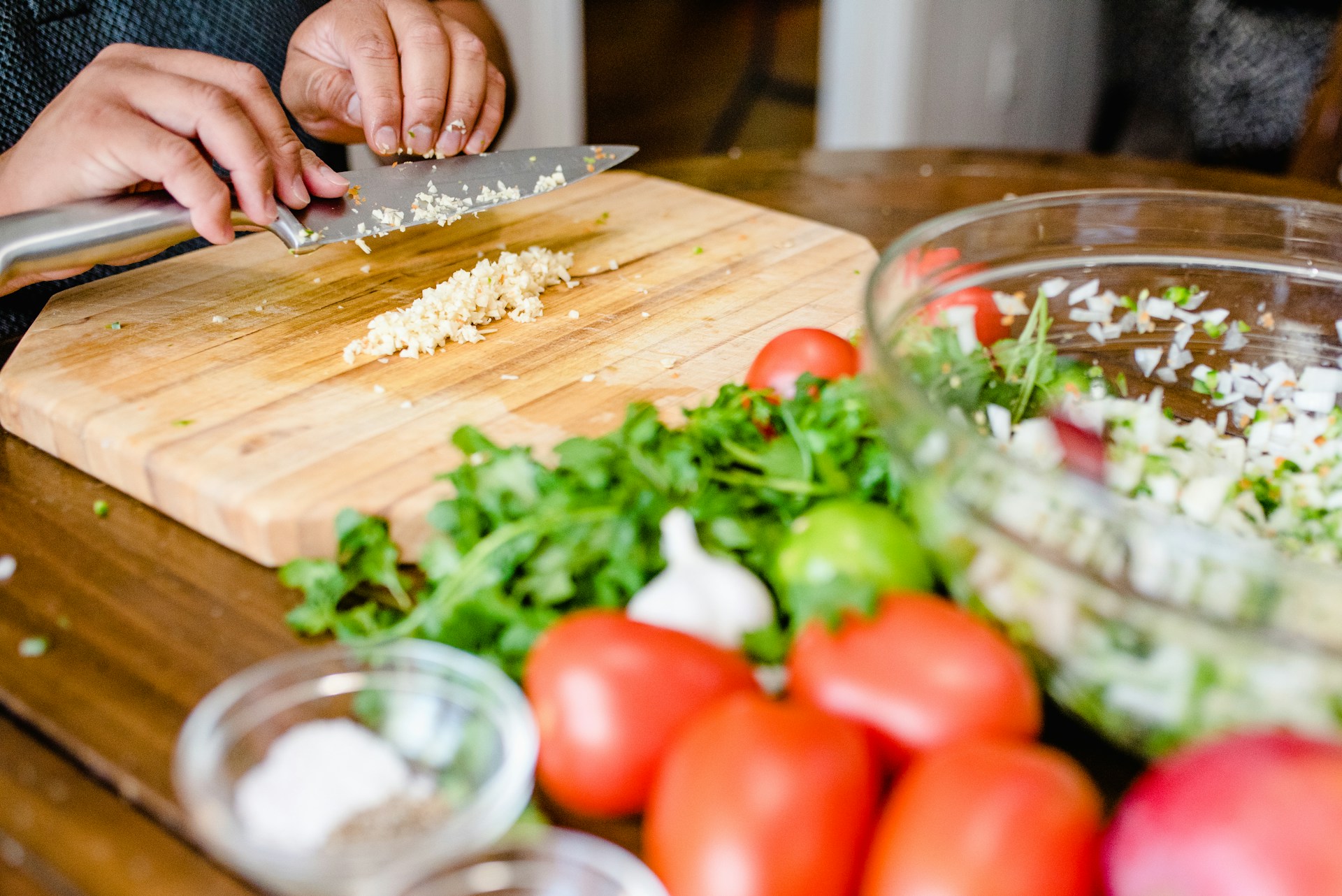
Mincing a single clove or shallot. For one clove of garlic or half a shallot, a paring knife is faster than getting out the chef’s knife. Lamson lists garlic, shallots and herbs among the jobs for its paring knife for exactly this reason.
Deveining shrimp. Run the tip along the back of the shrimp, shallow and steady, then lift out the vein with the point.
Segmenting citrus. After you cut off the peel and pith, slide the blade along each membrane to free clean segments, a job often called supreming.
Scoring. Light cuts across the fat cap of a ham, the skin of a duck breast or the top of a loaf of bread help fat render or dough rise evenly. A paring knife gives you shallow, controlled lines.
Seeding chiles and peppers. Split the chile, then use the tip to scrape out seeds and ribs. Wear gloves or wash your hands right after with hot chiles.
Trimming meat. Remove silver skin from a pork tenderloin, trim fat from a chicken thigh or separate a chicken tenderloin from the breast. For anything bigger, a boning knife is the better tool.
Checking doneness. Slip the thin blade into a potato, cake or roast to judge how tender it is without leaving a big gash.
Decorative and Detail Work
If you like presentation, the paring knife is your sculpting tool. It cuts garnishes like tomato roses and citrus twists, carves fruit for a platter and trims pastry edges. It is also the knife for cutting vents into a pie crust and for scoring patterns on a pie or bread. Bird’s beak paring knives, covered below, are made for this kind of curved work.
Find the paring knife that fits your hand: grip size matters more on a small knife than on a big one, so come pick up a few at Sharp Things OKC on N May Ave, open 9AM to 9PM daily, or shop our paring and chef’s knives online.
The Right Paring Knife Grip for Each Job
Using a small knife in your hand calls for a little technique, and the right paring knife grip keeps your fingers safe.
The peeling grip. Hold the handle in your fingers with the edge facing you and rest the pad of your thumb on the food, below the blade’s path. Close your fingers to draw the edge toward your thumb in short strokes. Your thumb stays below and behind the cut, never in the path of the edge.
The pinch grip. For board work, wrap three fingers around the handle and let your thumb and bent forefinger pinch the flat of the blade right where it meets the bolster. It is a chef’s knife grip in miniature, and it keeps the short blade from twisting.
The pencil grip. For scoring, deveining and detail work, hold the knife lightly like a pencil, with your index finger along the spine. It gives fine control over depth.
Two safety notes. First, a sharp knife is safer than a dull one, because a dull edge needs more pressure and skids off food. Second, if you are new to in-hand cutting, practice on a potato before moving to delicate fruit.
Paring Knife Blade Shapes Explained
Paring knives come in a few profiles, and each one leans toward different jobs.
| Blade shape | What it looks like | Best uses
|
|---|---|---|
| Spear point | Straight edge rising to a centered, pointed tip | All-around peeling, coring, hulling and board work |
| Sheepsfoot | Straight edge with a rounded spine that drops to the tip | Straight cuts on the board, slicing small fruit, julienne |
| Bird’s beak (tourné) | Short blade that curves down like a claw | Peeling round produce, decorative cuts, tourné shaping |
| Serrated | Small saw-tooth edge | Tomatoes, citrus and other slick skins |
If you only buy one, a spear point is the most versatile. The Lamson 3.5 inch Premier Forged paring knife is a good example: Lamson forges it from Solingen-sourced 4116 stainless, hardens it to 58 HRC, gives it a pointed tip and fits the Midnight version with black G-10 scales, all formed in its Massachusetts facilities.
What a Paring Knife Is Not For
Asking what is a paring knife used for also means knowing where it stops. Keep it away from these jobs:
- Large produce. Onions, melons, cabbage and squash need a longer blade for safe, even cuts.
- Bones and frozen foods. The thin tip can snap or chip.
- Prying. Popping lids or digging out pits with the tip bends or breaks it.
- Hard crusts. A serrated bread knife does that job.
Pairing a paring knife with a chef’s knife or santoku covers most of what a home kitchen needs. If you are building a small kit from scratch, read up on picking the right core knives for your cooking, and see how they come bundled in our roundup of premium knife sets worth owning.
Picking a Paring Knife You Will Use Every Day
A few details make a big difference with such a small knife:
- Length. 3 to 4 inches is standard. Shorter blades feel nimble in hand, longer ones are easier on the board.
- Stiffness. Most paring knives are fairly stiff. A stiffer blade is better for scoring and trimming, a slightly thinner one peels more smoothly.
- Handle size. If your knuckles hit the board during pinch-grip cuts, look for a handle with more drop or a blade with more height.
- Balance. A forged paring knife with a bolster feels steadier in hand. A lighter stamped blade is quicker for quick peeling.
Keep It Sharp and Safe
Paring knives get dull fast because they see a lot of tip work and get tossed in drawers. Wash by hand and dry right away, keep the tip covered with an edge guard if it lives in a drawer, and give it a few light passes on a honing rod each week. Many cooks keep two, so there is always a clean one ready.
One Small Blade for a Dozen Fiddly Jobs
The paring knife handles peeling, hulling, coring, deveining, scoring, trimming and detail work, both in your hand and on the board. Choose a spear point for all-around use, learn the peeling grip, and keep it off bones and big produce.
Hold a few before you choose: stop by Sharp Things OKC at 6610 N May Ave in Oklahoma City to compare blade shapes and handle sizes, or browse Lamson paring knives and cutlery at SharpThings.com.
Frequently Asked Questions
What size paring knife is most useful?
A 3.5 inch blade is the most common choice and handles nearly every job. Go a little shorter if most of your work is peeling in hand, or a little longer if you do more small board work.
Can a paring knife replace a utility knife?
Not quite. A utility knife has a longer blade, usually around 5 to 6 inches, for slicing sandwiches, small roasts and larger produce. The paring knife is better for in-hand and detail work, so many kitchens keep both.
Is a serrated paring knife worth having?
It is useful for tomatoes, citrus and peaches, since the teeth bite slick skins with little pressure. It is harder to sharpen and does not peel as cleanly, so treat it as a second paring knife, not the only one.
How do I sharpen such a short blade?
Use the same angle as your other kitchen knives and keep strokes short so you do not round the tip. A whetstone, a guided sharpener or a fine ceramic rod all work well on a paring knife.