Why Are Spyderco Knives So Expensive? What You Pay For

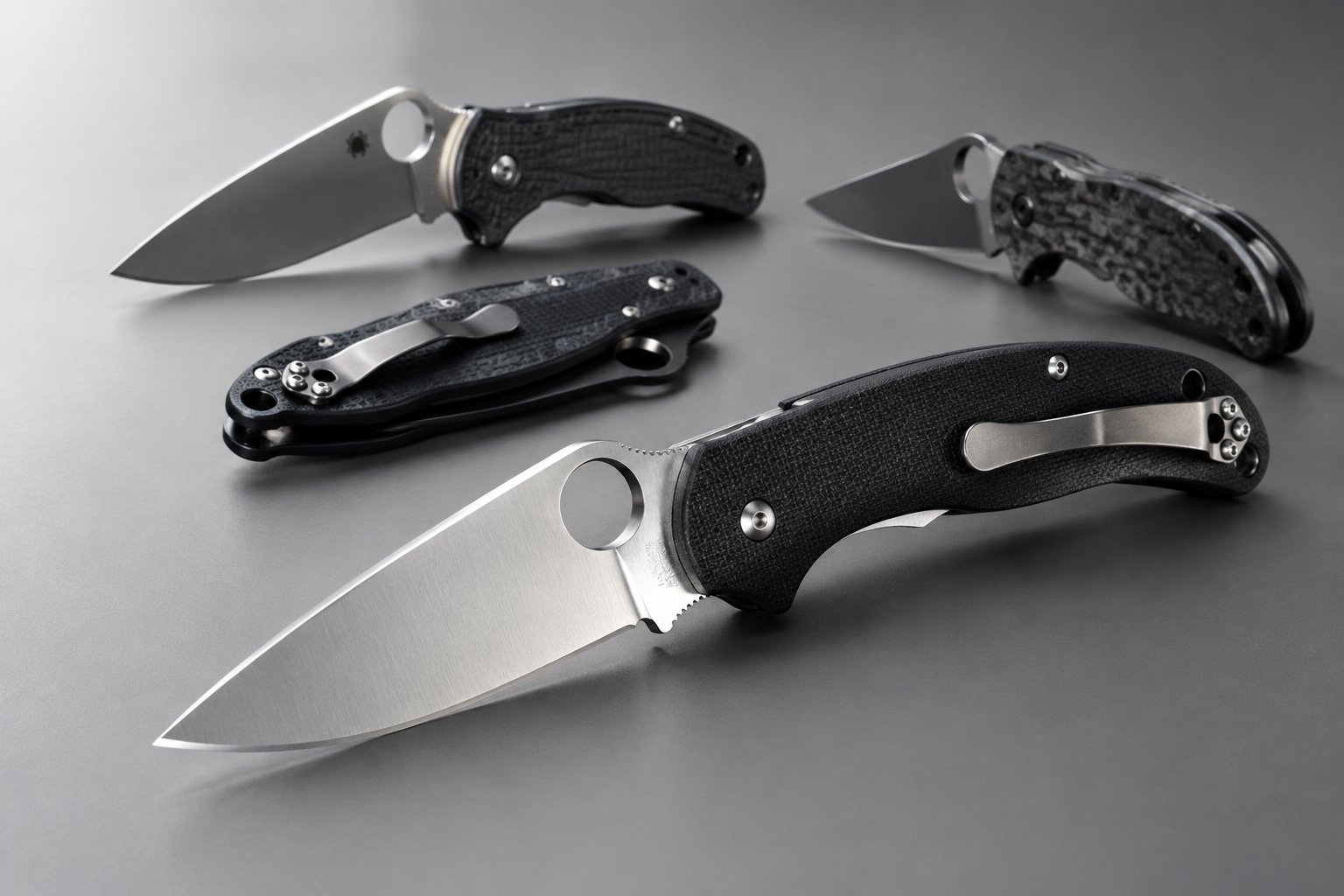
You pick up a Spyderco, and your first thought probably isn’t “worth it.” The FRN handle feels plain next to a polished titanium frame lock, and that round hole in the blade looks more like a bottle opener than a premium feature. Then you see the price tag sitting next to knives that look flashier for less money, and the question is fair: why are Spyderco knives so expensive when the materials look this basic on the surface?
The honest answer has nothing to do with looks and everything to do with what happens under the handle scales. A Paramilitary 2 or Para 3 is priced around its lock mechanism, its steel, and decades of ergonomic testing that most buyers never see. None of that shows up in a product photo.
This breaks down exactly where that money goes, where it stops making sense, and how to decide if a Spyderco earns a spot in your pocket.
What the Price Actually Pays For
Spyderco prices reflect engineering choices baked into the knife long before it reaches a store shelf. The company built its reputation on solving mechanical problems other brands ignored, and those solutions cost real money to manufacture correctly.
Three things drive the bulk of that cost: a proprietary lock, US-based production on top-tier models, and steel that outperforms what most budget brands offer. Each one adds a specific, traceable expense rather than a vague “quality” markup.
Compression Lock Design and Manufacturing
The Compression Lock sits in the spine of the handle instead of the traditional liner-lock position, and that placement is not cosmetic. It moves your fingers away from the lock bar during closing, reducing accidental slips that plague cheaper liner locks.
Machining a Compression Lock correctly requires tighter tolerances than a standard liner lock. The lock bar has to seat against a stop pin with consistent spring pressure across thousands of units, which means more precise milling and more quality control per knife.
That precision is why the Paramilitary 2, which introduced the design widely, still commands respect from people who have cycled through other lock styles for years.
U.S. Production on Flagship Models
Spyderco builds its flagship folders, including the Paramilitary 2, Para 3, and Military, at its Golden, Colorado facility. Domestic manufacturing carries higher labor costs than overseas production, and that difference shows up directly in retail pricing.
Chris Reeve Knives, built in Boise, Idaho, shows how expensive a fully domestic folder can get once tolerances tighten: the Umnumzaan runs $450. Spyderco sits well below that range while still absorbing US labor costs on its core lineup.
Spyderco also makes budget models overseas, like the Tenacious, which uses 8Cr13MoV steel and typically sells for well under $75 depending on configuration. That split lets the company keep an entry point open while charging more for the models built at home.
Blade Steel, Heat Treatment, and Cutting Geometry
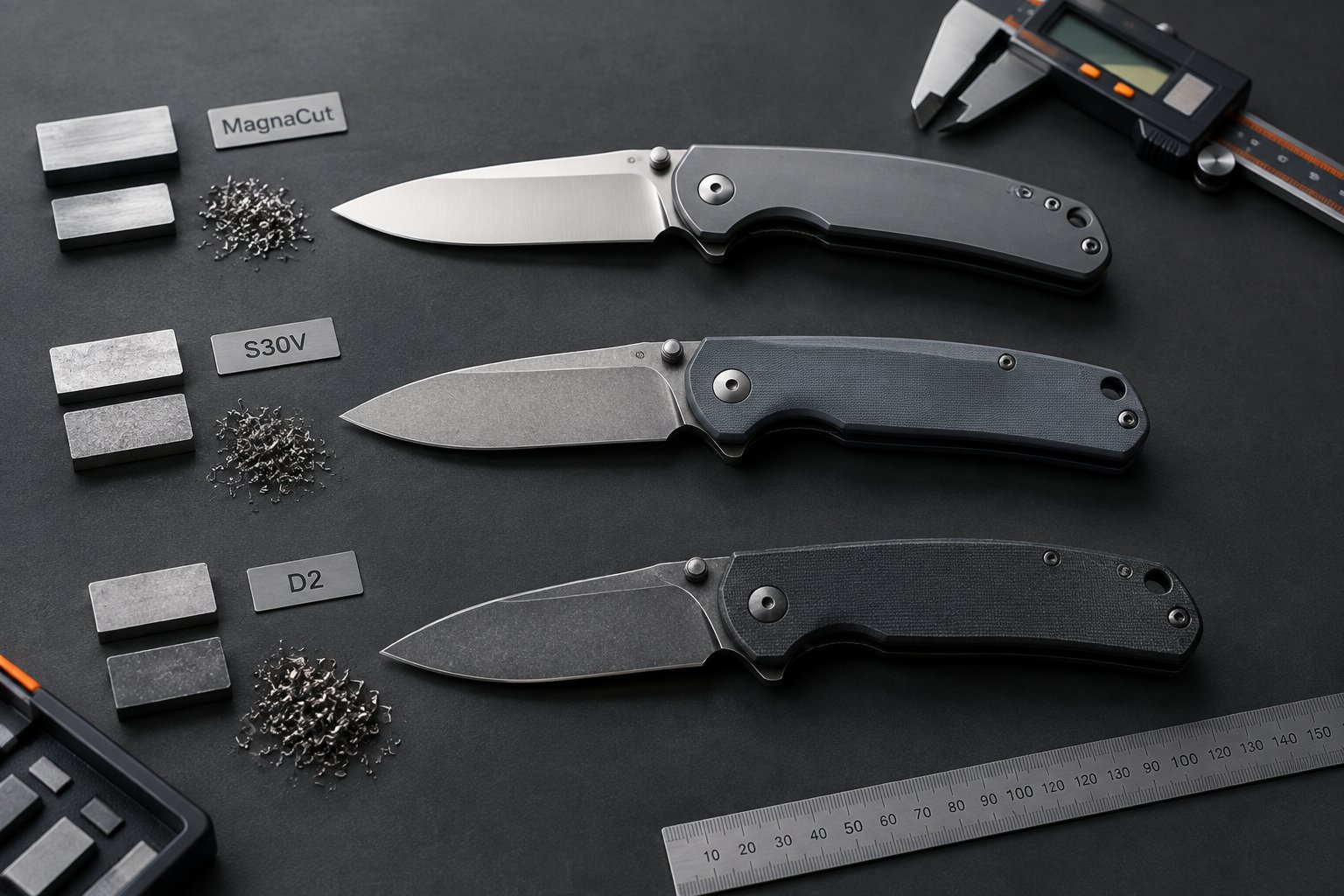
Steel choice is where much of the price difference lives, and it is the part most first-time buyers underestimate. CPM S45VN, a common upgrade steel on Para 3 variants, holds an edge longer than basic stainless and resists corrosion better than older powder steels like S30V.
Heat treatment matters as much as the steel itself. Two knives can use the same steel and perform completely differently depending on how well that steel was hardened and tempered, and Spyderco’s in-house heat treatment process is tuned per steel type rather than run on a single generic cycle.
Grind geometry finishes the job. A full flat grind, common on Spyderco’s EDC lineup, cuts more efficiently than a hollow or saber grind because it removes more material behind the edge.
- CPM S45VN: strong corrosion resistance, good edge retention, easier to sharpen than older super steels
- CPM S30V: solid all-around performance, found on knives like the Benchmade Bugout, slightly harder to sharpen than S45VN
- 8Cr13MoV: budget steel used on entry Spyderco models, softer edge but easy to resharpen at home
Steel and geometry explain the cutting performance, but they don’t explain why a Para 3 feels different in your hand than a knife with similar specs on paper.
Why the Para 3 and Paramilitary 2 Feel Different in Use
The Para 3 and Paramilitary 2 feel different because Spyderco designs the ergonomics around the hand, not around a sketch. Every curve on the handle traces back to years of field feedback, not a single design pass.
The Paramilitary 2 grew directly out of the original Military model, which Spyderco co-founder Sal Glesser designed in 1996 after a customer asked what knife he’d give a child heading into military service, according to Spyderco’s own design history.
The first Para Military followed in 2004 with the new Compression Lock; the Paramilitary 2 refined it further in 2010, and the Para 3 shrank that platform into a more pocketable size in 2016 without losing the features that made the original work.
The Round Hole Is a Functional Opening Feature
Spyderco pioneered the opening hole, and it remains one of the fastest one-handed deployment methods on the market. The company also popularized the pocket clip and serrated edge, both now standard across the folding knife industry.
The hole lets you open the blade with a thumb, gloved hand, or even a hooked finger motion, which matters more in cold weather or wet conditions than most buyers expect. Liner-lock knives with flipper tabs can be faster in ideal conditions, but they lose that edge the moment your hands are cold or wet.
Ergonomics Refined Through Everyday Carry
The finger choil on the Para 3 and Paramilitary 2 lets you choke up on the blade for detail work without losing grip security. That choil placement went through multiple production revisions before Spyderco settled on the current geometry.
Handle jimping, the small grooves along the spine and choil, gives your thumb a stable reference point during hard cuts. It sounds minor until you compare it to a smooth-spined knife during repetitive box-cutting work.
FRN Handles: Lightweight Function Over Luxury Appearance
FRN, or fiberglass-reinforced nylon, earns its spot on premium Spyderco models for a reason unrelated to cost-cutting. It is nearly impossible to crack under normal use and keeps the knife light.
A Paramilitary 2 in FRN weighs noticeably less than a comparable titanium-framed folder, which matters over a full day of carry. Collectors know this trade-off well: the plain look of FRN is a deliberate function choice, since Spyderco also offers G10 and carbon fiber versions at higher prices for buyers who want a different feel.
None of that ergonomic work shows up in a photo, which is why the price can still feel confusing until you compare it with what else is on the market.
Where Spyderco Prices Can Feel Hard to Justify
Spyderco pricing gets harder to defend once you look at what budget brands now deliver for far less money. The gap that used to separate a $150 Spyderco from a $40 import has narrowed considerably over the last several years.
Buyers in the knife community have noticed this shift directly, with mid-market Spyderco models now regularly landing in the $200 to $250 range at going market prices, which pushes some buyers to look elsewhere.
Budget Competition Has Changed the Value Equation
Brands like Kizer, QSP, and Civivi now offer ball-bearing pivots, D2 or S35VN steel, and tight fit and finish for a fraction of Spyderco’s flagship pricing. The knife community has taken notice, and longtime buyers generally feel these Chinese brands have gotten good enough to make even Spyderco’s own budget overseas models look expensive by comparison.
That competition is real, and it means the “just pay for Spyderco” answer no longer works as a blanket rule. Steel quality alone no longer separates premium from budget the way it did a decade ago.
Premium Scale Materials and Sprint Runs Add Cost
Sprint runs, limited production versions with upgraded steel or handle materials, carry a real cost bump over standard models. A Para 3 in CPM S45VN with carbon fiber scales costs meaningfully more than the standard FRN and CTS BD1 version, and that gap mostly comes from materials and small-batch tooling.
Collectors chase these runs specifically because Spyderco does not reissue every sprint configuration. That scarcity is part of what keeps secondary market prices on discontinued sprints above original retail, something a first-time buyer rarely expects but a collector tracks closely.
Not Every Model Is the Right Buy for Every User
A $200 Paramilitary 2 makes little sense for someone who needs a knife for occasional package-opening and light kitchen tasks. Spyderco’s own budget lineup, or a competitor’s sub-$100 offering, covers that use case without the extra spend.
- Heavy daily use, hard cutting tasks: premium steel and Compression Lock earn their price
- Occasional light use: a budget Spyderco or competitor folder covers the need
- Collecting or sprint-run interest: material and scarcity drive value beyond raw function
Matching the model to the actual use case is the real skill here, and it leads directly into how to make that call for your own EDC.
How to Decide Whether a Spyderco Is Worth It
Deciding whether a Spyderco is worth the money comes down to matching the lock, steel, and size to how you actually use a knife day to day. Skip the marketing angle entirely and start with your own habits.
Choose the Steel and Lock for Your Actual EDC
If you cut rope, cardboard, and food daily, CPM S45VN or S30V will hold an edge through a full week of normal use. If you mostly open mail and packages, a lower-tier steel saves money without costing you real performance.
The Compression Lock earns its keep if you open and close the knife dozens of times a day, since it resists lock stick and wear better than a basic liner lock over time. If you rarely fold the knife closed during a task, that advantage matters less.
Compare a Para 3 With Similar Premium Folders
A side-by-side against a Benchmade Bugout in S30V shows how steel choice alone can shift price and performance expectations. The Bugout trades some edge retention for lighter weight, while the Para 3 leans toward a more secure grip and stronger lock geometry.
Size and lock design also shift the everyday carry feel noticeably across Spyderco’s core lineup, which is worth handling in person before choosing between the Military, Paramilitary 2, and Para 3.
When a Less Expensive Spyderco Makes More Sense
The Tenacious or Persistence lines use simpler steel and liner locks but still carry Spyderco’s ergonomic design work. For a first serious knife, or a beater for yard work, that trade-off makes financial sense.
Once you know which tier fits your actual use, the last question is whether you’ll notice the performance gap between tiers in daily carry.
Paying for Performance You Will Actually Use
The performance gap between a $60 Spyderco and a $180 Spyderco shows up in edge retention, not in how the knife looks sitting in a drawer. That distinction matters more than any spec sheet comparison.
CPM S45VN on a Para 3 will outlast basic stainless steel through significantly more cardboard, rope, or food prep before needing a touch-up. If your knife sees that kind of daily wear, the steel upgrade pays for itself in fewer sharpening sessions and less downtime with a dull blade.
The Compression Lock’s durability advantage also compounds over years of use rather than showing up on day one. A liner lock can develop stick or wear unevenly after heavy cycling, while the Compression Lock’s spring geometry holds its feel longer.
- If you open your knife more than a dozen times a day, lock durability and steel edge retention both pay off quickly
- If your knife sees light, occasional use, a mid-tier steel and simpler lock will serve you just as well
Buying the right tier for your actual habits, rather than the highest spec available, is where Spyderco pricing starts to make real sense.
The Real Cost of a Well-Built Folder
Spyderco’s price tag traces back to specific, traceable choices: the Compression Lock’s tight tolerances, US manufacturing on flagship models, and steel options like CPM S45VN that outperform basic stainless. None of that is marketing gloss, and none of it shows up clearly in a photo.
The honest trade-off is that budget competitors have closed the gap on fit and finish, which means Spyderco’s price only makes sense once you match the model to your actual carry habits. A Para 3 built for daily hard use earns its cost quickly. A rarely used folder doesn’t need the same spend.
If you want to feel that difference before deciding, Sharp Things OKC keeps the Spyderco lineup, including Para 3 and Paramilitary 2 models, on hand to hold and compare against other premium folders in person. Contact the shop with questions, or order online with same-day shipping on orders placed before the 3 pm cutoff.
Frequently Asked Questions
Are Spyderco knives worth the money?
Spyderco knives are worth the money for buyers who use their EDC knife daily and need a reliable lock and edge-holding steel. Occasional users may get better value from a budget model or a competitor brand at a lower price point.
Why do Spyderco knives have a round hole in the blade?
The round hole is Spyderco’s original one-handed opening feature, designed for fast deployment with a thumb or gloved hand. Spyderco pioneered this feature decades ago, and it remains one of the fastest opening methods in wet or cold conditions.
Is the Spyderco Para 3 worth its price?
The Para 3 is worth its price for anyone who wants the Paramilitary 2’s Compression Lock and ergonomics in a smaller, more pocketable size. It carries the same lock durability and premium steel options as its larger sibling, just in a more compact frame.
Are FRN Spyderco handles durable?
FRN handles are durable and resist cracking better than many people expect from a lightweight material. Spyderco chooses FRN specifically for its strength-to-weight ratio, not as a cost-cutting shortcut on premium models.
Is Spyderco better than Benchmade?
Which brand is “better” depends on the design problem you’re solving, since Spyderco and Benchmade take different approaches to locks and steel choices. Spyderco leans on the Compression Lock and ergonomic grip work, while Benchmade often emphasizes lighter builds like the AXIS lock Bugout.
Why are some Spyderco knives much more expensive than others?
Price differences within the Spyderco lineup come down to where a knife is made, what steel it uses, and whether it is a limited sprint run. A US-made Paramilitary 2 in CPM S45VN with carbon fiber scales costs far more than an overseas Tenacious in 8Cr13MoV steel.